Education Portfolio
“I cannot teach anybody anything; I can only make them think.” Socrates
Table of Contents
The Why
In art education, there’s a persistent myth that artistic ability is something you either magically possess or tragically missed out on at birth. I’ve had parents confidently explain that their child “just isn’t creative,” while others are shocked that their “naturally talented” child didn’t earn the top score. From my experience, the students who make the greatest progress are rarely the ones relying on raw talent—they’re the ones who show up, work hard, stay persistent, and keep trying even when things get messy (which, in art class, is both figurative and very literal). Like learning a sport or a musical instrument, art is a skill that can be developed through effort, practice, and guidance—and having a teacher who genuinely believes in you certainly doesn’t hurt.
I firmly believe that people are capable of far more than they often give themselves credit for—especially when they’re supported, encouraged, and motivated to succeed. If I can help a student believe in their own potential simply because I believed in it first, then I consider that a win.
Curriculum
My curriculum emphasizes skill-building through observation, critical thinking, and creative problem-solving, helping all students grow as confident, independent artists.
Below are selections from my curriculum that have been iterated over many years.
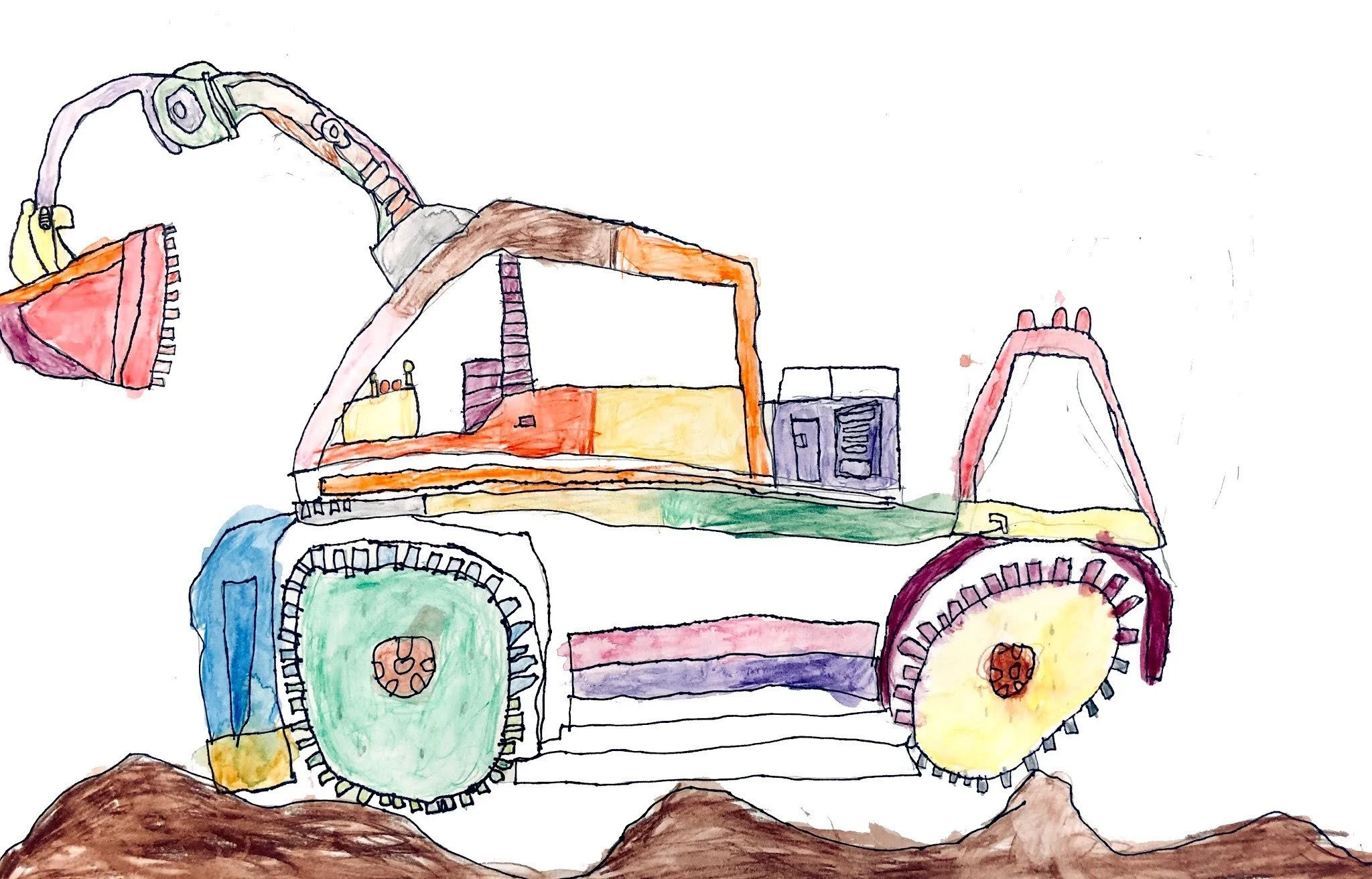
Grade 1
Observational Drawing
Essential Question: How do shapes make up the things we see in the world?
Umbrella Objective: Complex structures can be visually deconstructed into simple, geometric shapes and then elaborated upon to create a representational drawing.
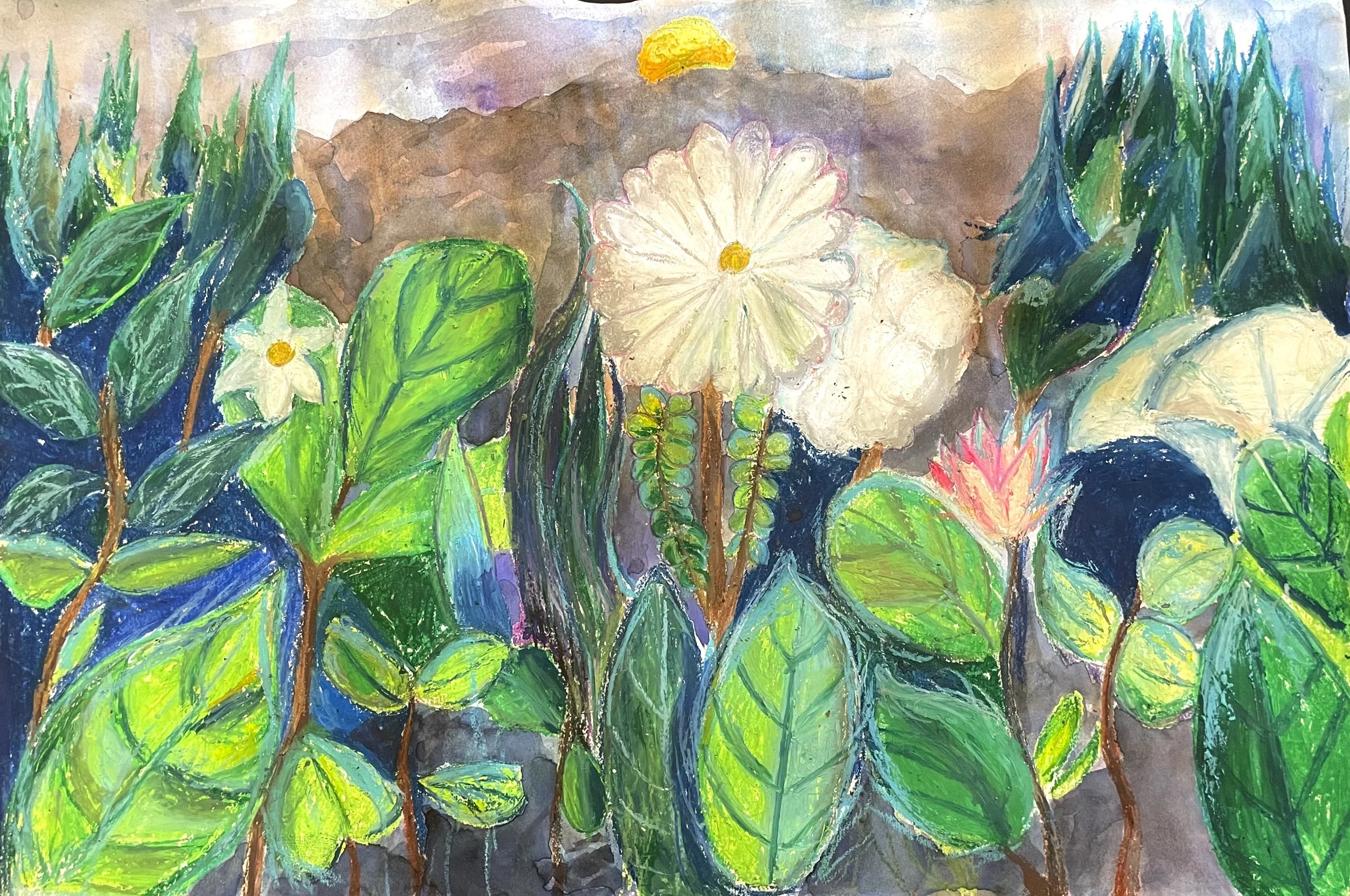
Grade 4
Perspective Foundations
Essential Question: How do artists make objects look like they exist in space? How do they make things appear as if they are closer or farther?
Umbrella Objective: Elements in a work of art can be composed to appear to have depth based on their placement, size, color and amount of detail.
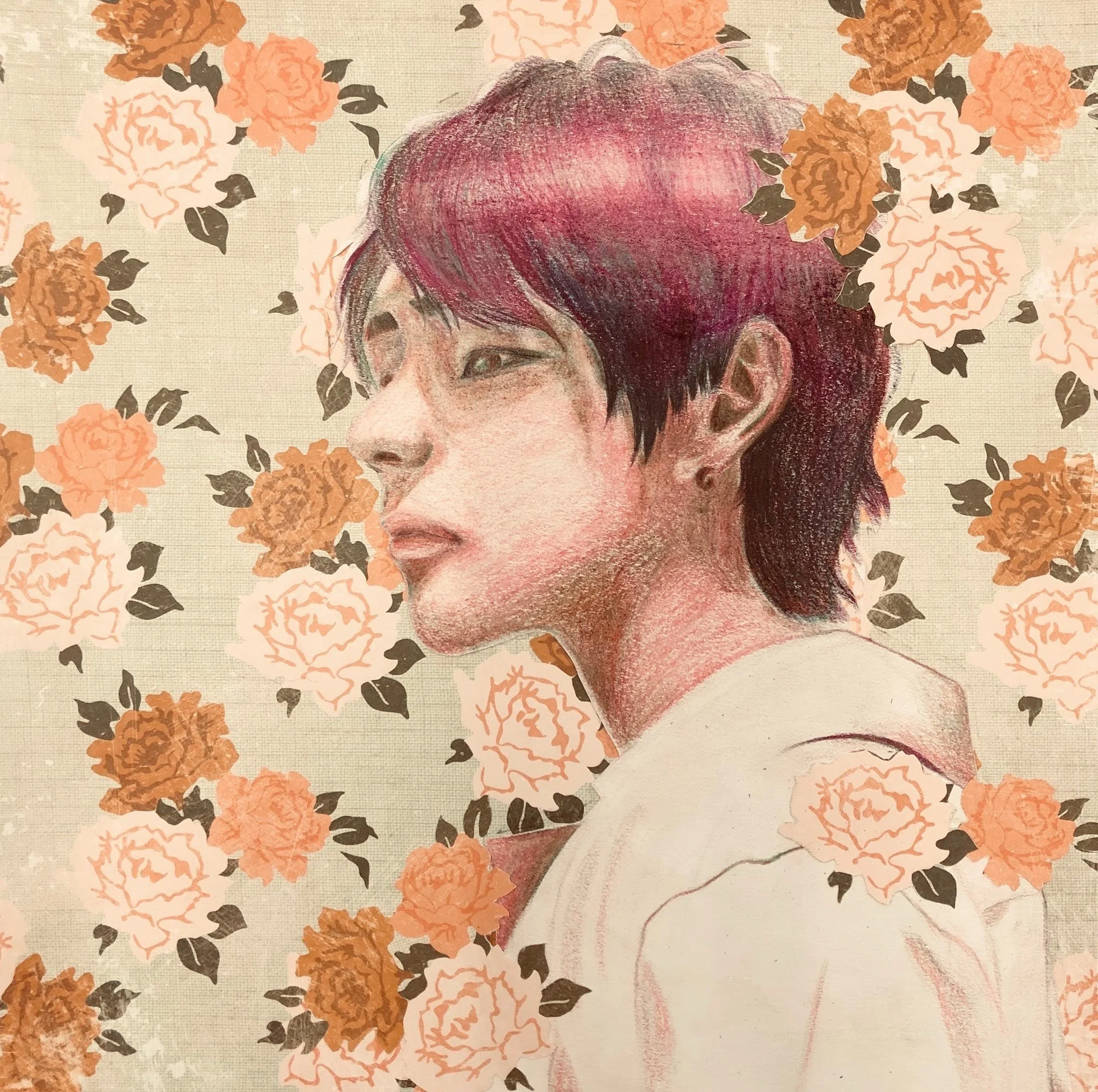
Grade 7
Value Studies
Essential Question: How do values describe the distinction between physical dimensions? How do artists use value to create the illusion of 3-dimensionality?
Umbrella Objective: Observation and variation of values are the key components to accurately depicting a 3-dimensional, realistic work of art.
Observational Drawing
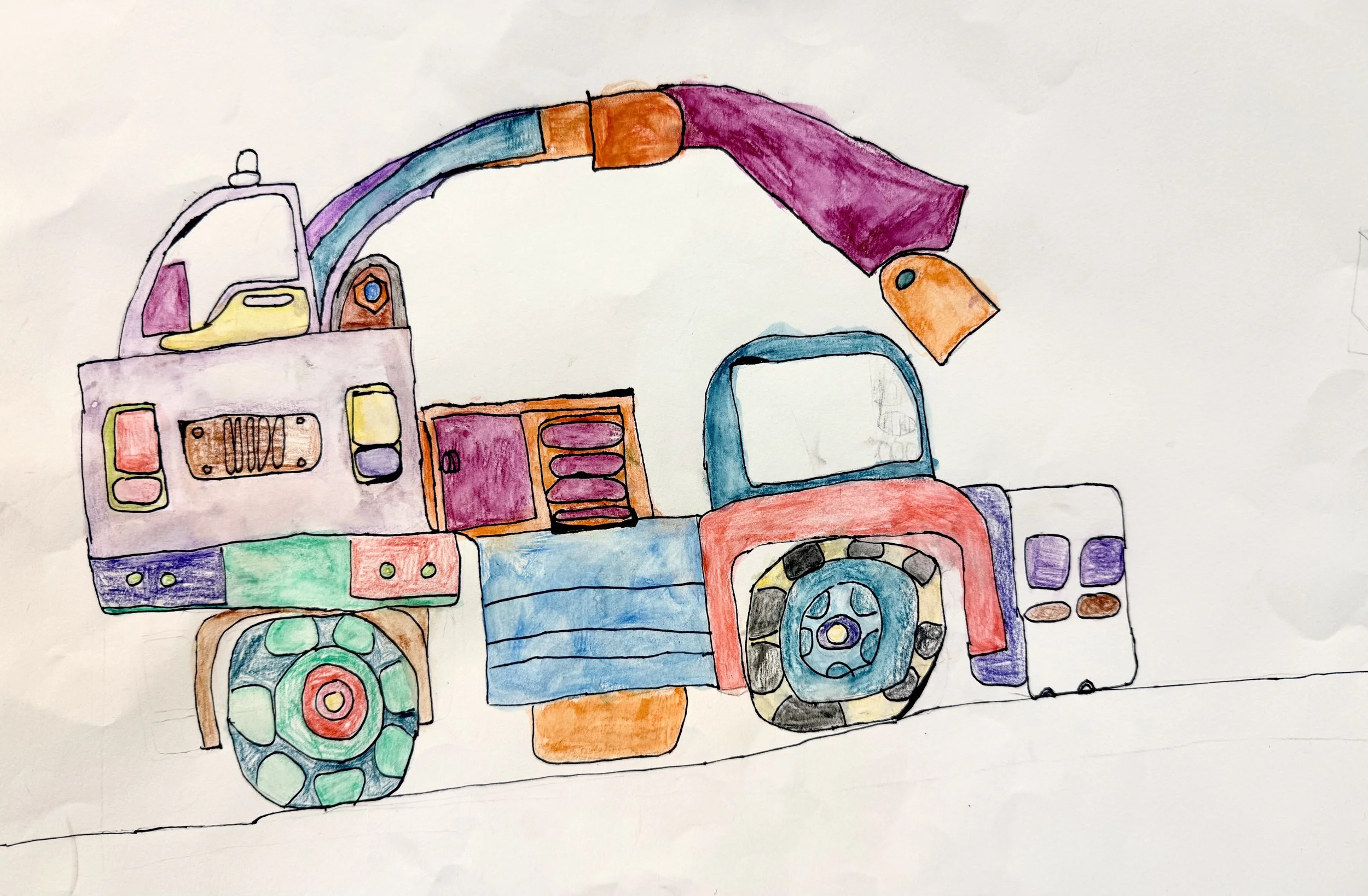
By 1st grade
Lesson Sequence
Part 1
Shapes as Building Blocks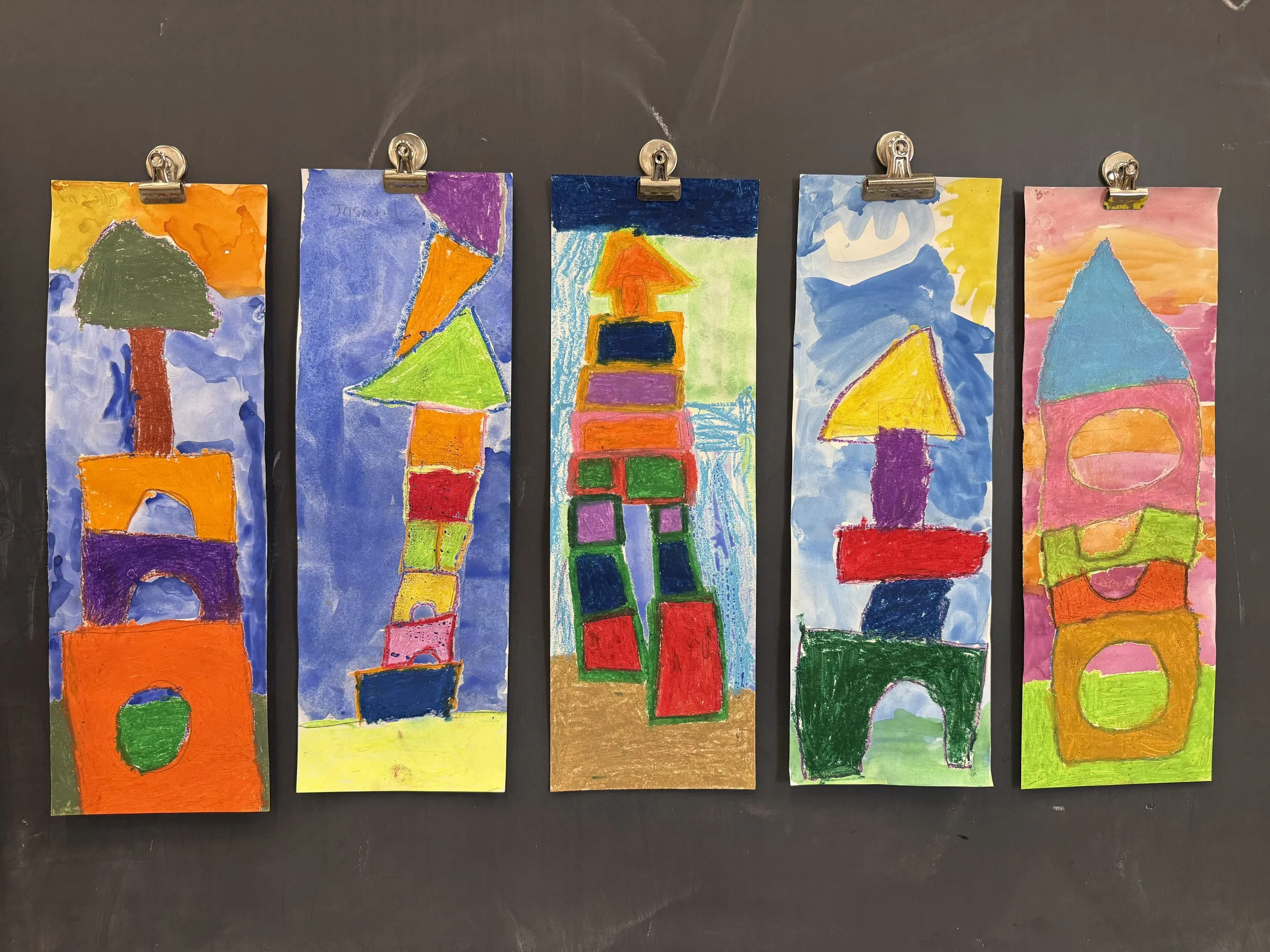
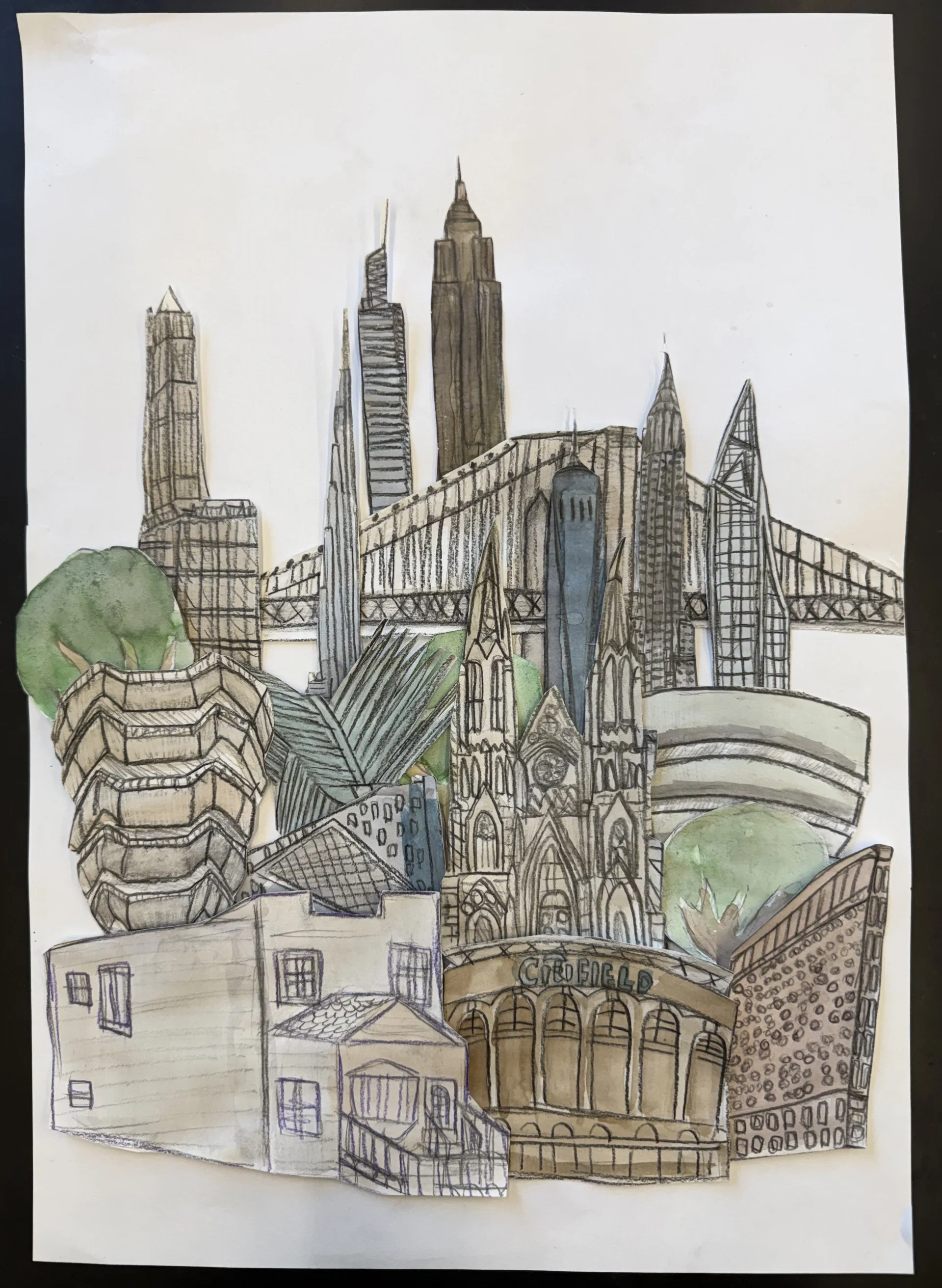
In this foundational drawing and painting lesson, students explore the art of observation by constructing skyscrapers using building blocks, and then drawing the still life they’ve created using oil pastels. One key focus during this lesson is rather than relying on assumptions, students are encouraged to observe the shapes carefully to represent them accurately as drawings.
This lesson also allows students to discover the oil-resist technique by painting over their oil pastel drawings. This lesson creates a solid knowledge of shapes and how they come together to create more complex structures.
Part 2
Shapes as Representation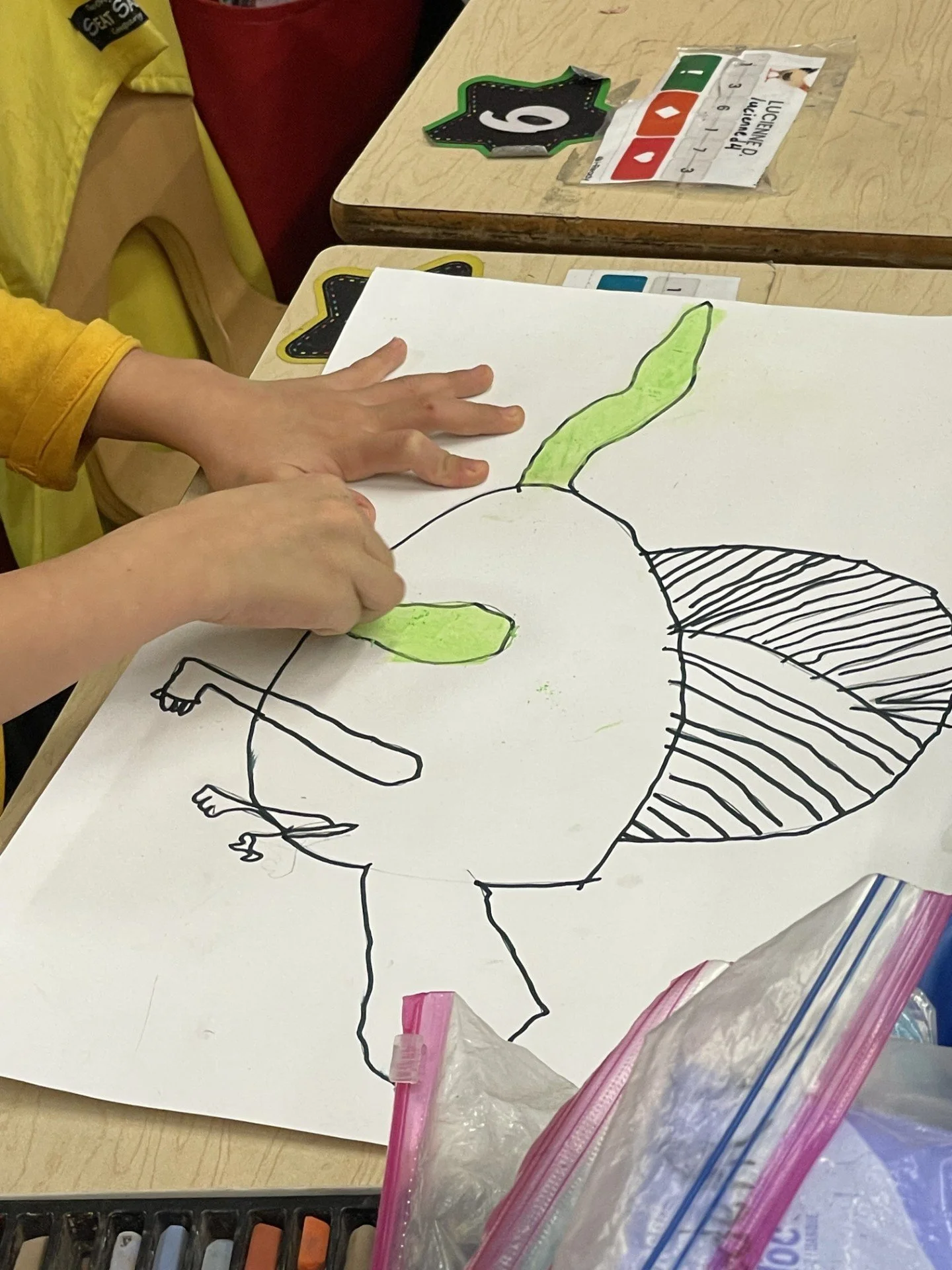
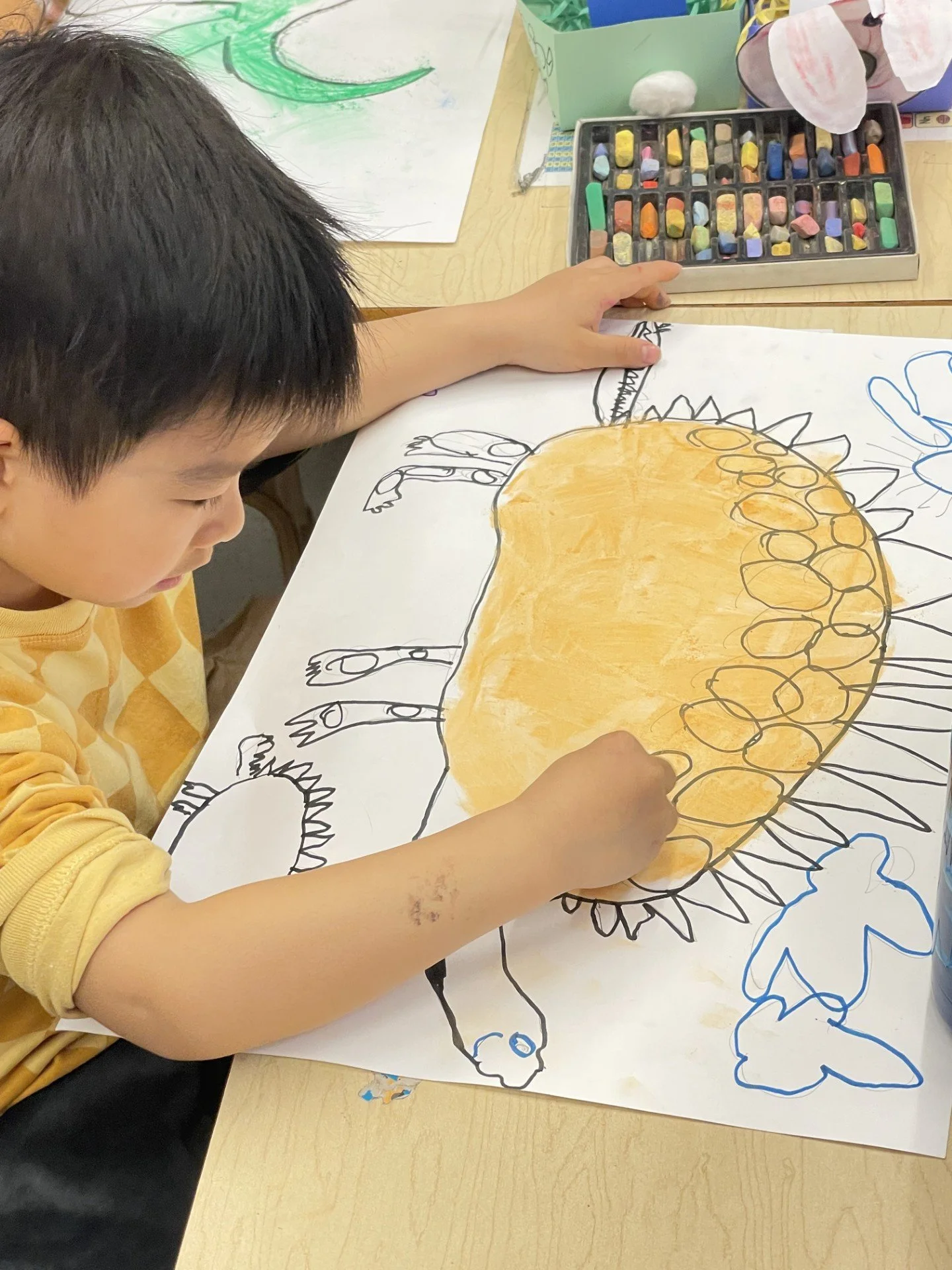
Building on their understanding of shapes from the skyscraper lesson, students begin exploring how simple forms can be combined to create representational drawings of animals. I start out with stuffed animal still-lives because they’re usually very approachable. Using dinosaur stuffed-animals as still-lives, students learn to break down the animals’ bodies into basic geometric shapes. By identifying these foundational forms on a still-life, students strengthen their ability to draw what they see rather than relying on preconceived ideas of what it “should” look like.
Afterward, they use markers and soft pastels to add color, texture and blending. Not only does this lesson deepen observational drawing skills, it introduces students to other types of pastels that exist and allows them to compare and contrast the two similar yet disparate mediums.
Part 3
Shapes as Still-Life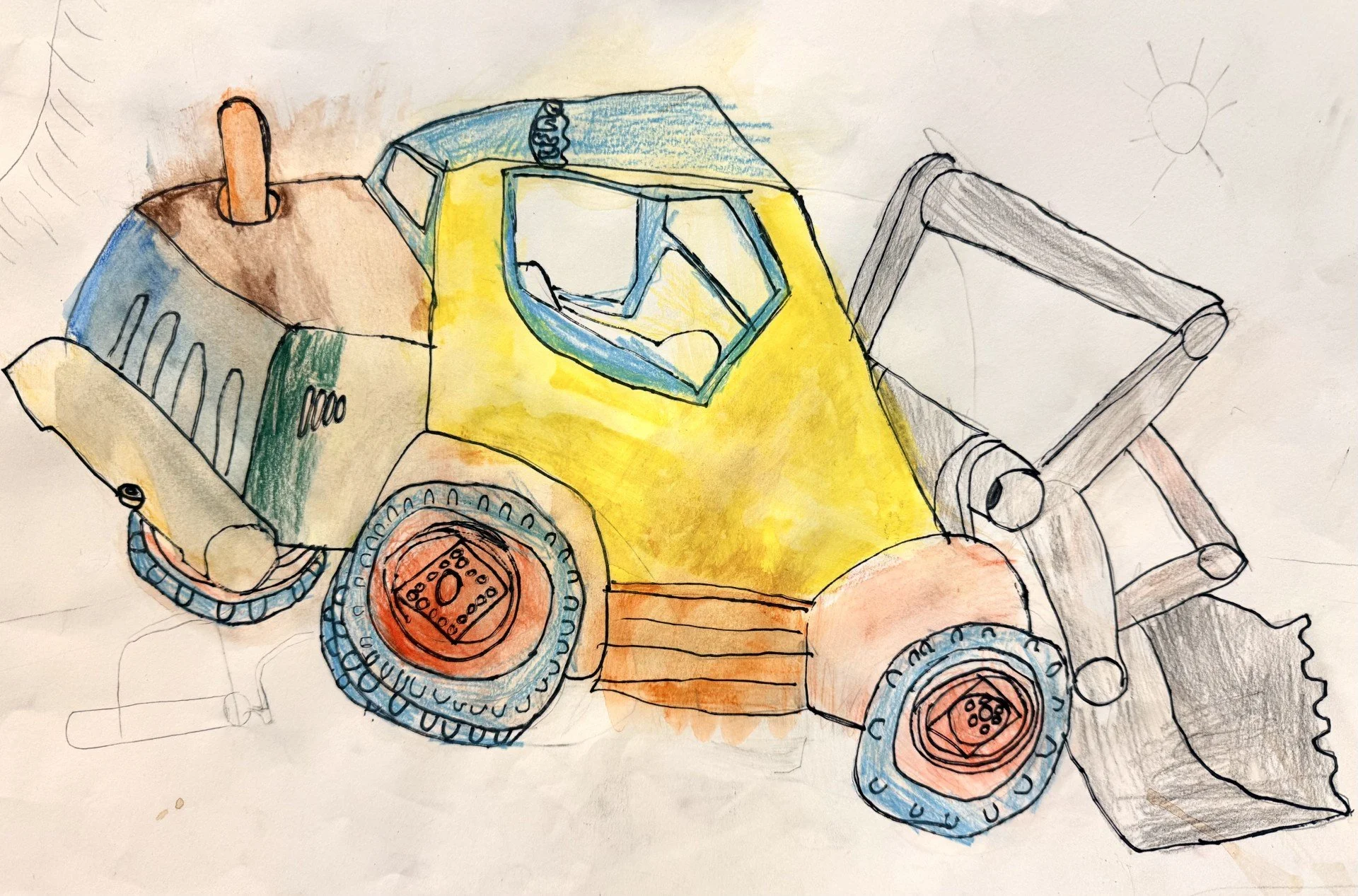
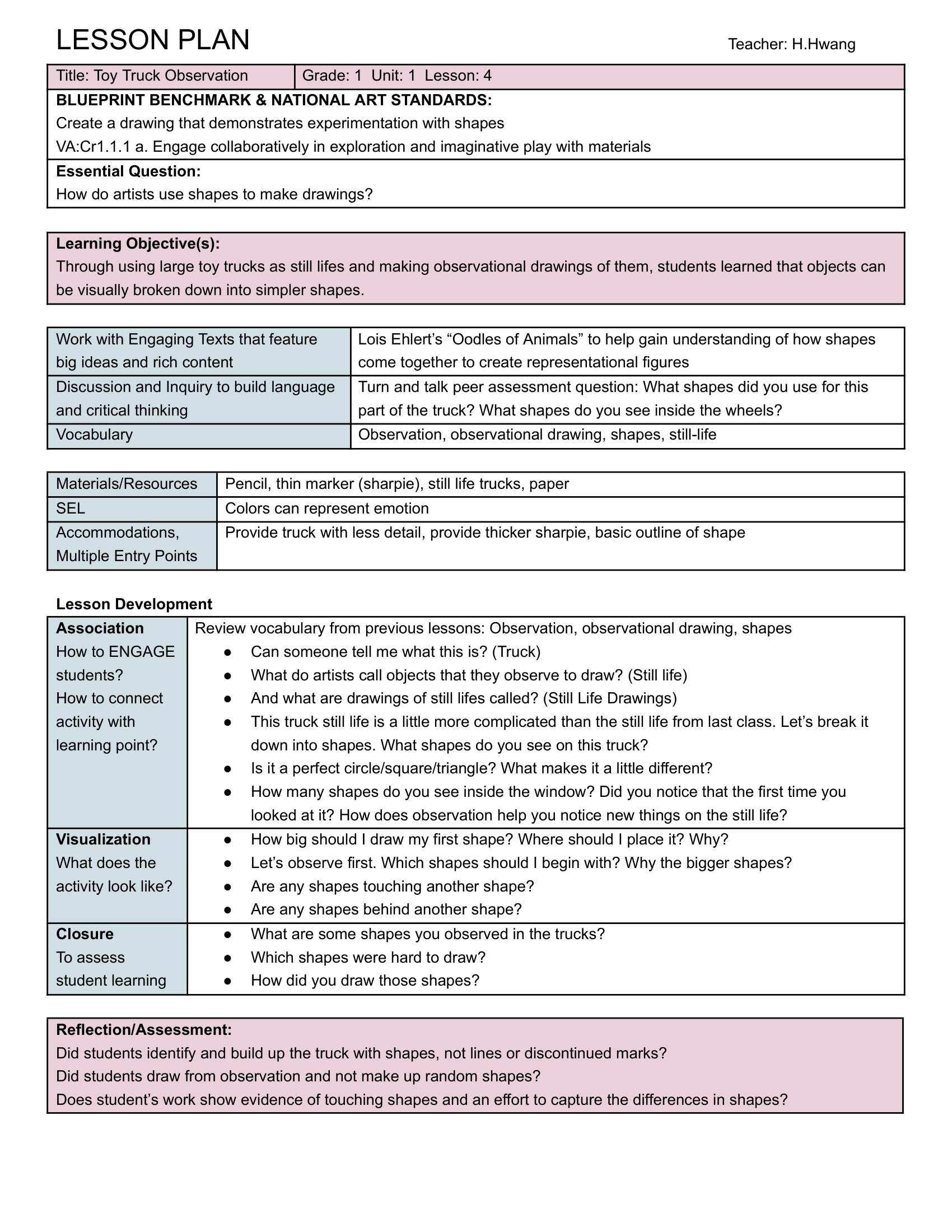
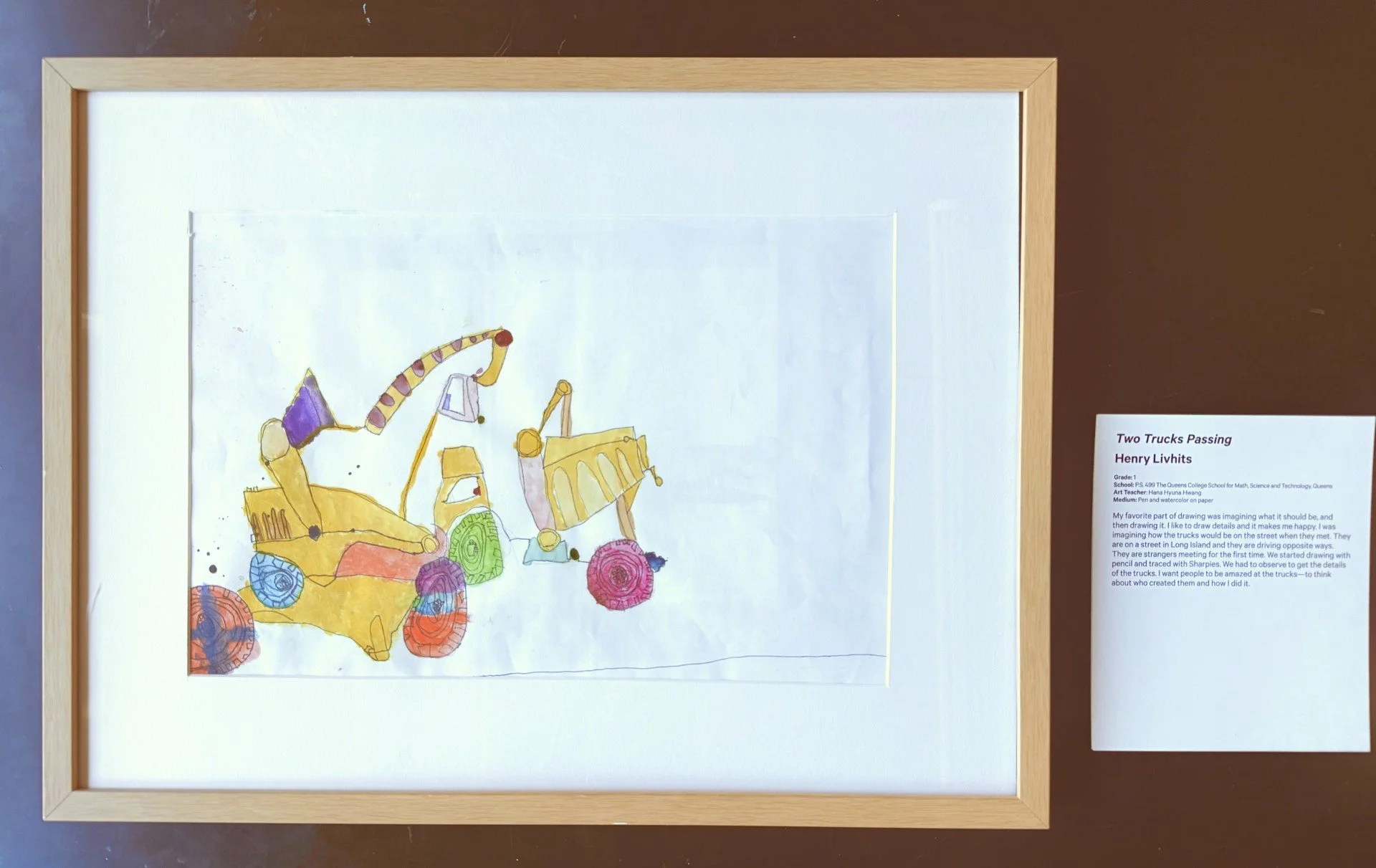
In the final lesson, students apply their growing understanding of shape and form by studying a toy construction truck as a still life subject. This still life introduces more detailed and complex structures that challenge students to look carefully and think critically about the shapes they observe. Students analyze each part of the vehicle by asking questions such as, “What shape do the wheels resemble?” or “What familiar shape does the body of the truck remind me of?” and “How many circles do I see on this truck?”
Even when forms are irregular, students learn to compare them to basic geometric shapes and adjust their drawings to better match what they truly see.
After sketching their trucks, students outline their work and paint it in with watercolors. This lesson encourages flexible thinking about shape recognition, and help students develop greater confidence in translating complex objects into accurate representational drawings.
Assessment Tools
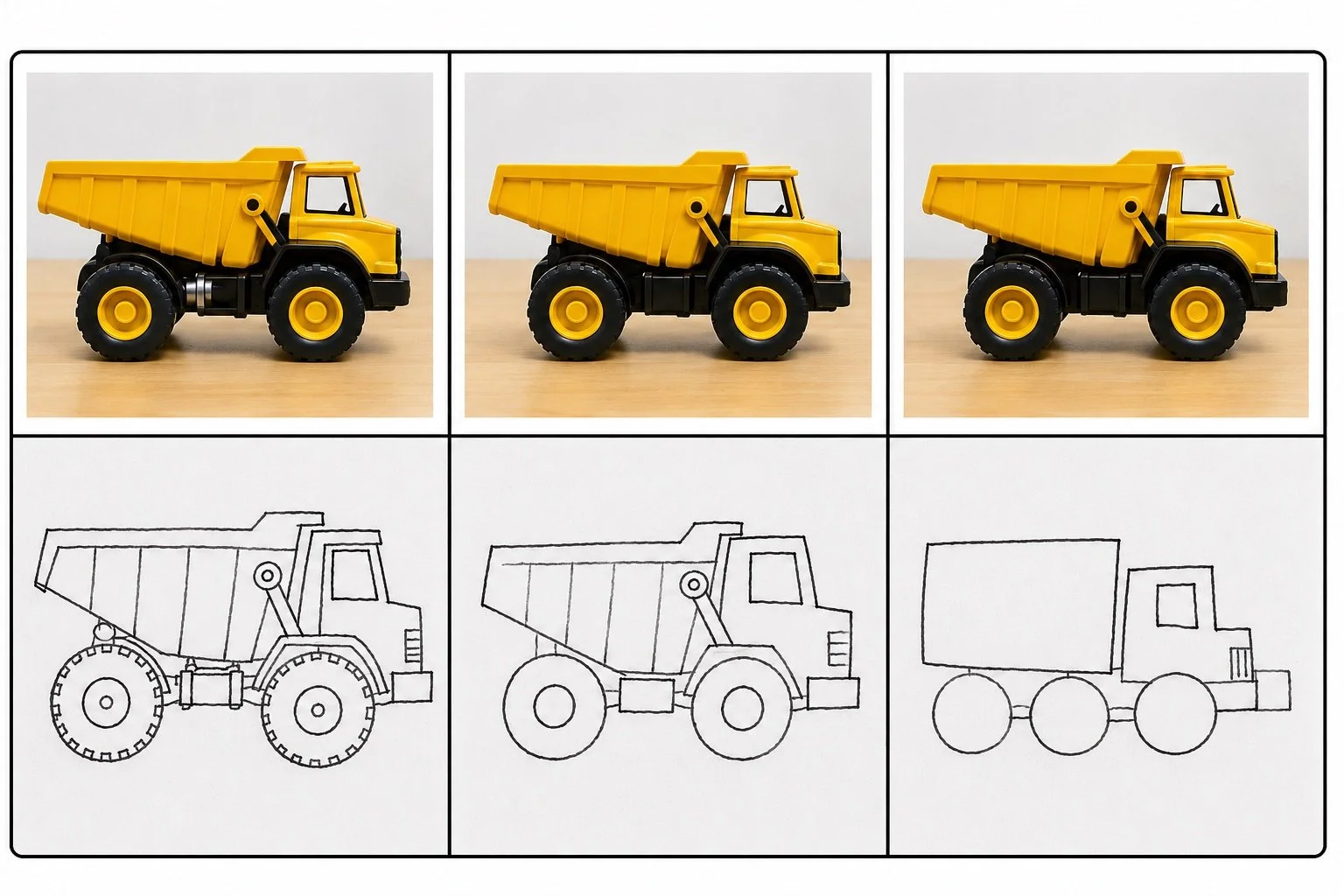
I created this visual rubric in response to noticing that many students struggled to notice the difference between casual observation and close observation: What does it look like to capture every detail rather than just the essence of the still life?
This rubric was designed to make the learning goal more visible and concrete. By providing clear visual examples of different levels of observation and detail, students were better able to reflect on their own work and recognize how close looking contributes to more accurate representations.
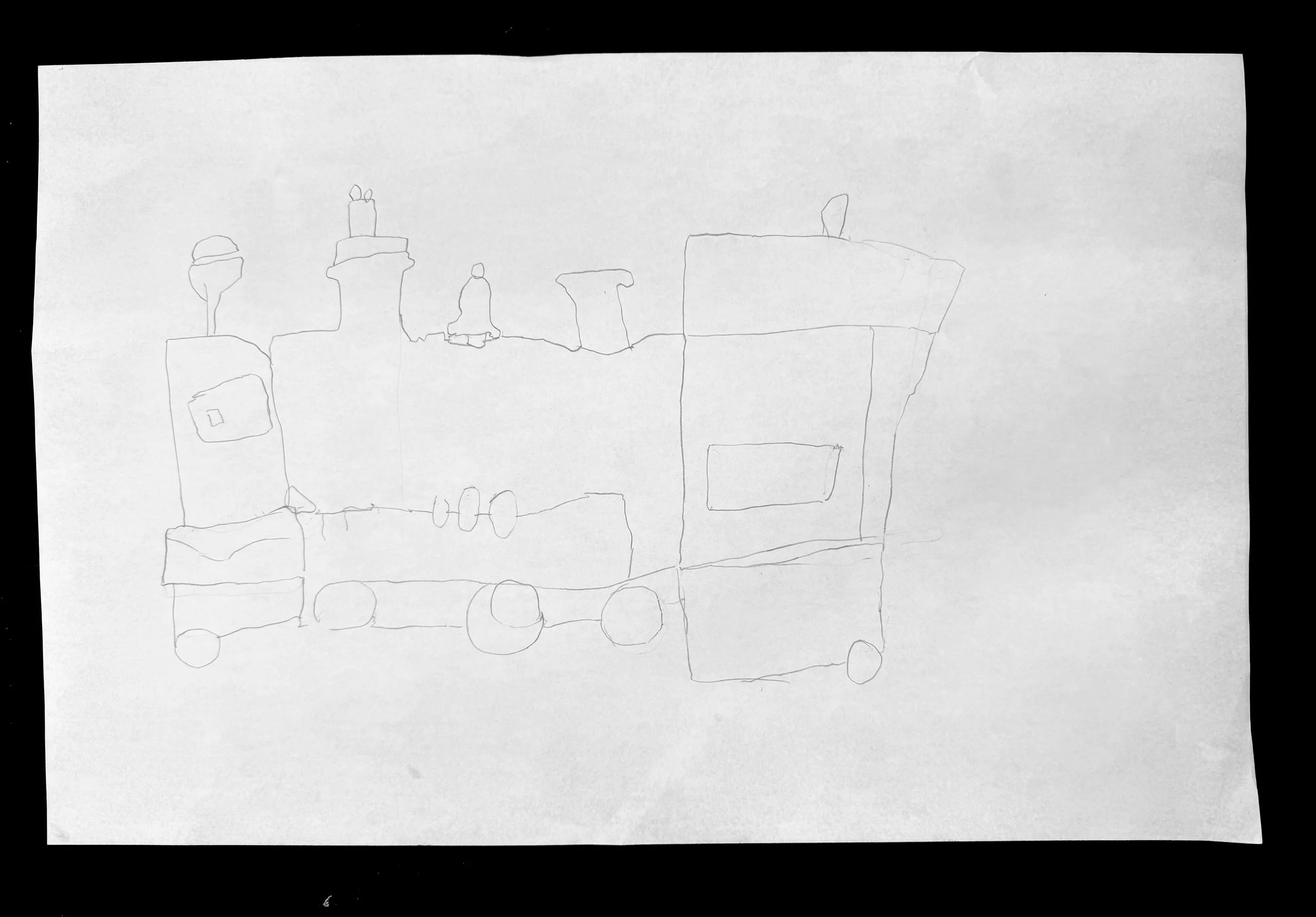
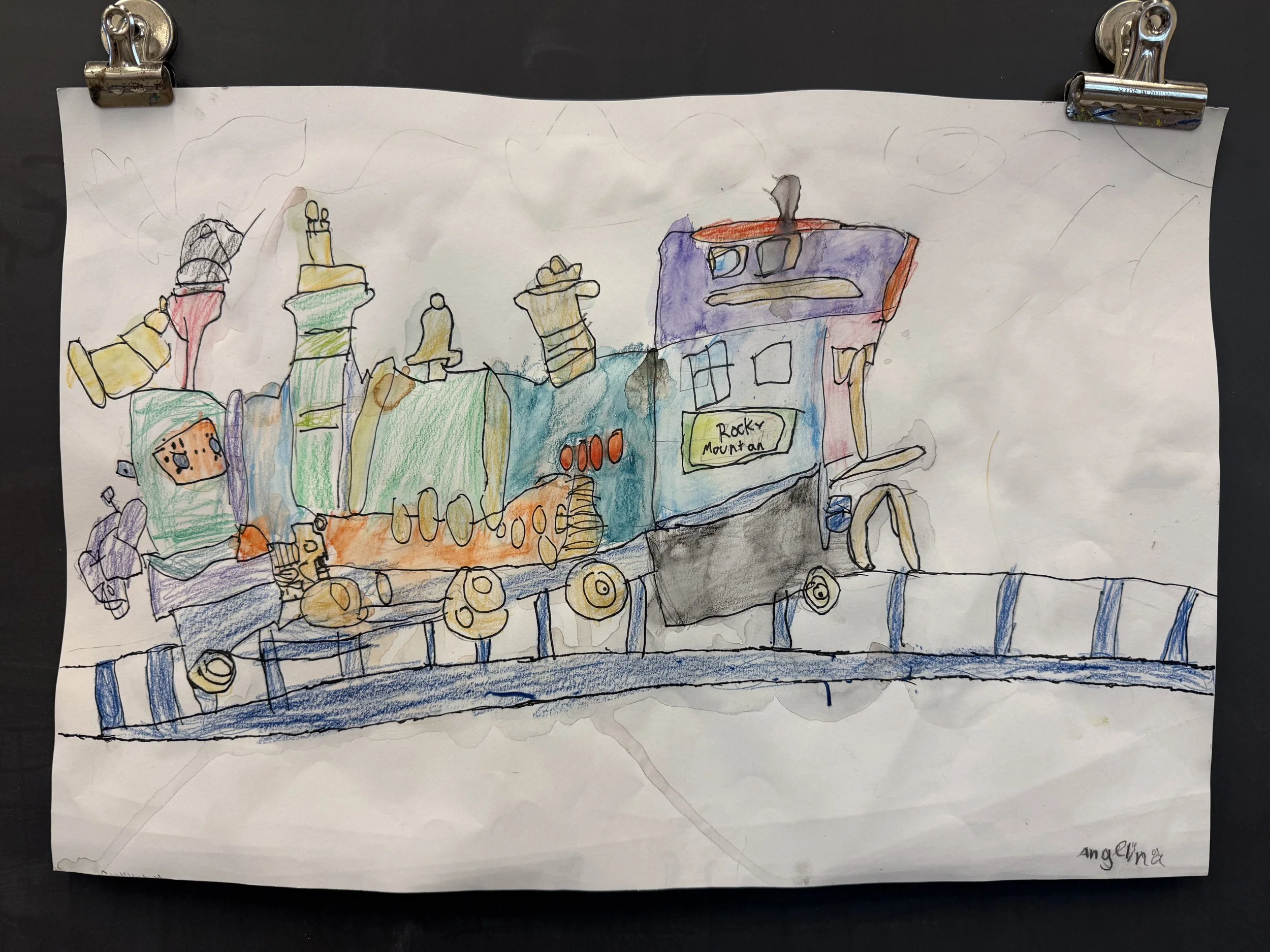
Below is an example of a student who improved her drawing with details using the visual rubric.
Perspective Foundations
By 4th grade
Lesson Sequence
Part 1
Studying and Discussing Henri Rousseau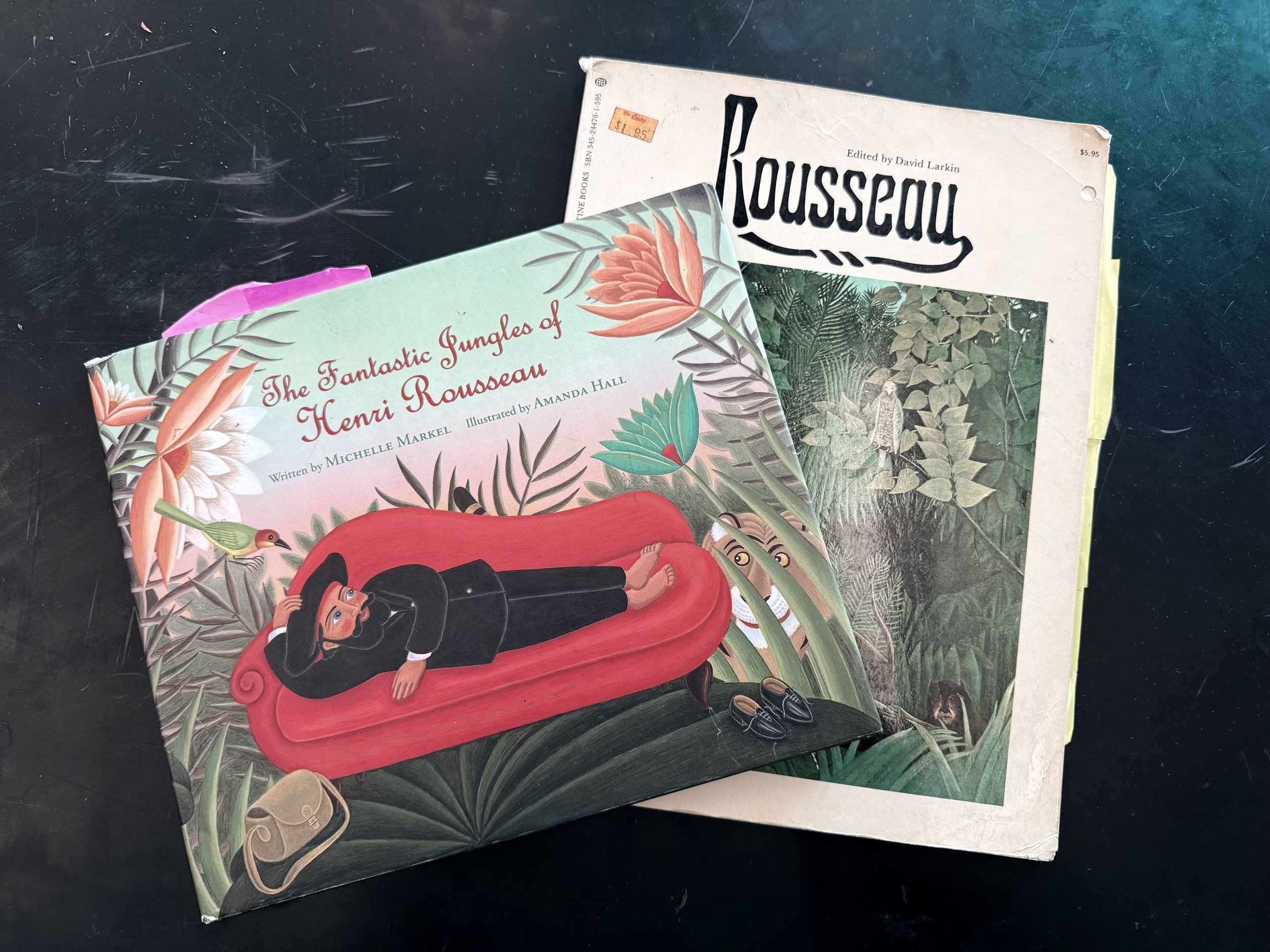
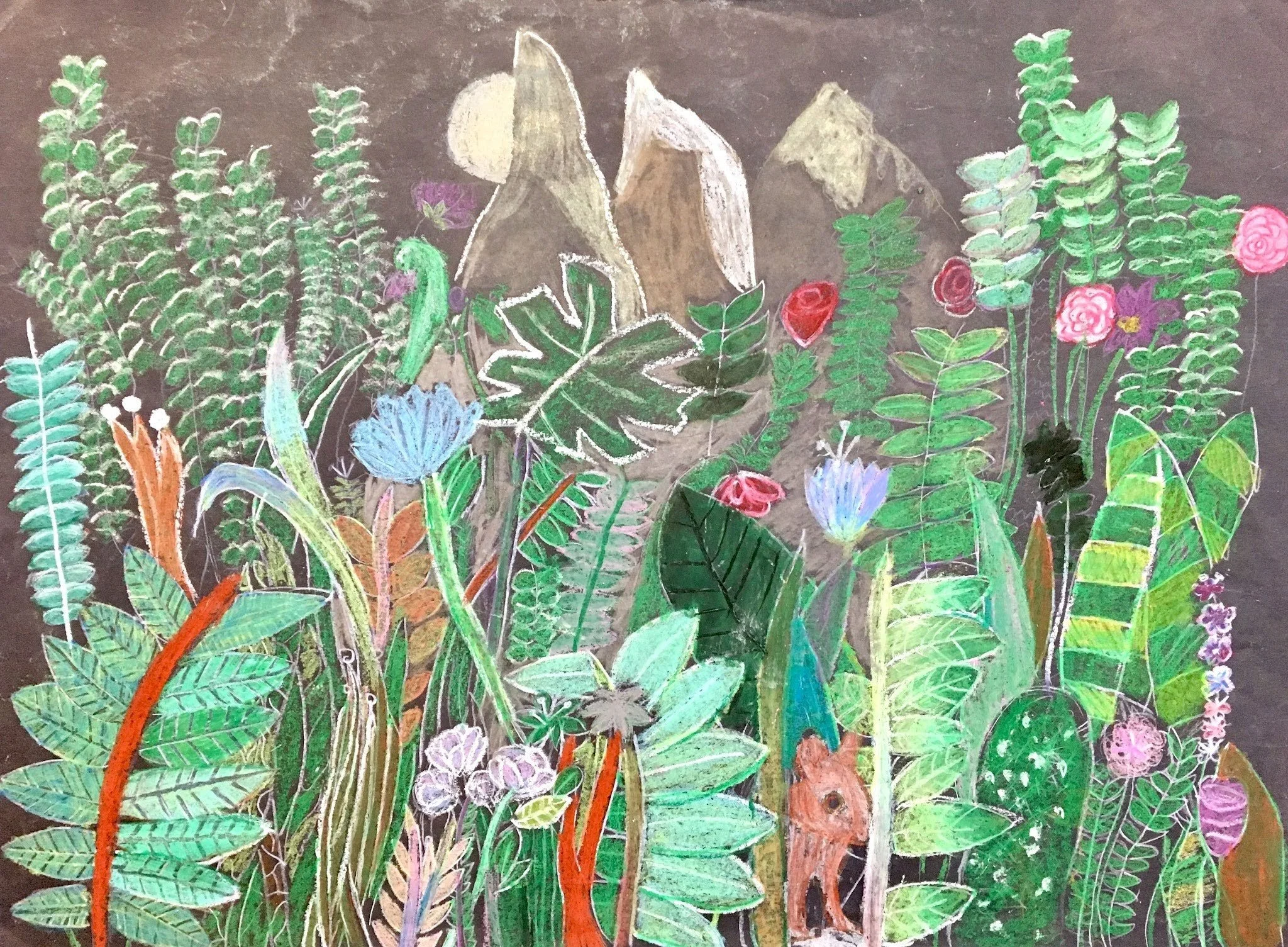
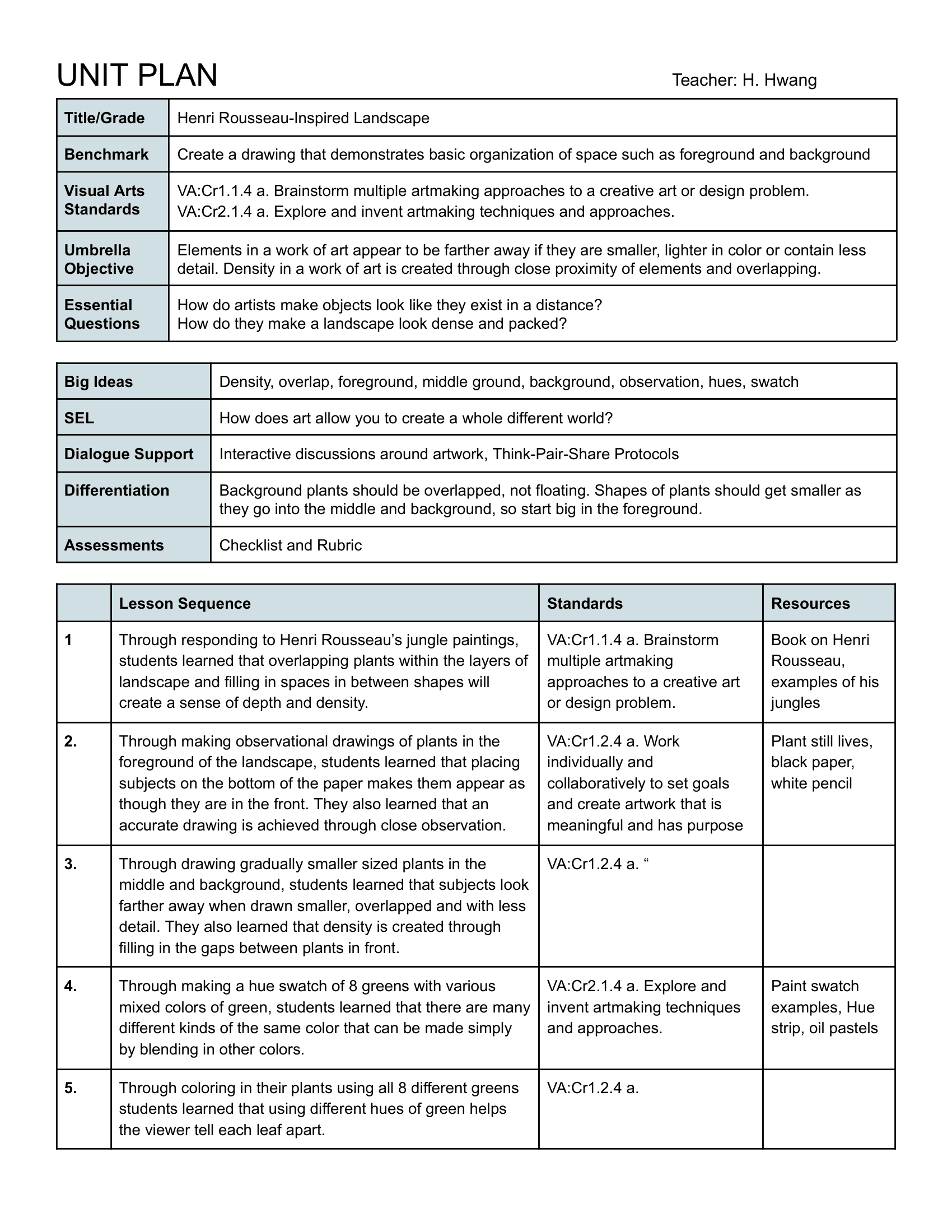
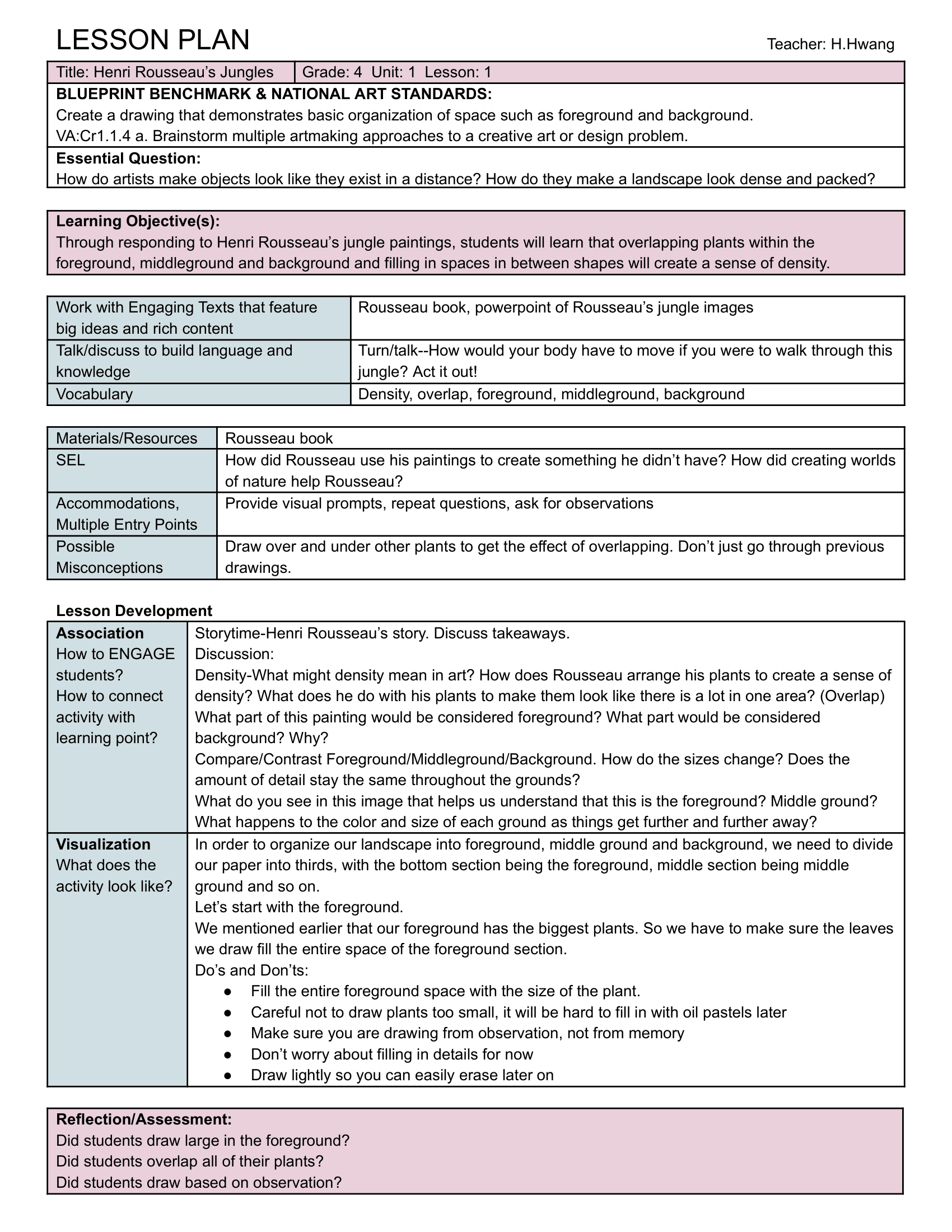
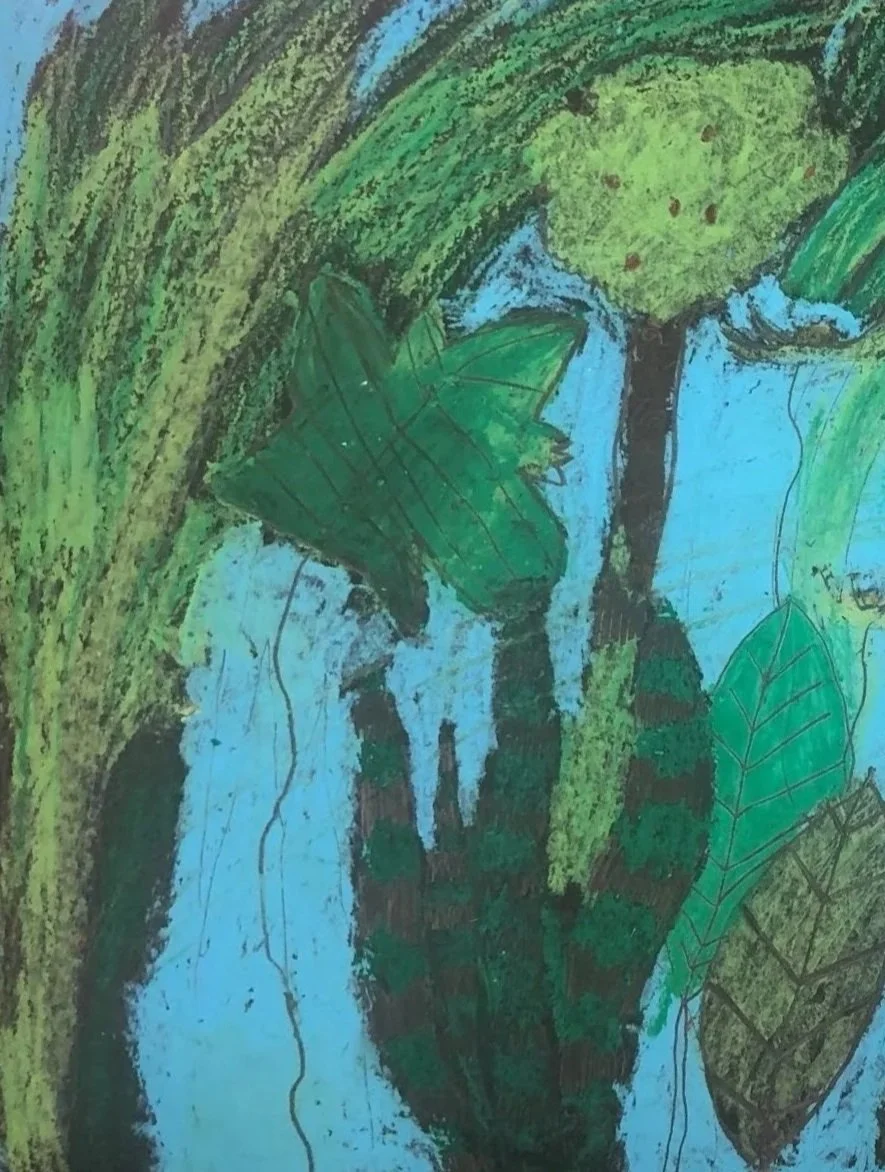
In this perspective landscape lesson, students explore the concepts of foreground, middle ground and background through the imaginative jungles paintings of Henri Rousseau. Students closely observe how Rousseau organized space within his dense and layered compositions by placing larger forms in the foreground, medium-sized elements in the middle ground, and smaller details in the distance to create depth and perspective.
Through inquiry-based discussions of overlapping shapes, varied shades of green that differentiate the plants, and the way visual elements appear to recede into space, students develop an understanding of how artists create the illusion of depth on a flat surface.
This lesson is paired with a reading of "The Fantastic Jungles of Henri Rousseau,” allowing students to connect art history, storytelling and visual analysis while inspiring them to create richly layered jungle environments of their own.
Part 2
Foreground, Middle ground, Background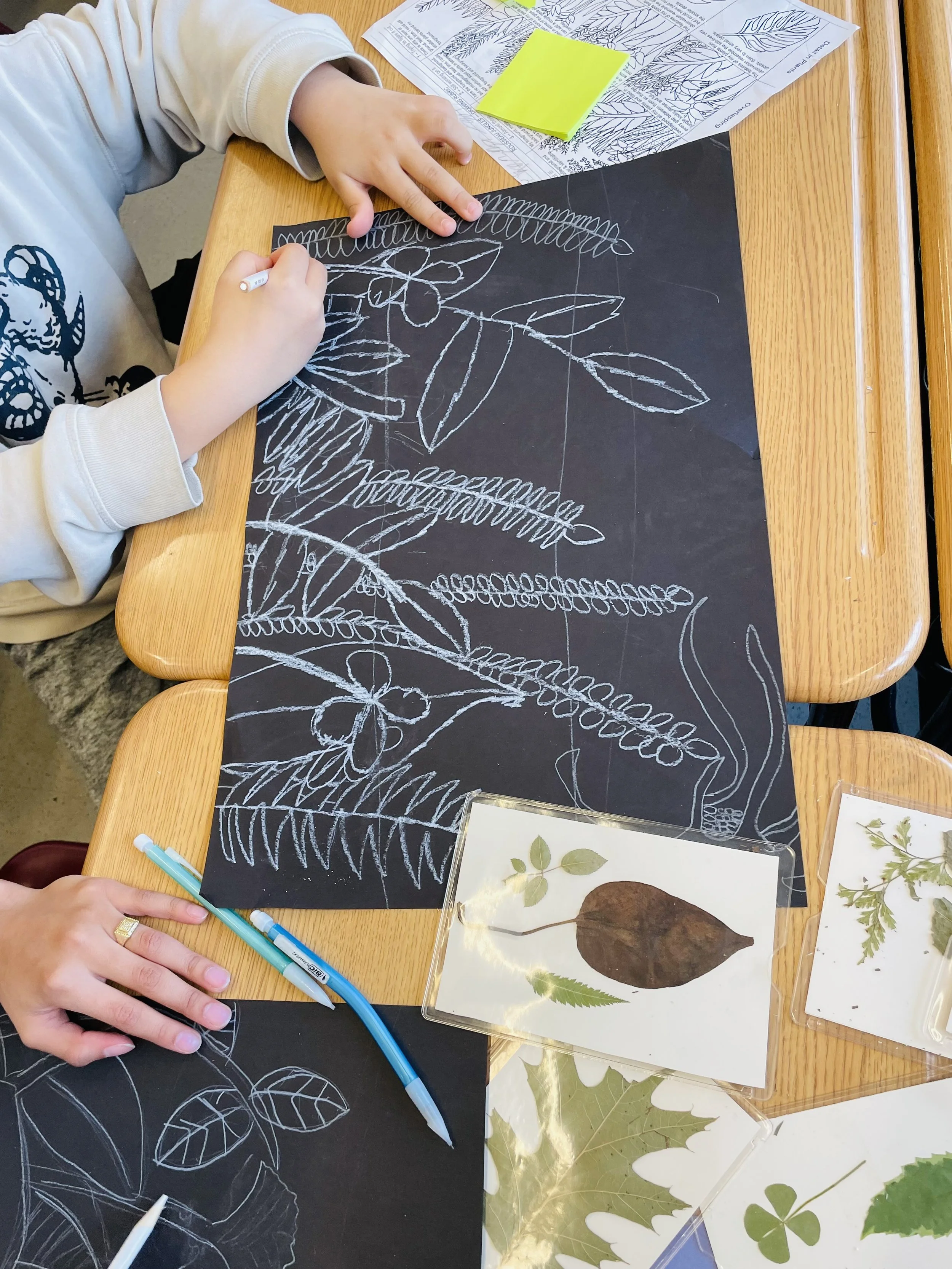
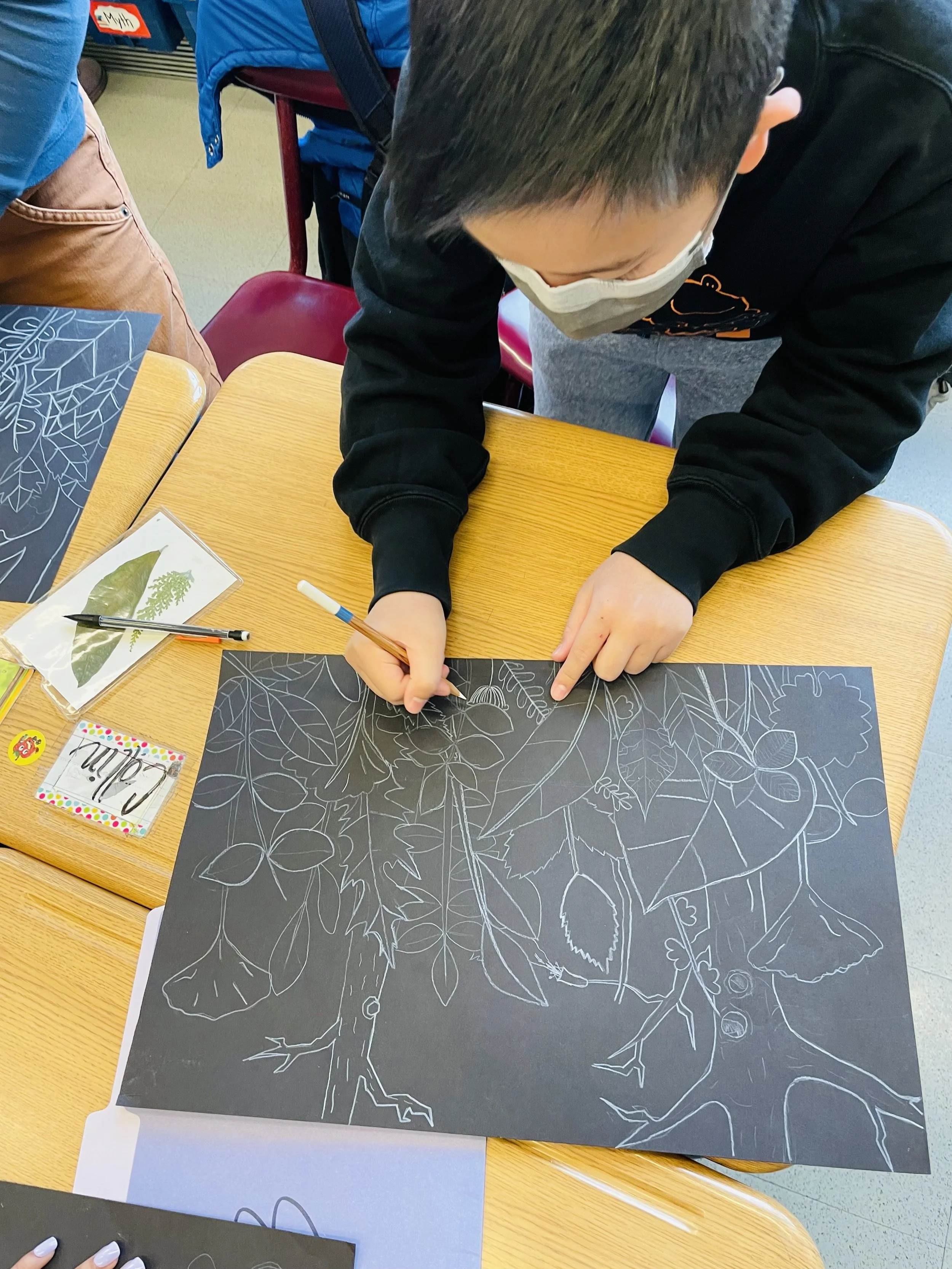
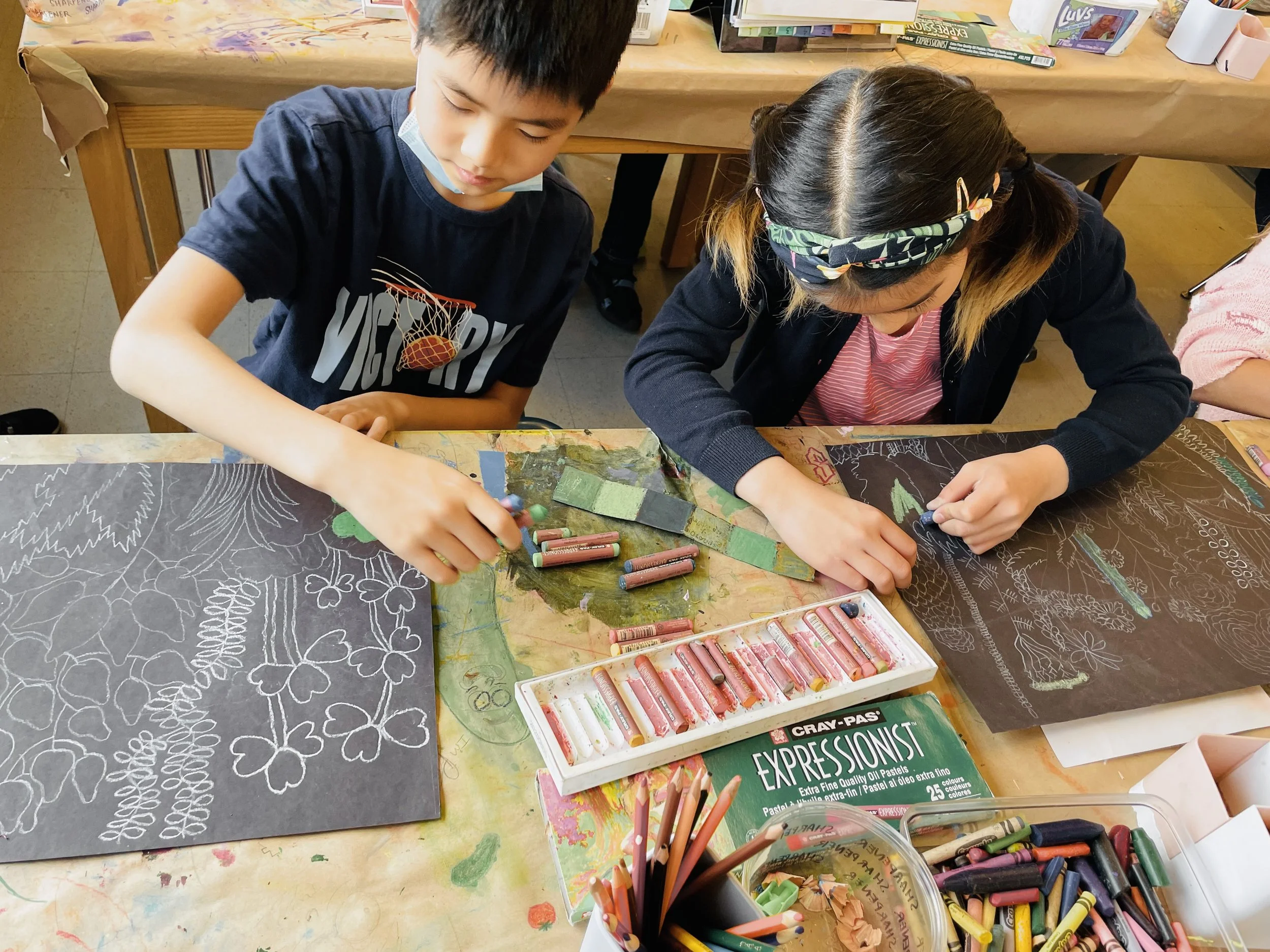
As students continued developing their jungle landscapes inspired by Henri Rousseau, they deepened their understanding of perspective and spatial depth through observational drawing and layering techniques. Students learned that objects placed lower on the page appear closer to the viewer, while subjects drawn smaller, with fewer details create the illusion of distance in the middle and background. By carefully observing plants and natural forms, students practiced drawing from observation (of real plants in the classroom as well as dried leaves and pressed flowers) rather than assumption, strengthening both their visual awareness and representational skills.
They also explored how artists create a sense of density within a composition by filling gaps with overlapping foliage and experimenting with multiple shades of green to create rich, immersive jungle environments.
Part 3
Blending, Mixing, Gradating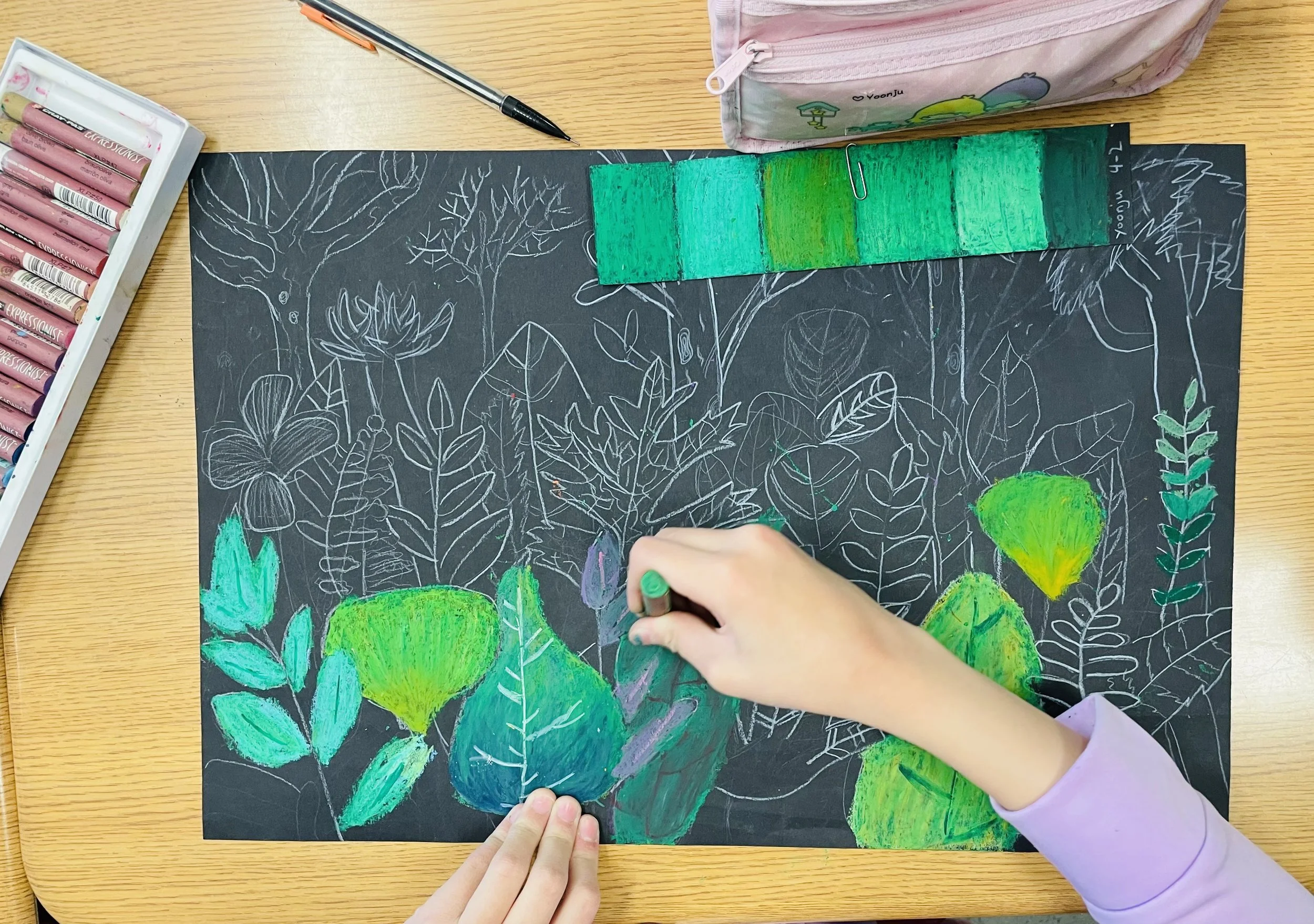
As students refined their jungle compositions, they explored color theory by creating hue swatches of multiple shades of green. Through mixing colors, students discovered that a single color can have many variations and learned how subtle changes in hue can create greater realism and visual interest within a work of art.
Students then applied these custom-mixed greens throughout their jungle scenes, using a variety of tones to help separate overlapping leaves and plants so that each shape remained visible within the dense environment.
This process strengthened students’ understanding of color mixing, visual contrast, and how artists use variation in color to create depth, clarity and complexity within a composition.
Reinforcing Understanding and Cultivating Dialogue
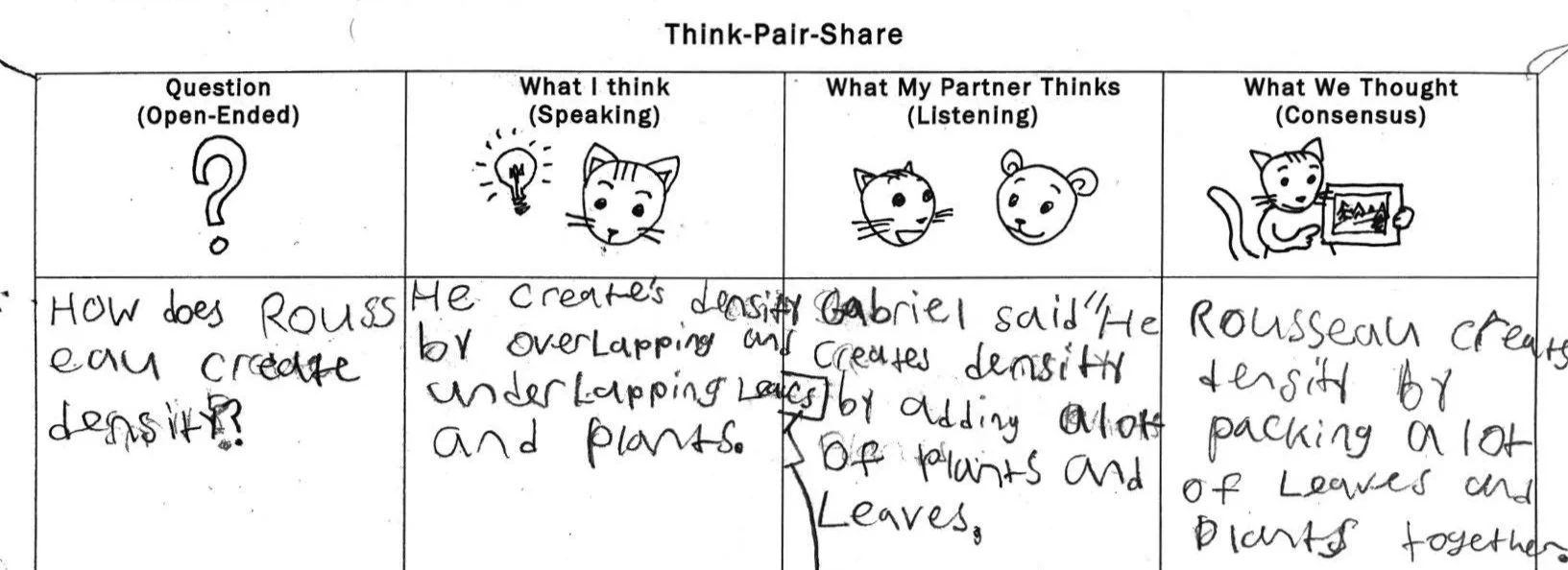
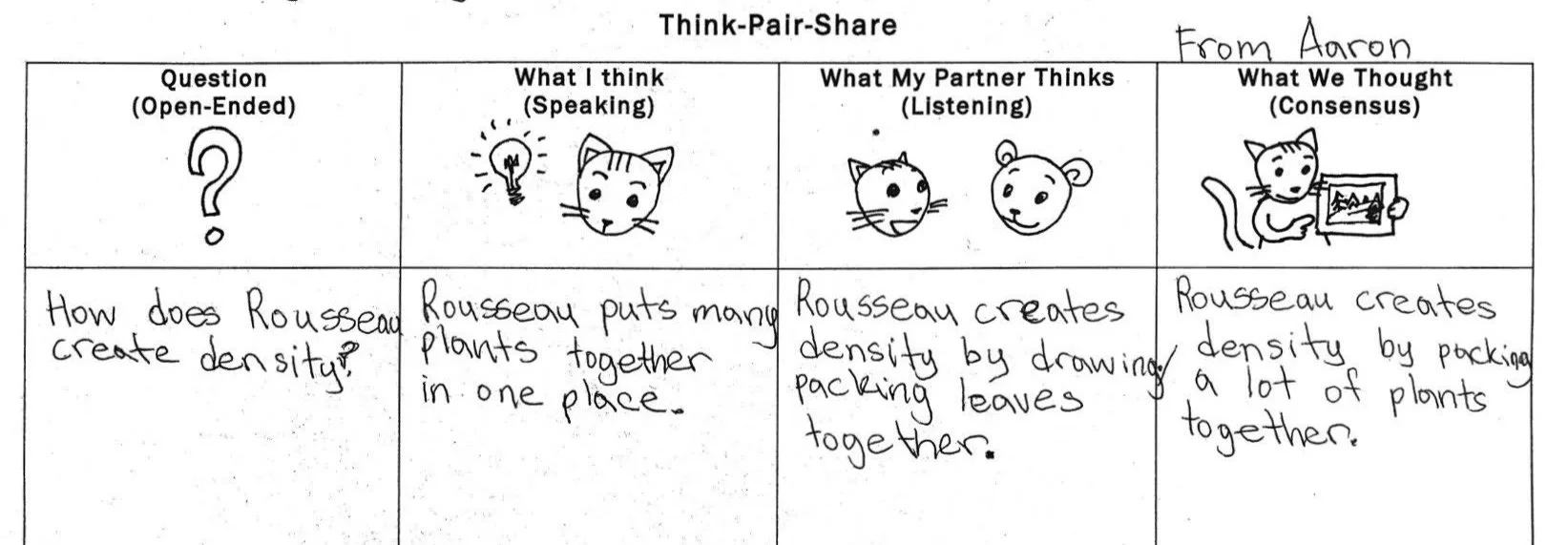
One of the major concepts we learned for this unit was the idea of creating density in an artwork using overlapping and detail.
Students participated in a think-pair-share discussion responding to the question, “How does Henri Rousseau create density in his paintings?”
This inquiry encouraged students to develop independent observations, then build understanding through peer discussion, helping strengthen visual analysis skills, confidence in sharing ideas, and collaborative dialogue in the classroom.
Assessment Tools
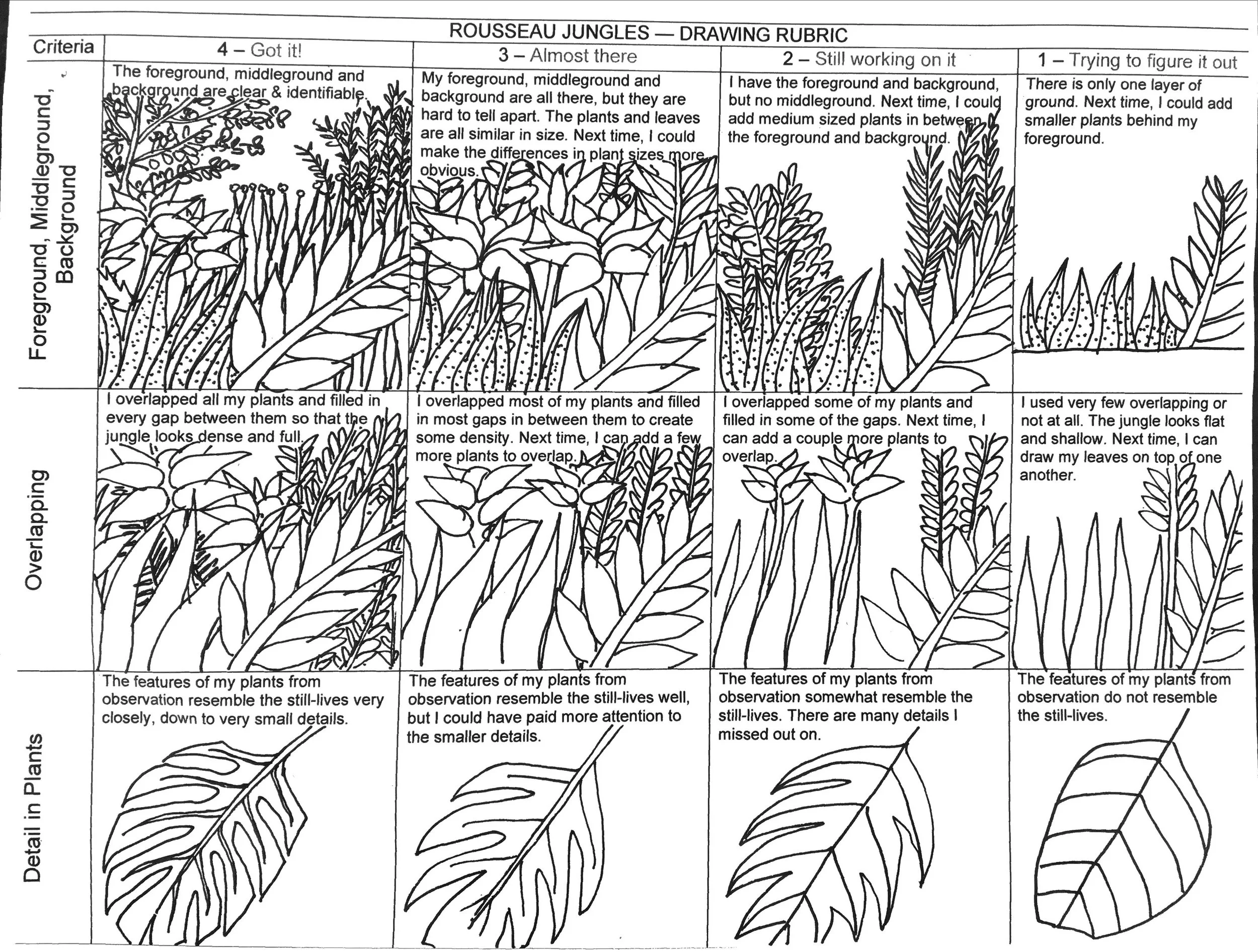
While teaching this lesson, I noticed that students’ jungles started becoming a jumble of amorphous green shapes towards the end. This happened for a few different reasons:
They were not fully coloring in their leaves
They did not mix and use different hues from their custom swatches and instead relying on the premade green pastel from the box
Because the compositions were so densely layered with overlapping plants, the lack of color variation and unfinished coloring caused many artworks to appear visually cluttered, making it difficult to distinguish one plant from another.
In response, I created a supplemental checklist to guide students through specific strategies for differentiating leaves, such as varying greens, fully filling in shapes and outlining where needed.
This additional support helped students create landscapes that felt visually organized, readable and rich with depth rather than a flat collection of greens.
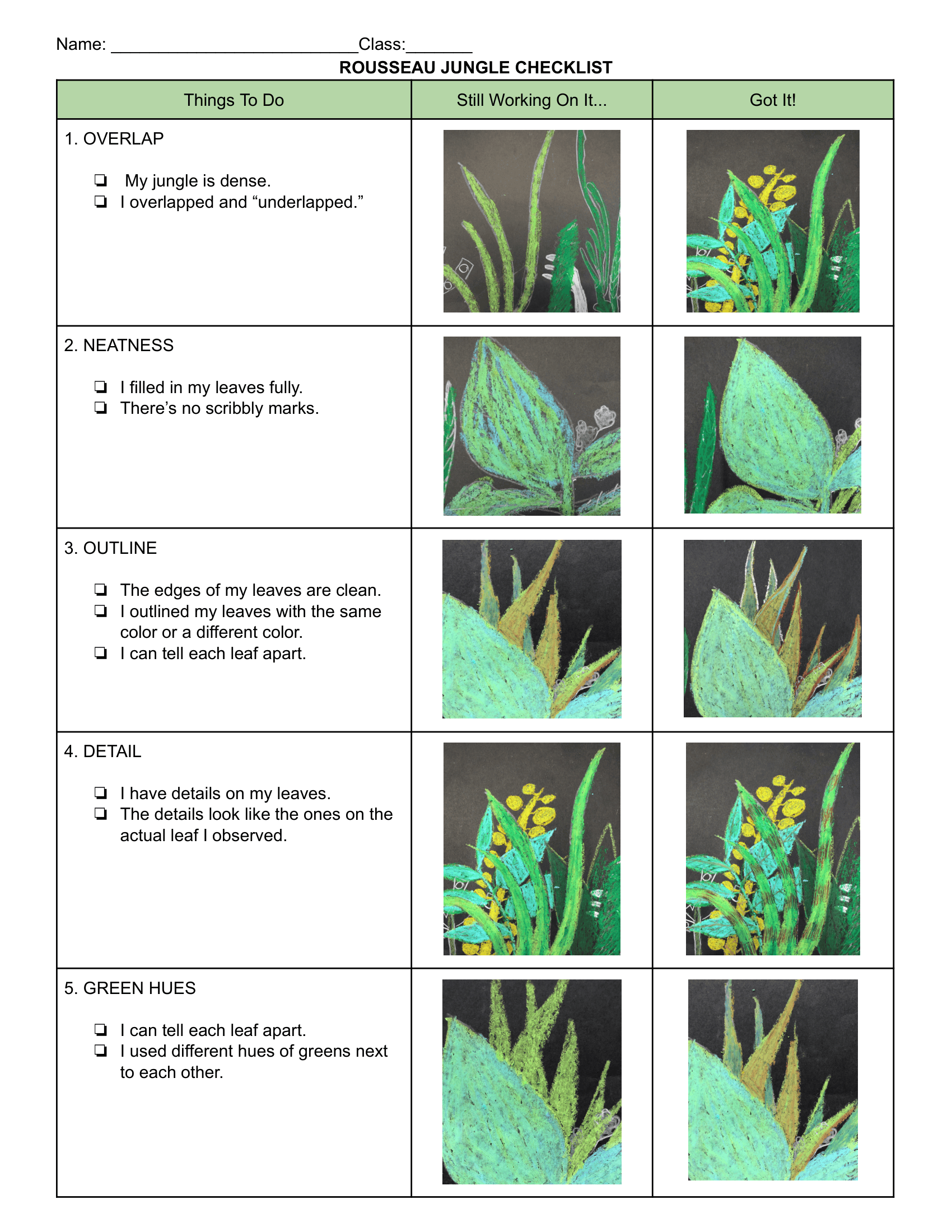
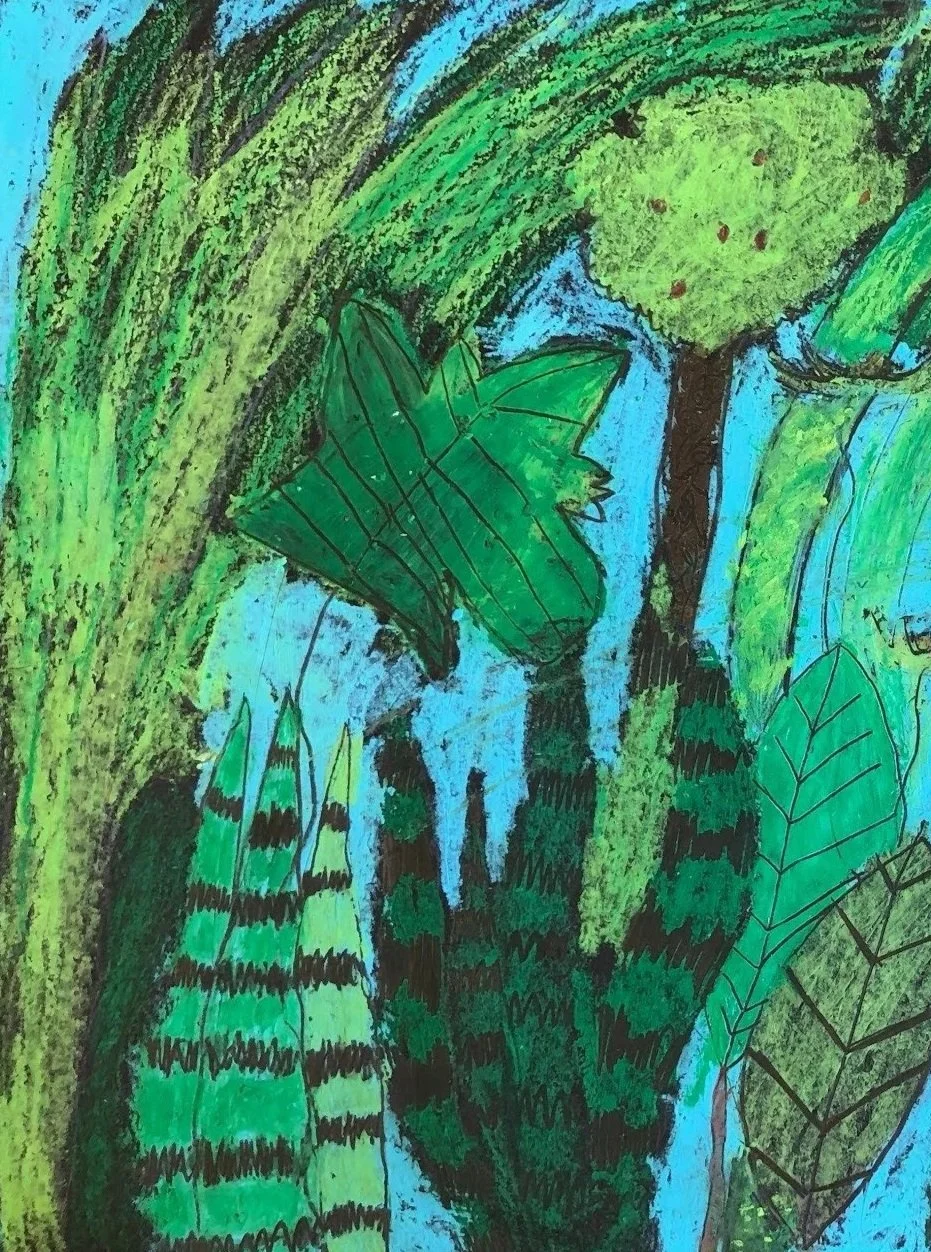
After being given the checklist, this student created a better sense of density by adding plants in between existing plants.
He also differentiated plants by coloring in the new plants he added using mixed hues rather than the green straight out of the box.
Value Studies
By 7th grade
Lesson Sequence
Part 1
Return to Observation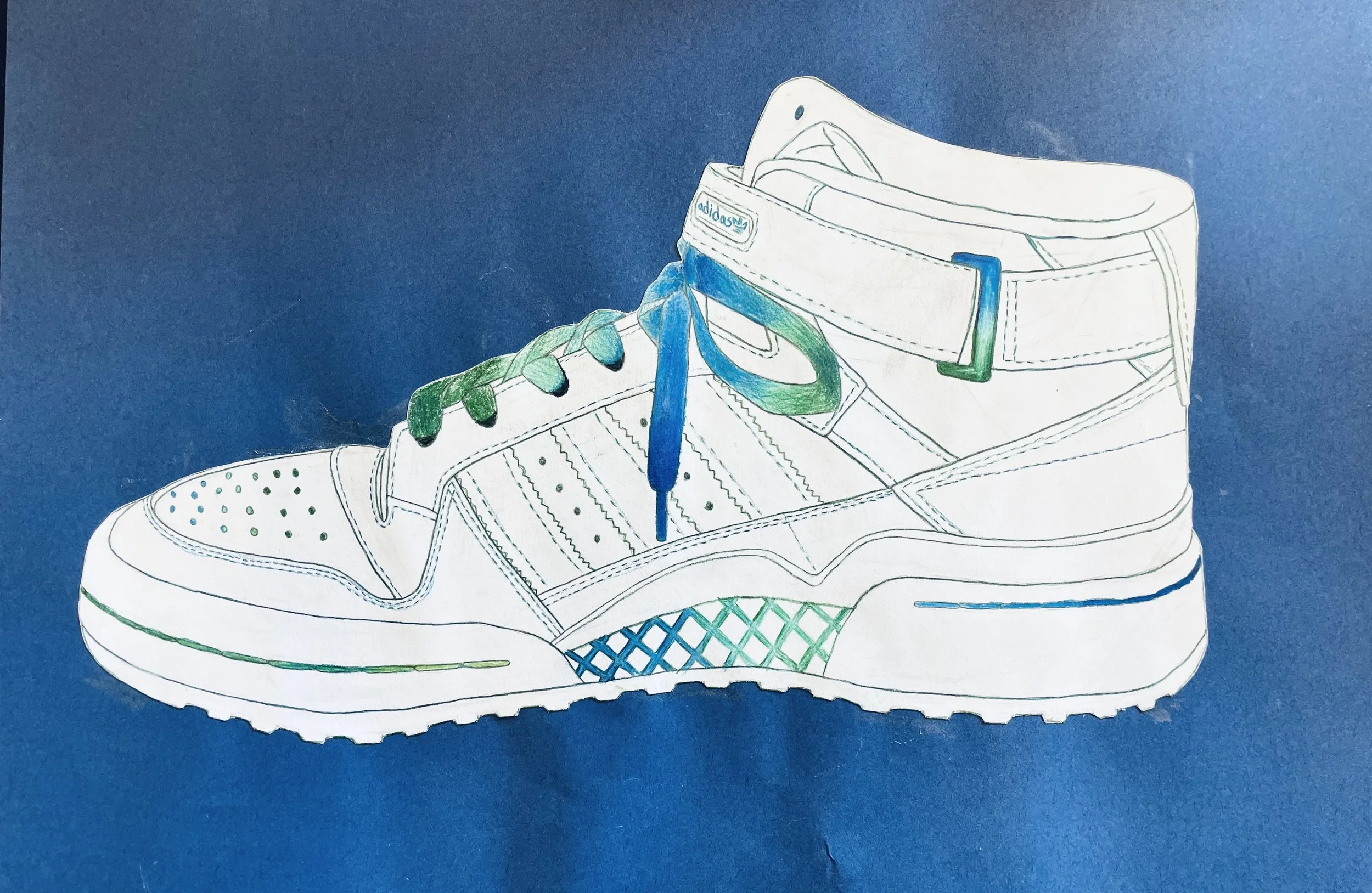
In this lesson, students revisit the foundations of observational drawing through the personally meaningful subject of their own shoes. By placing their shoes on the table and studying them closely, students practice drawing representationally while observing proportions, contours, textures and form. The goal here is to capture the proportions and details of the shoe accurately.
Part 2
Still-Life with Value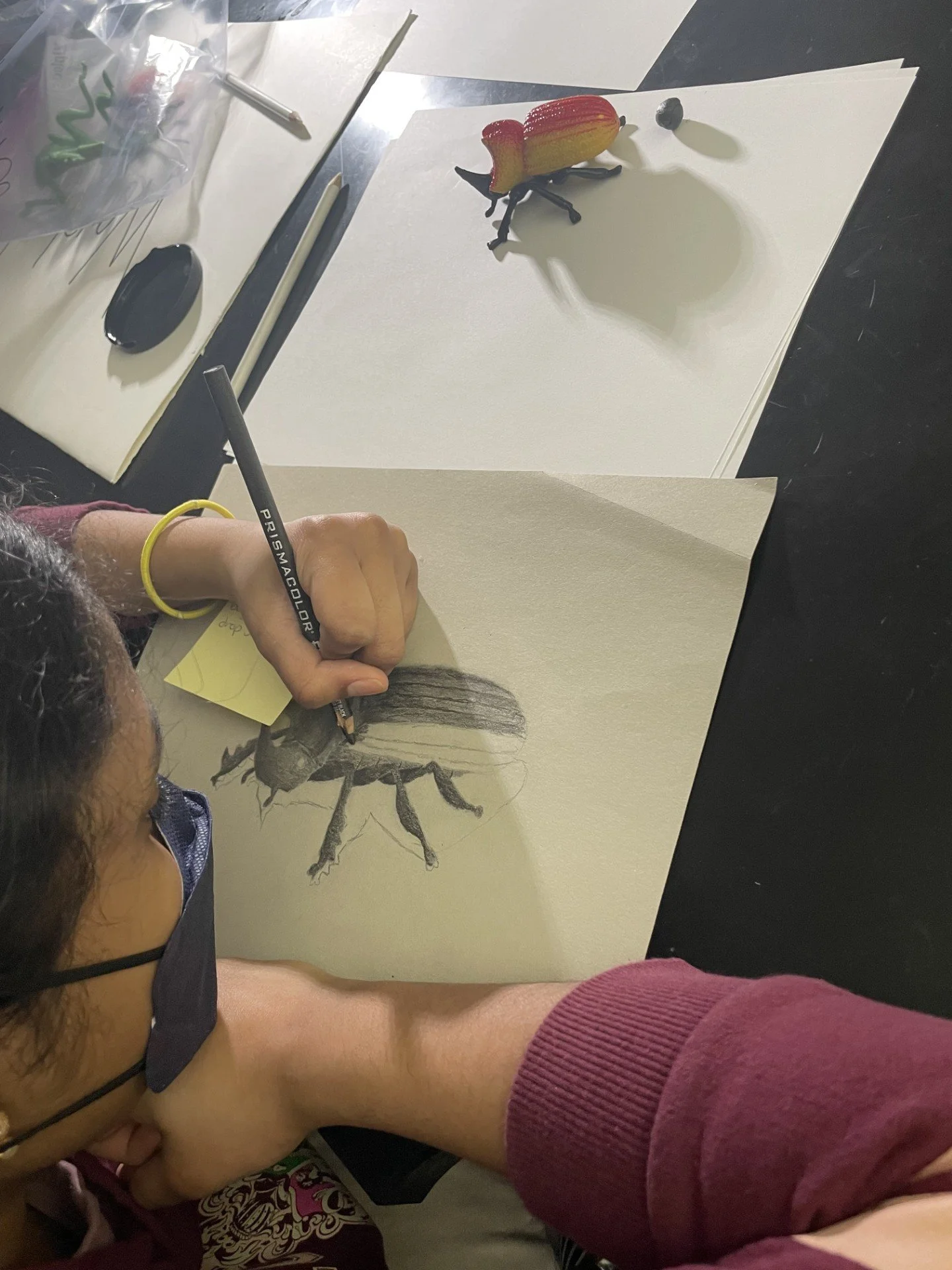
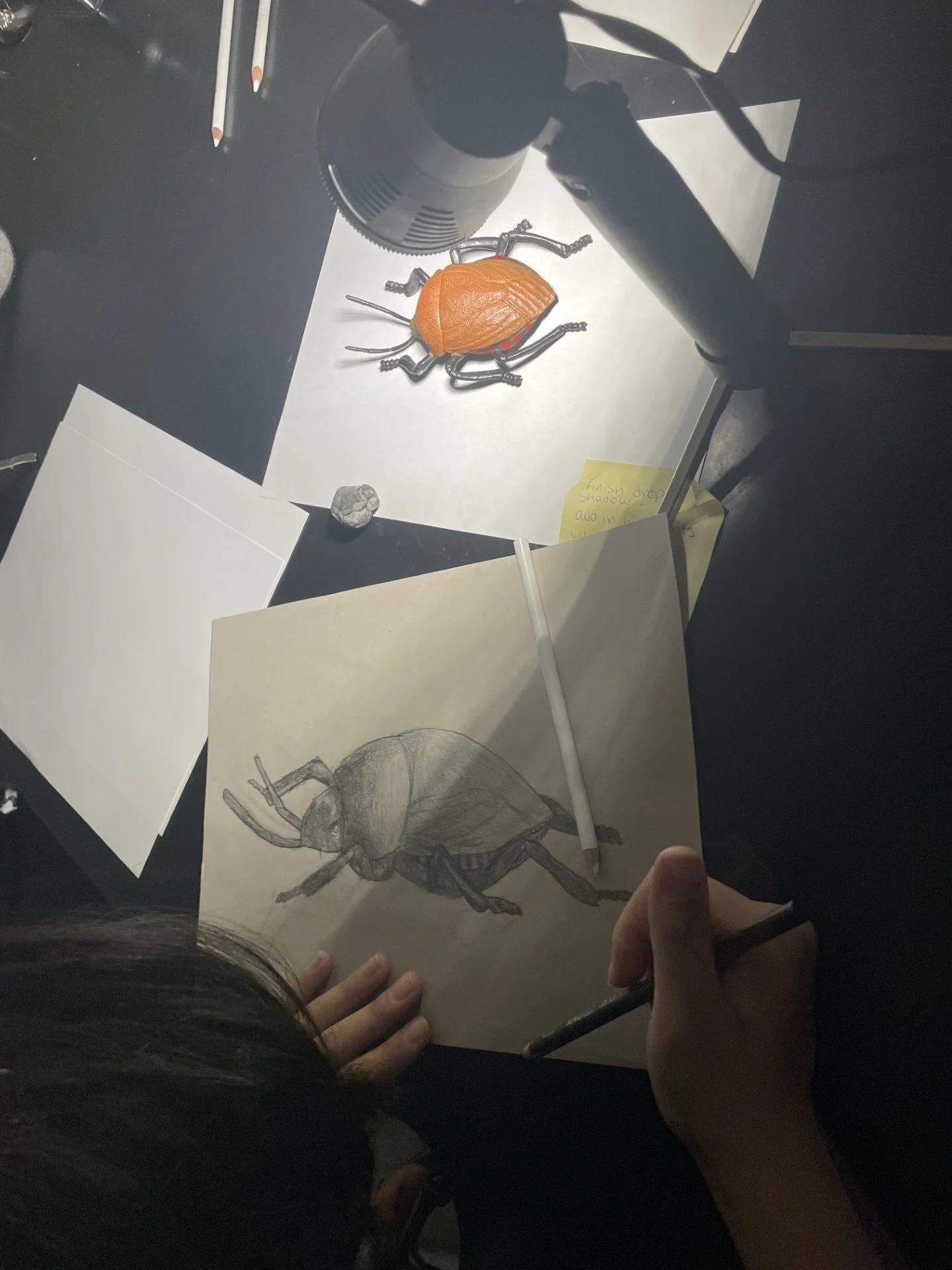
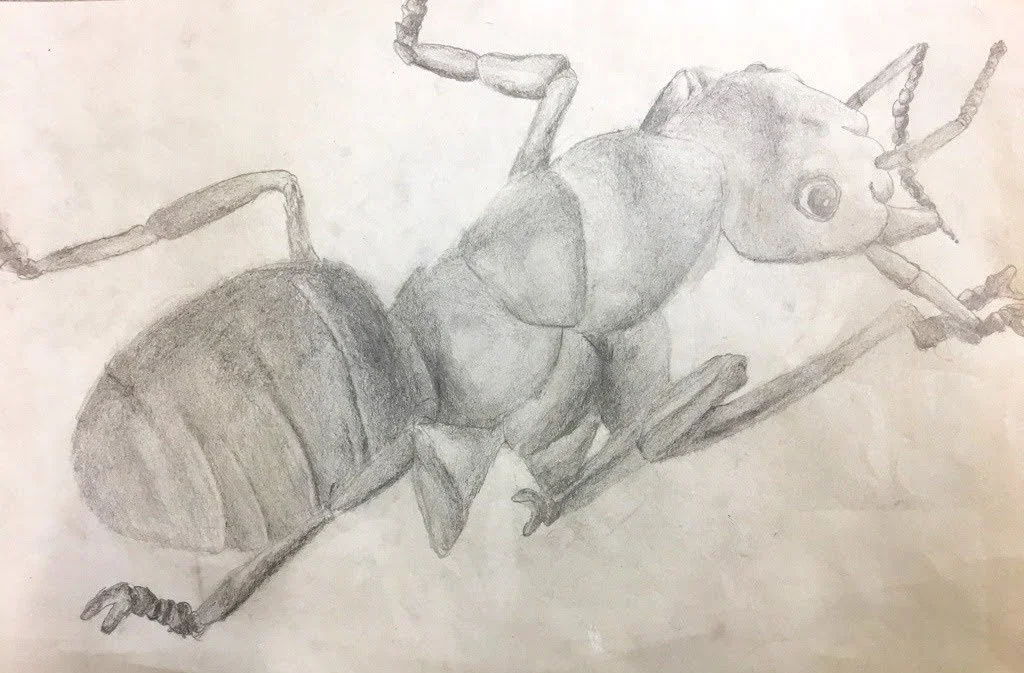
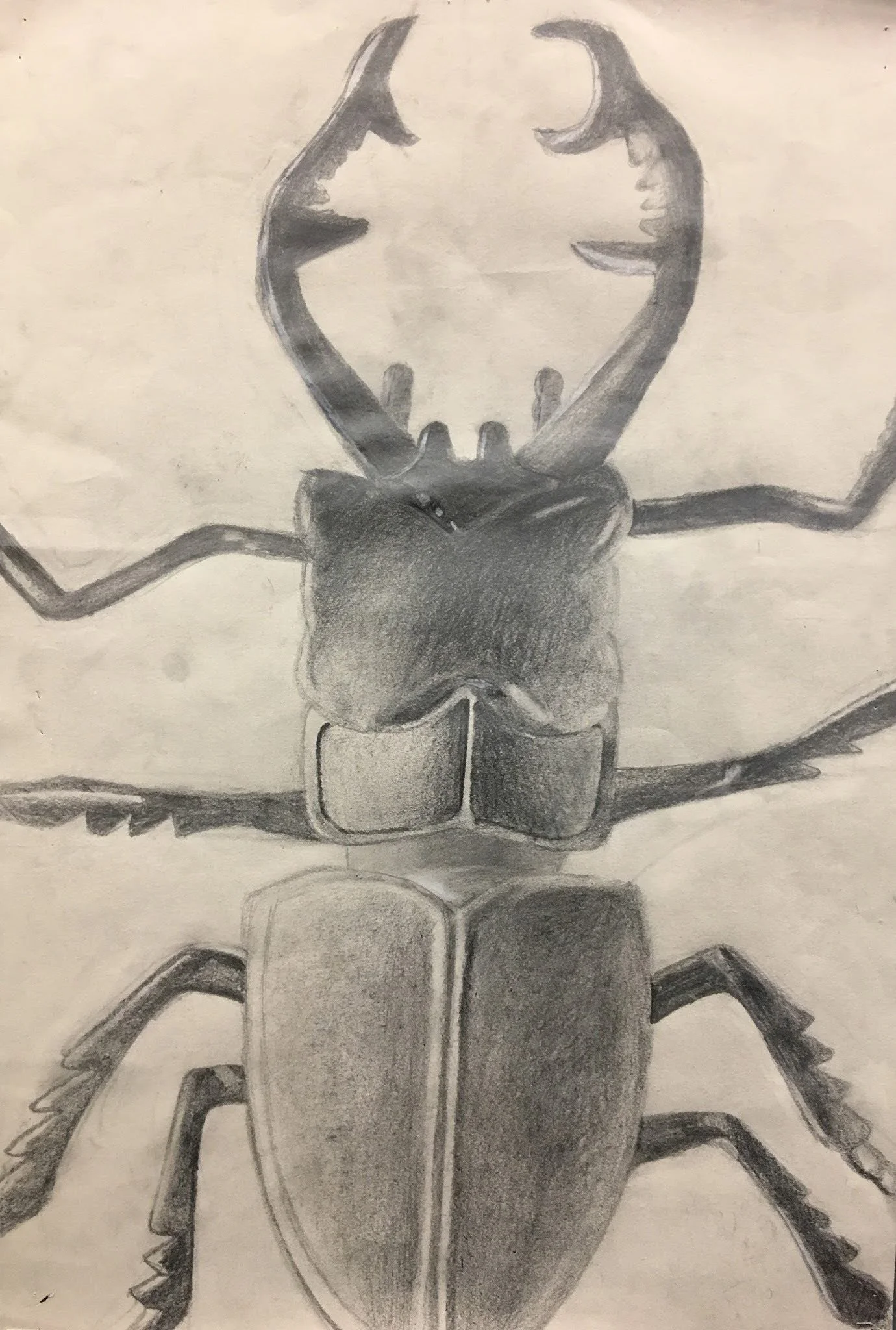
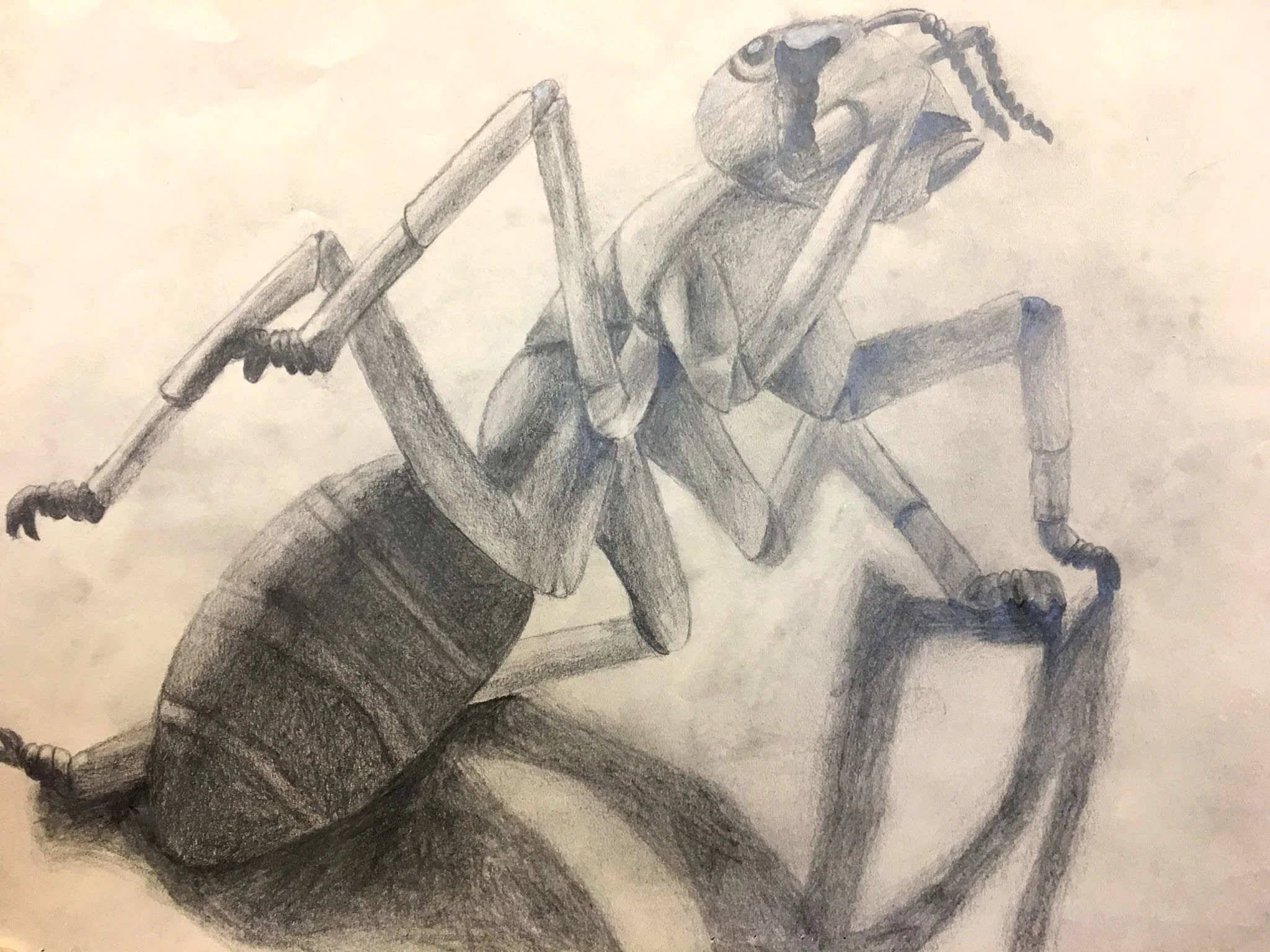
In this value study, students deepen their understanding of light and shadow by first creating a value scale to explore the full range of tones from light to dark. Students then apply this knowledge to an observational drawing of a still-life object—in this case, a model insect—lit with a directed light source that creates dramatic highlights and shadows.
Beginning with an accurate contour drawing, students carefully study how light interacts with the form and use shading techniques to transform a flat drawing into the illusion of a three-dimensional object.
The focus of the lesson is on observing subtle shifts in value and accurately placing light and dark areas to create a lifelike representation that appears to emerge from the page.
Part 3
Identity Portraits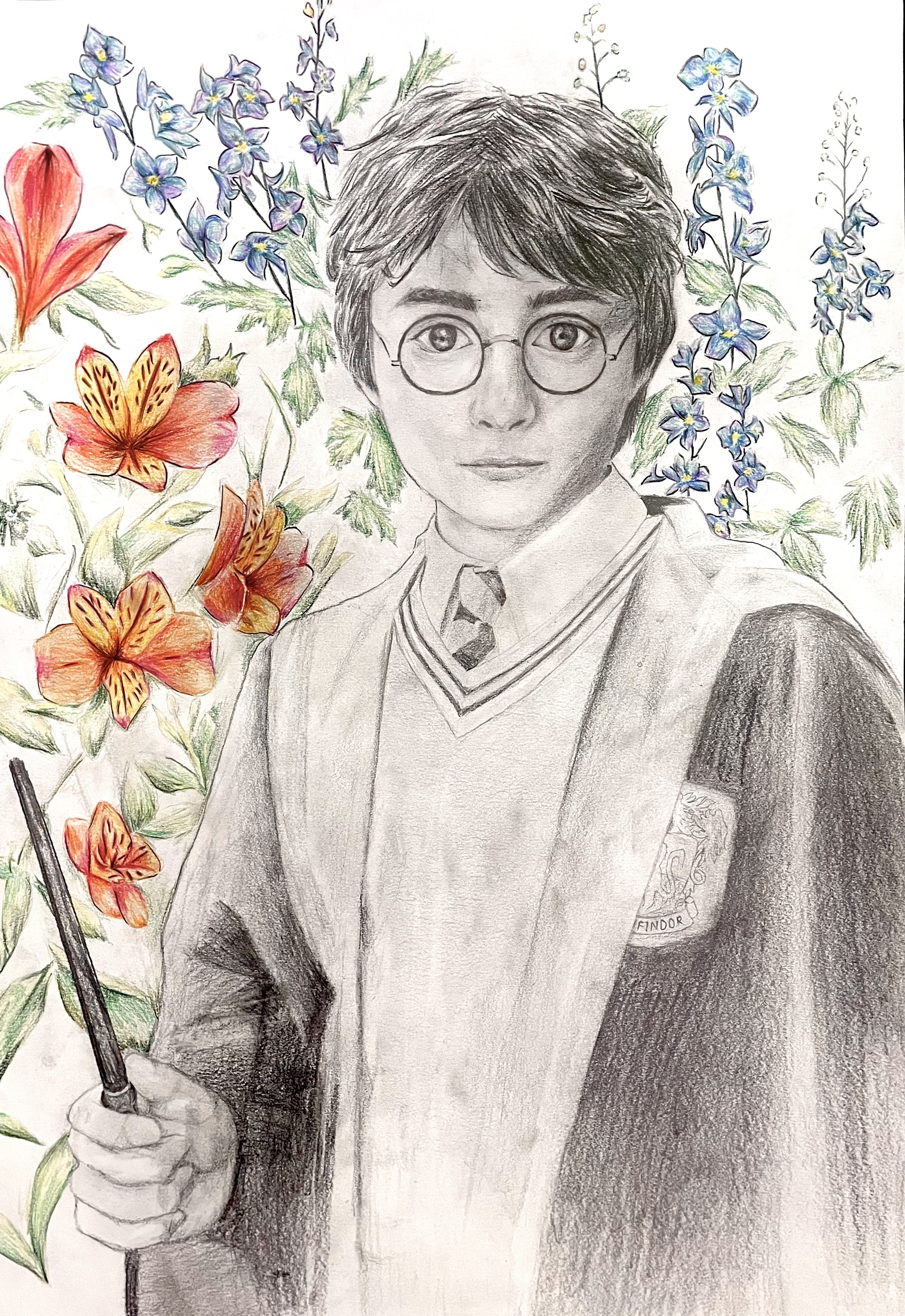
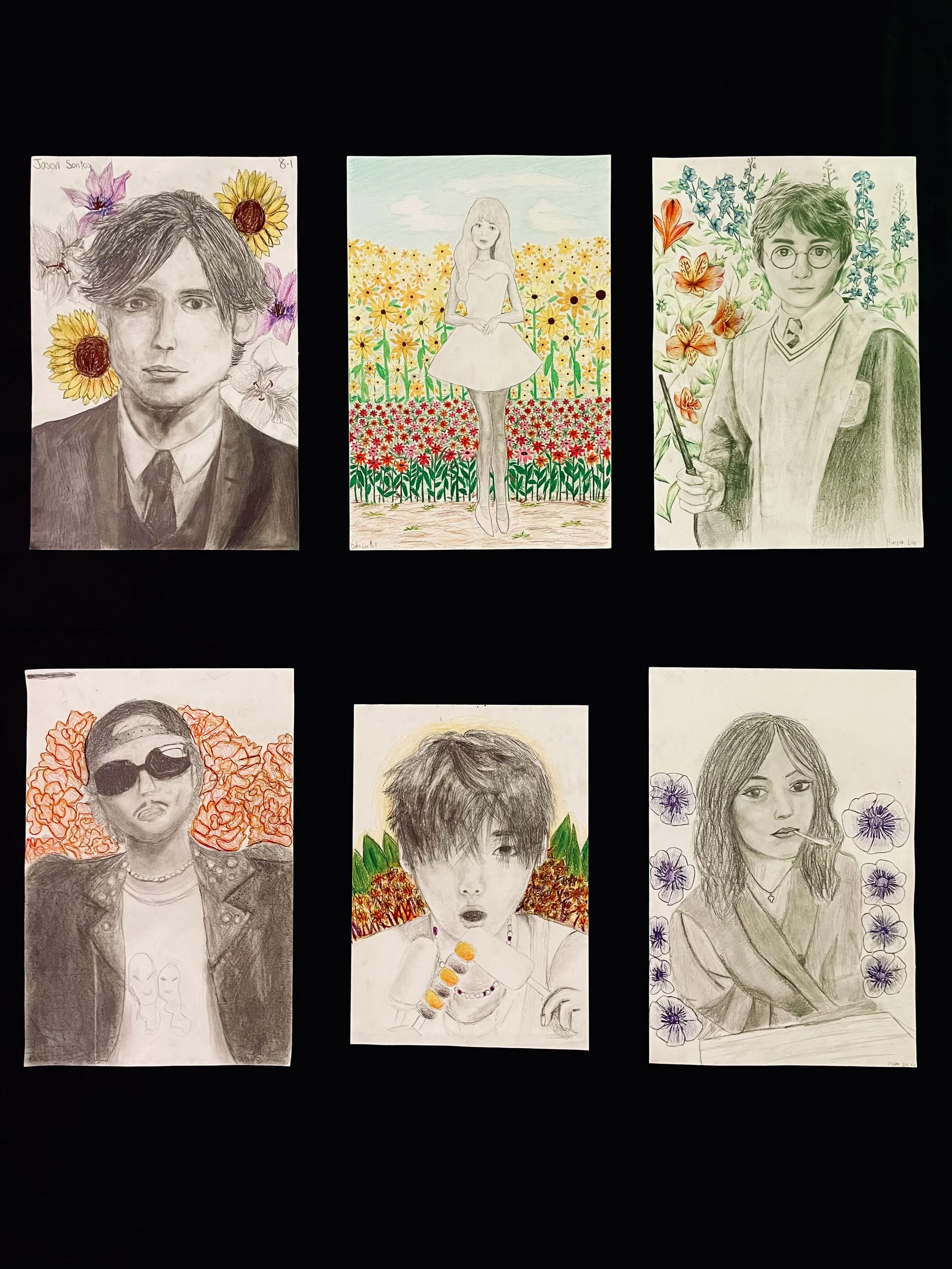
Inspired by the portrait work of Kehinde Wiley, students explored how posture, value and symbolism can communicate identity and personal narrative. Through inquiry-based discussions, students analyzed the way Wiley positions his subjects with strength and presence, particularly in works such as his portrait of President Obama, where floral imagery in the background carries symbolic meaning connected to the subject’s history.
Students then selected or photographed a person who was influential to them and created a grayscale observational portrait focused on capturing accurate proportions and smooth gradations of value. Special attention was given to how texture differs between hair, skin and fabric.
To complete the work, students designed patterned floral backgrounds inspired by Wiley’s compositions, choosing flowers that symbolized aspects of the subject’s identity. This lesson combined technical value studies with storytelling, symbolism and personal connection.
Assessment Tools
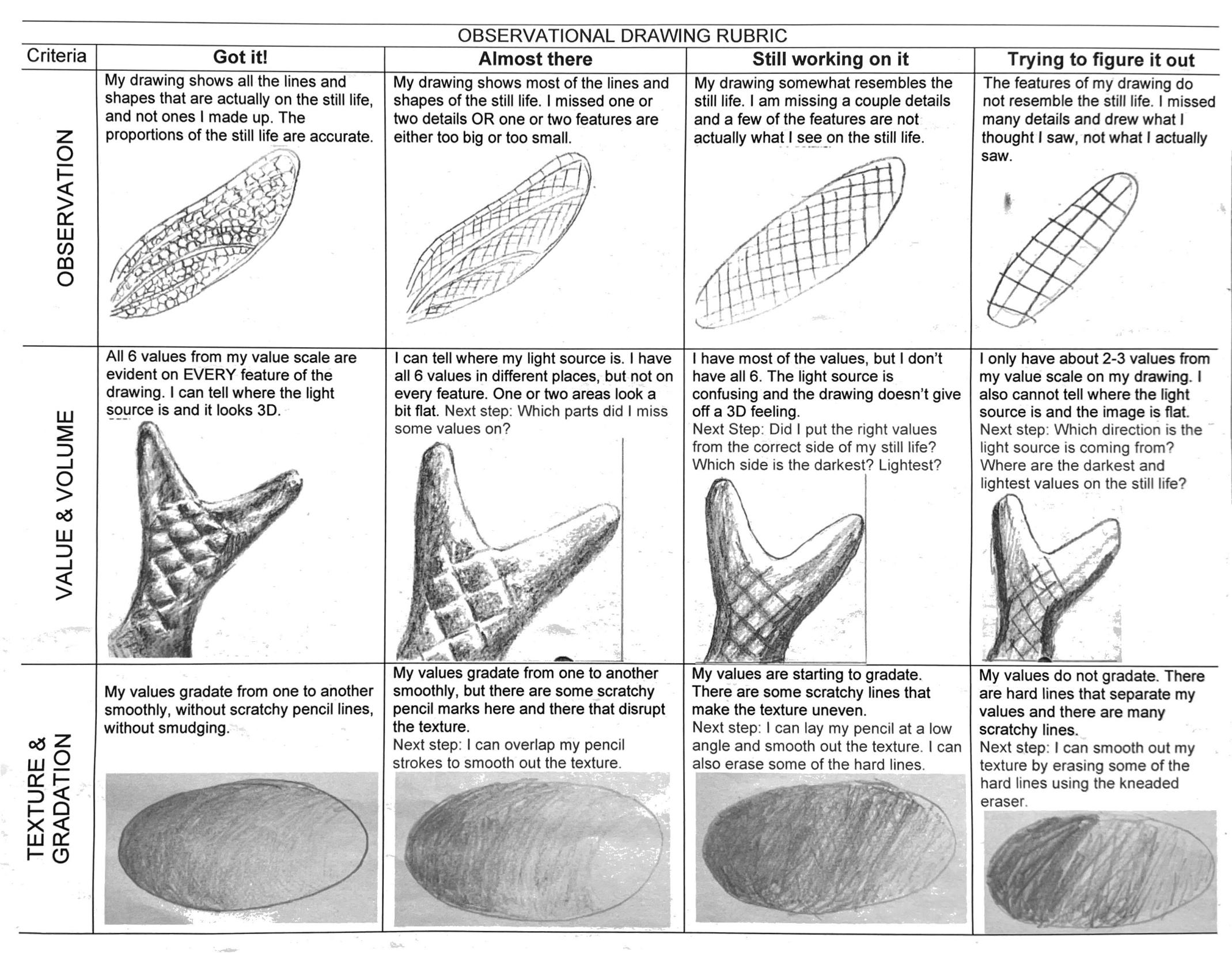
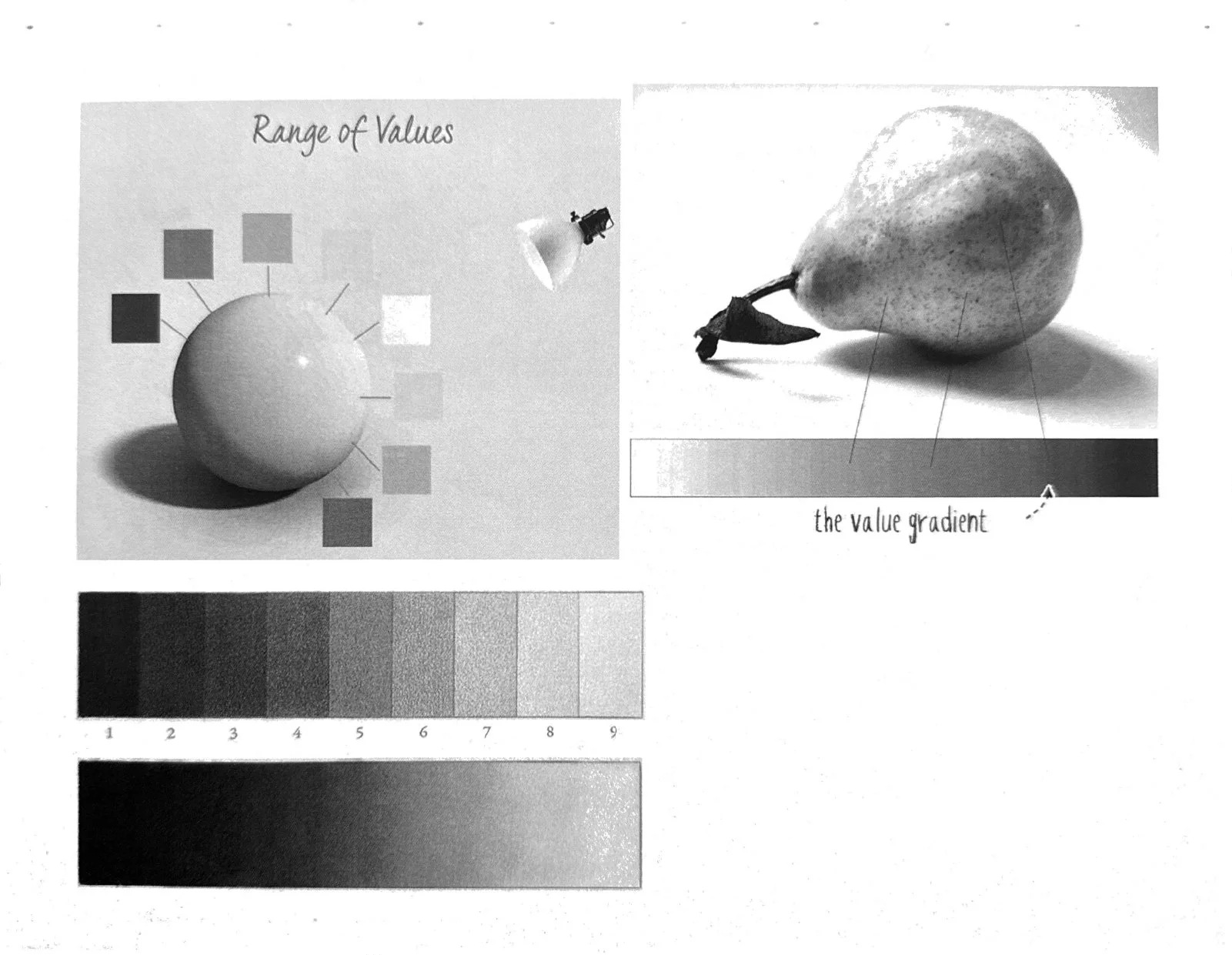
The biggest challenge for students throughout this project was creating smooth gradations between values, especially for the skin texture.
This rubric on the left originally had just “Observation” and “Value and Volume” as criteria, but I added “Texture and Gradation” after observing that students needed extra support in this area.
I also gave them a separate resource (below) on gradation and value to help them through this process.
Art Critiques
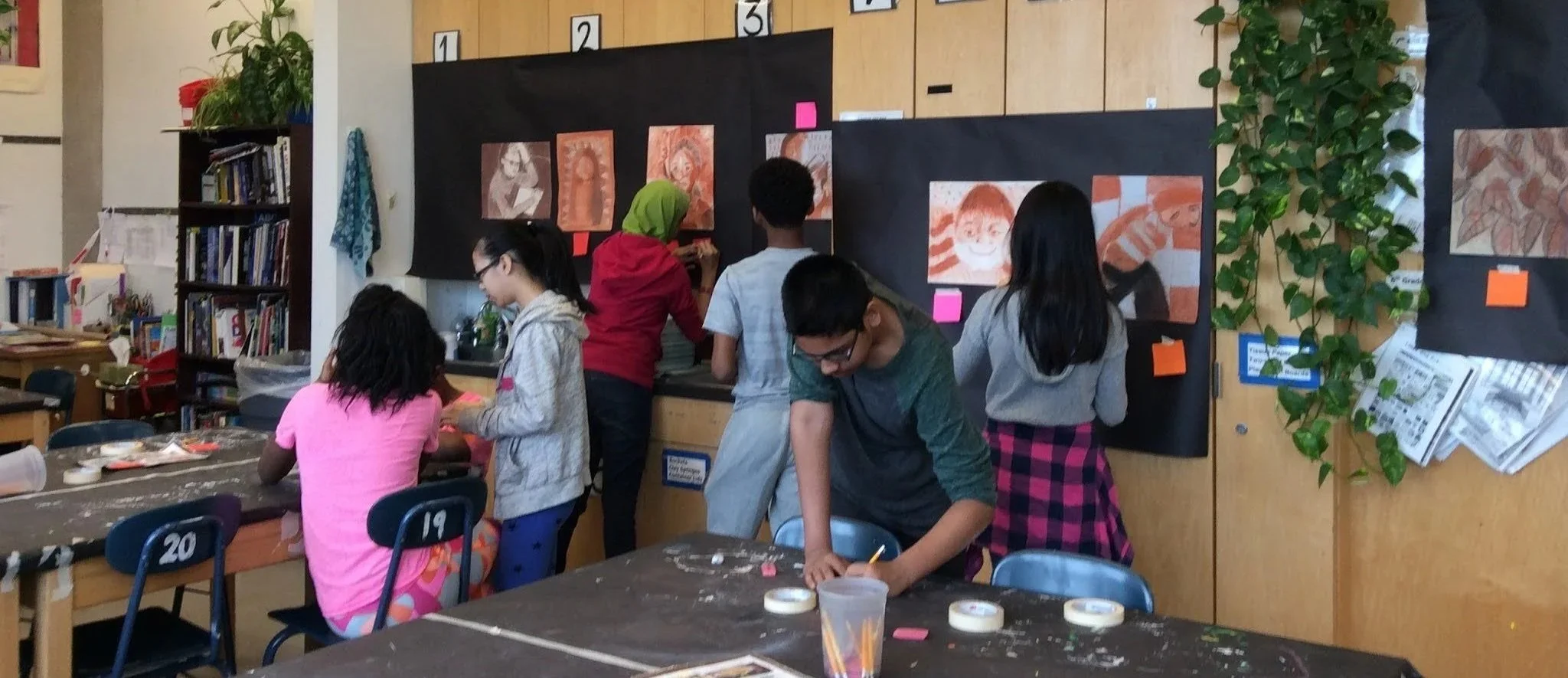
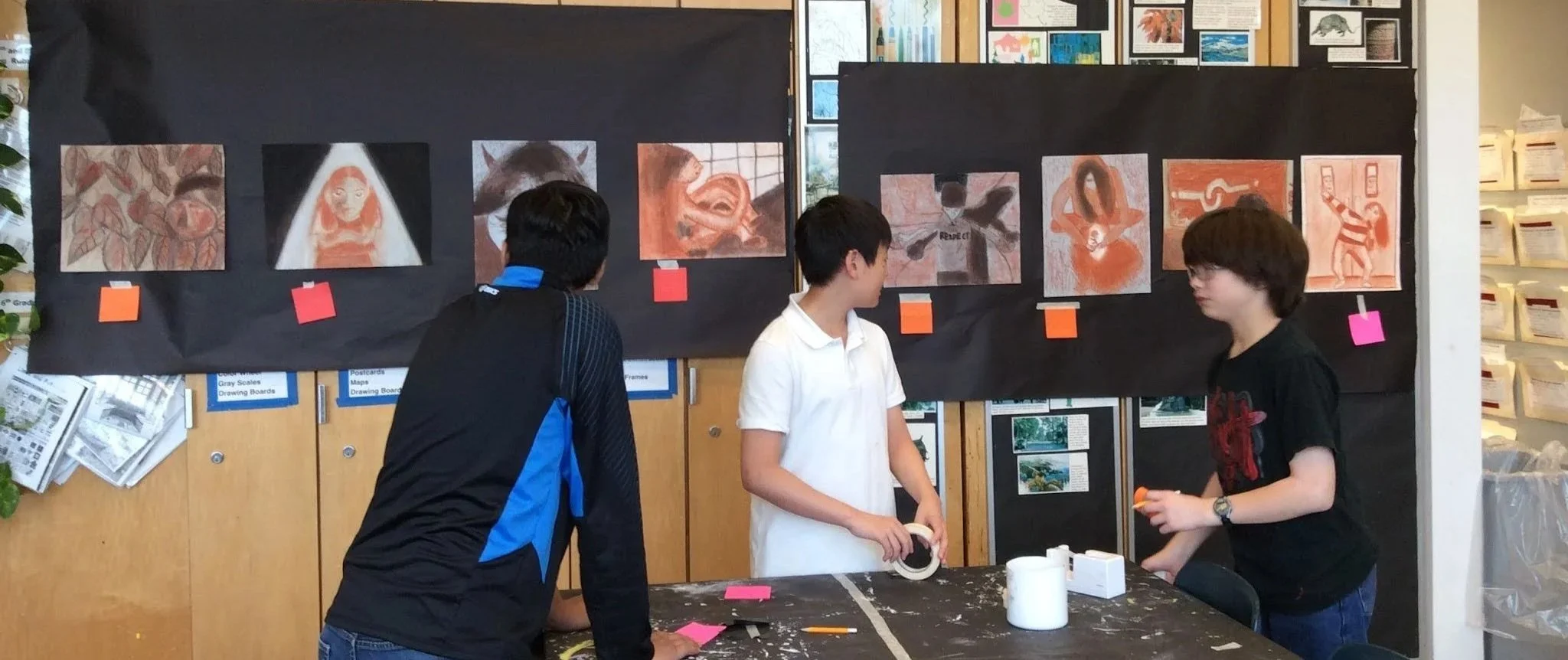
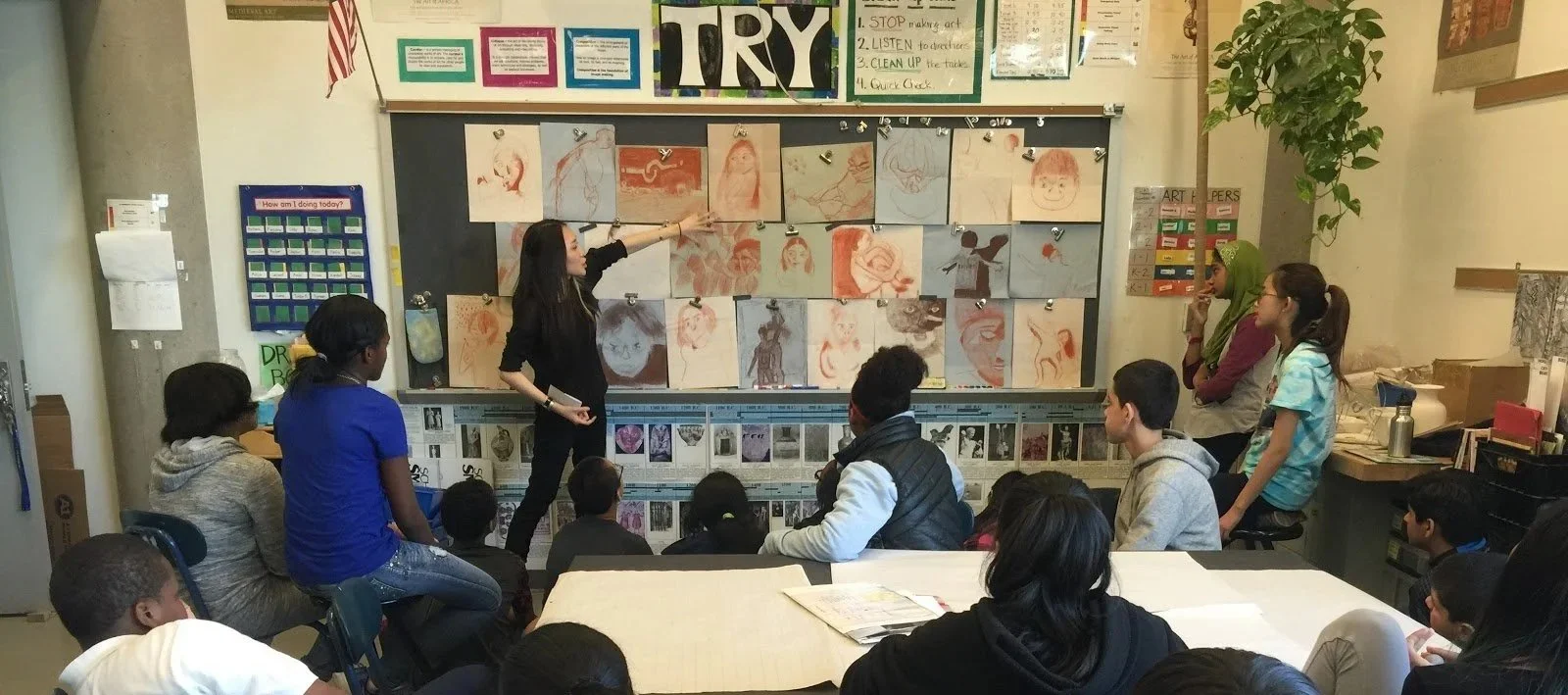
Art critiques provide students with opportunities to share their ideas, reflect on their artistic choices, and engage in meaningful dialogue about their work and the work of others.
For this project, students wrote feedback on post-it notes and left them by their peers’ art. Students then took this feedback and applied them to make improvements to their works.
Through the critique process, students learn how to give constructive feedback with empathy and clarity while also developing the confidence and resilience to receive feedback as part of their creative growth.
Assessment Tools
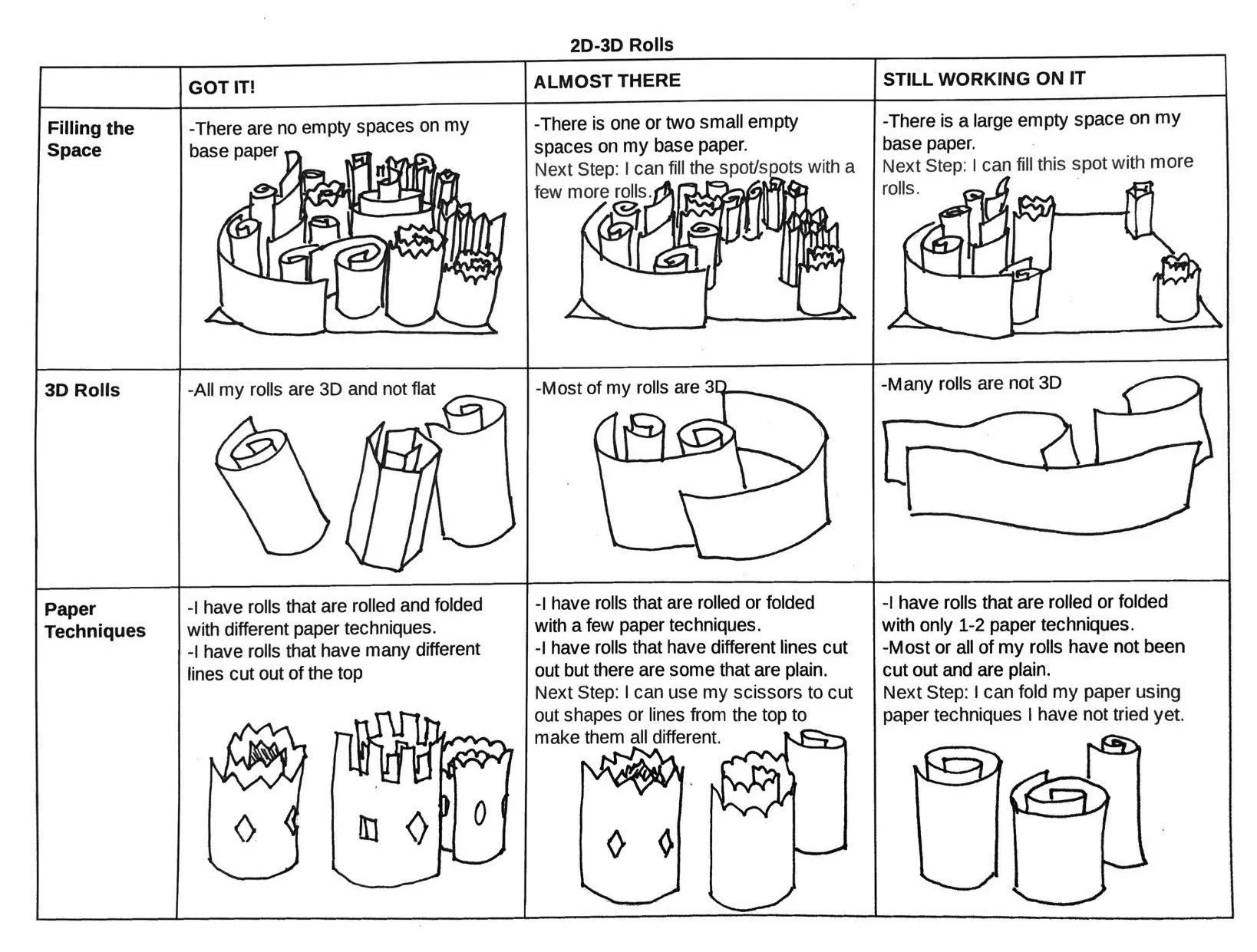
Assessment tools provide students with clear visual and conceptual expectations, helping them better understand both the artistic process and the goals of the project. By breaking complex skills into manageable components, these supports encourage self-reflection, problem-solving and independent decision-making throughout the creative process.
They also allow students to track their own growth over time, making progress more visible and helping them recognize how practice, revision, and observation contribute to artistic development.
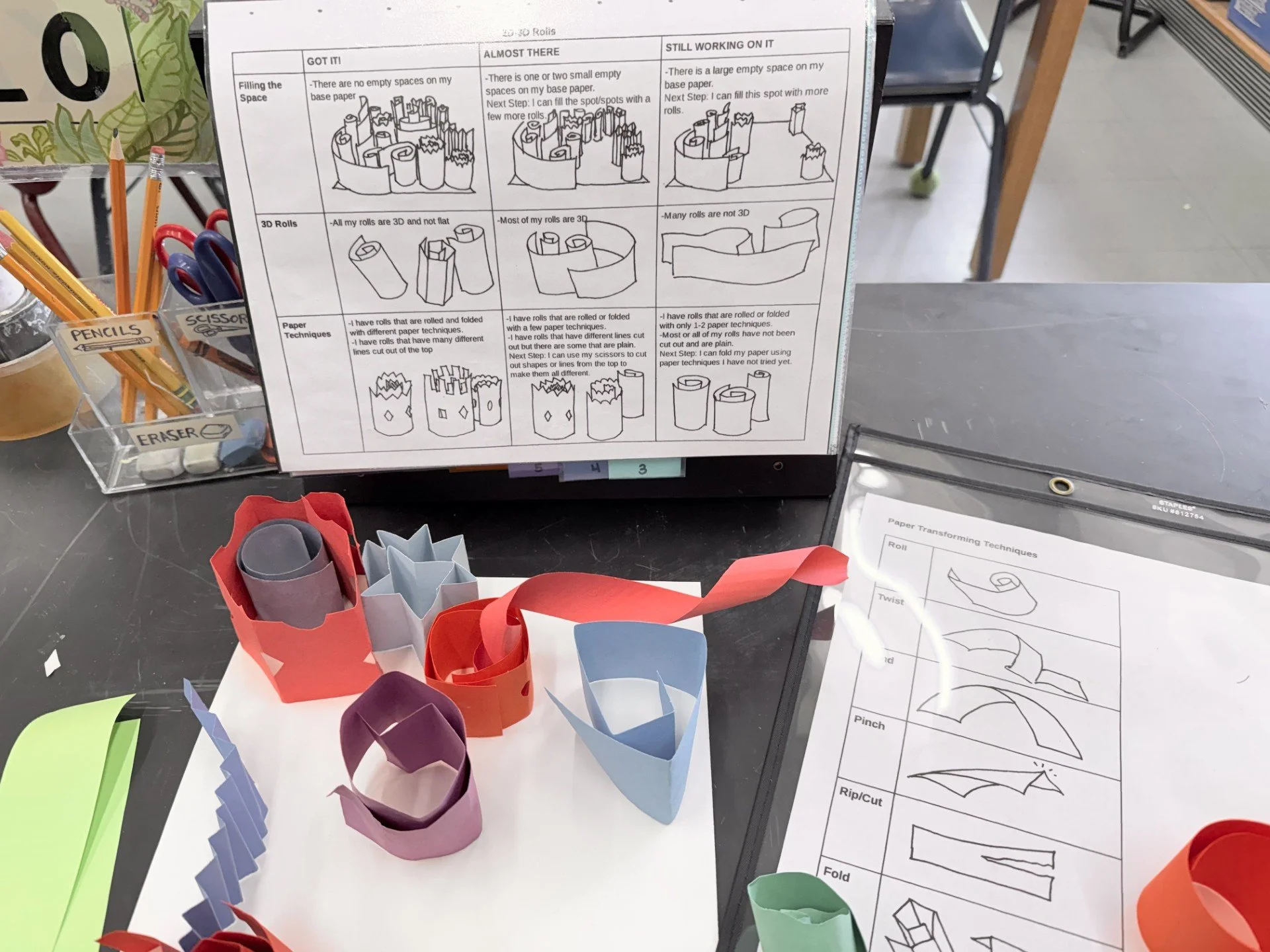
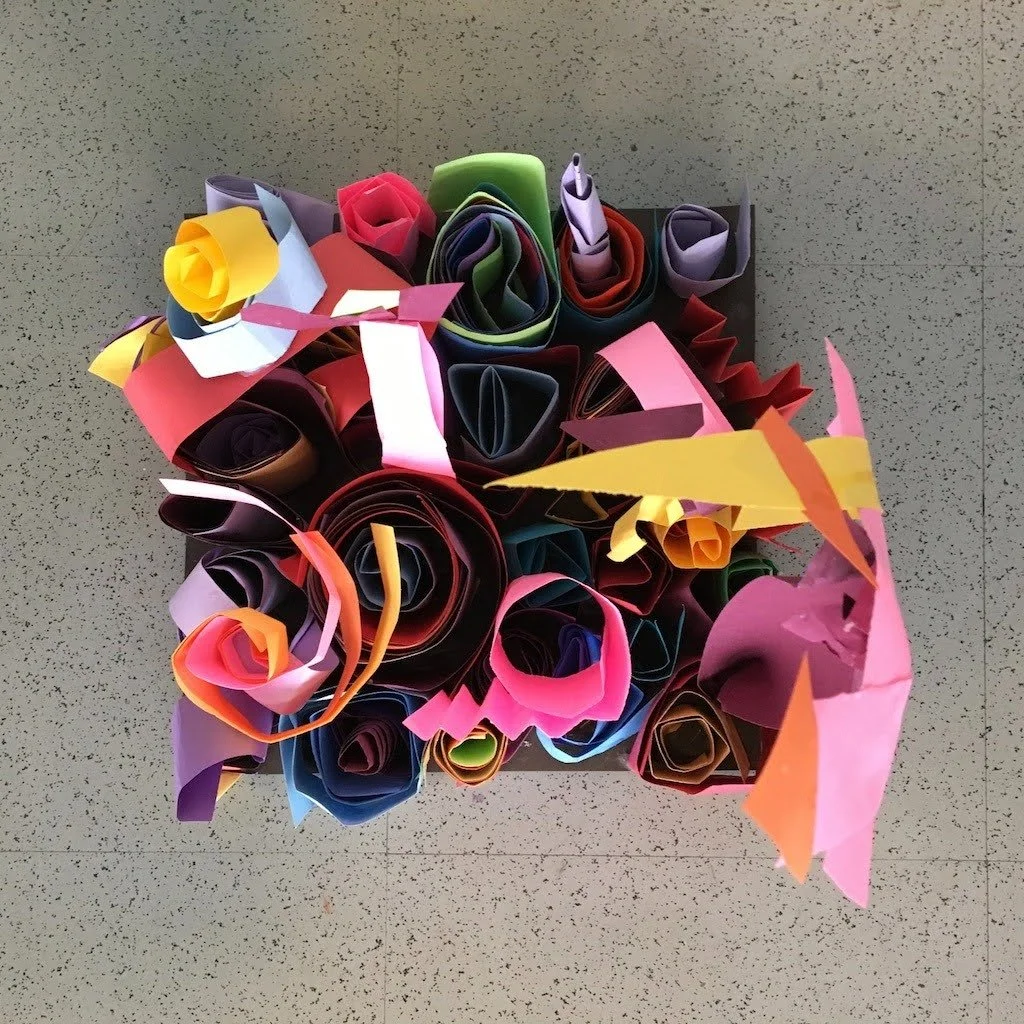
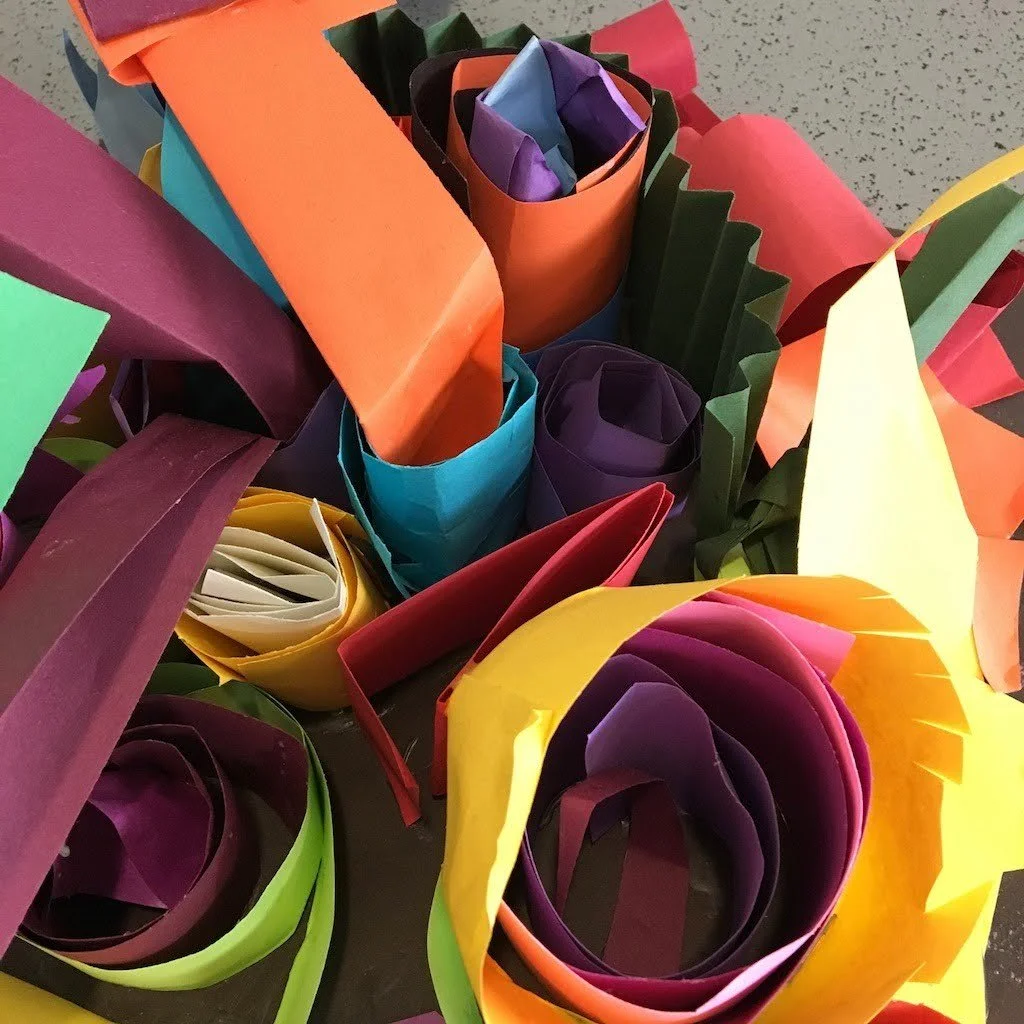
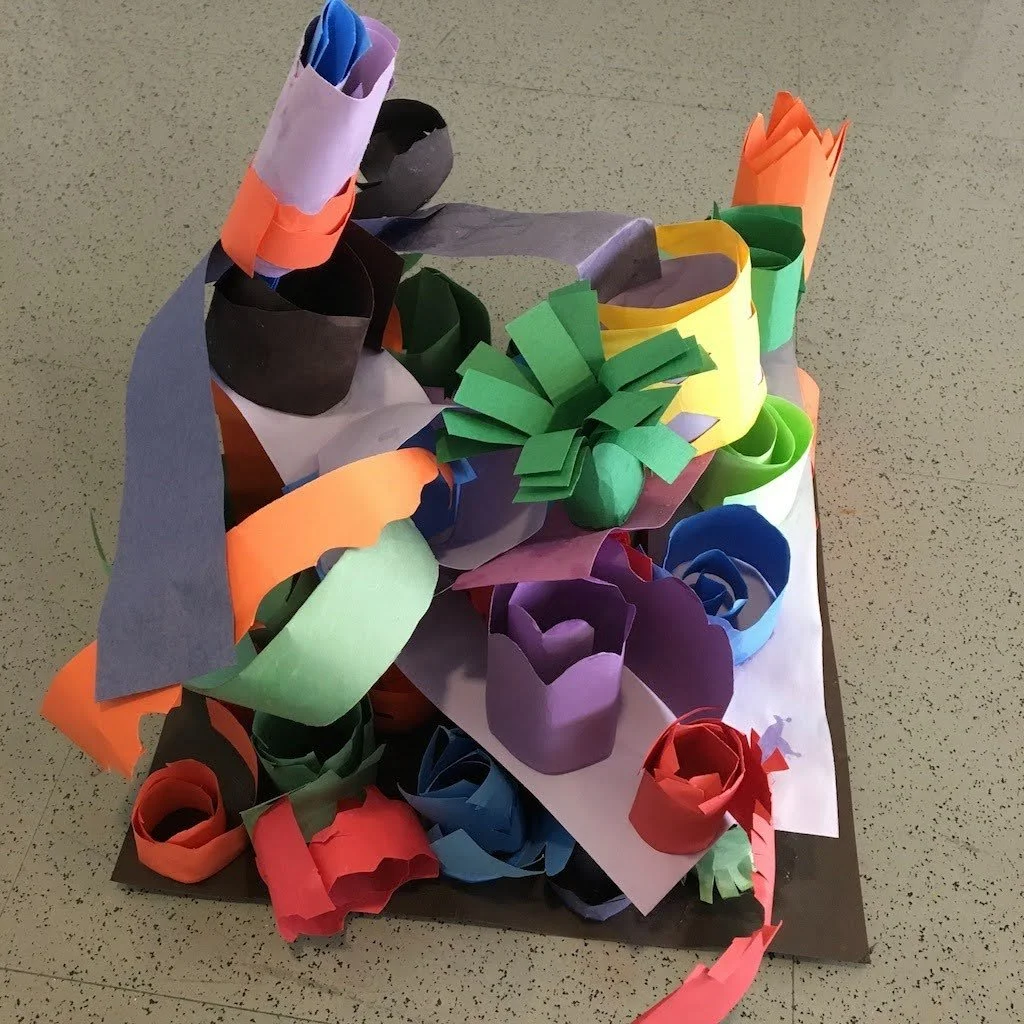
Paper Transformation Relief Sculpture
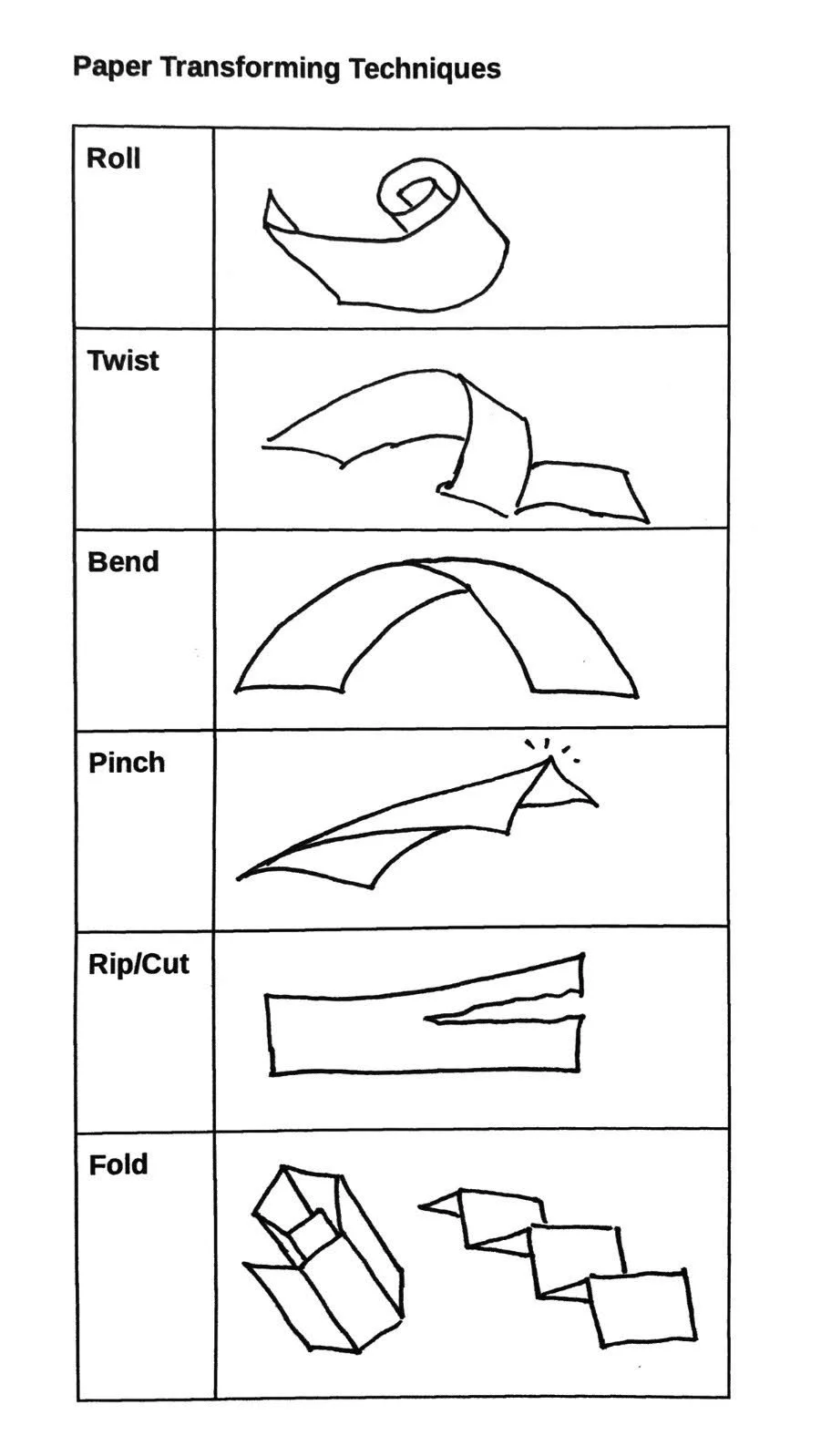
In this 2nd grade relief sculpture lesson, students transformed flat strips of paper into 3-dimensional forms using a variety of paper-transforming techniques explored in class. The concept was that a flat object could be changed to become 3D by rolling, folding, twisting…etc.
Perspective Landscape
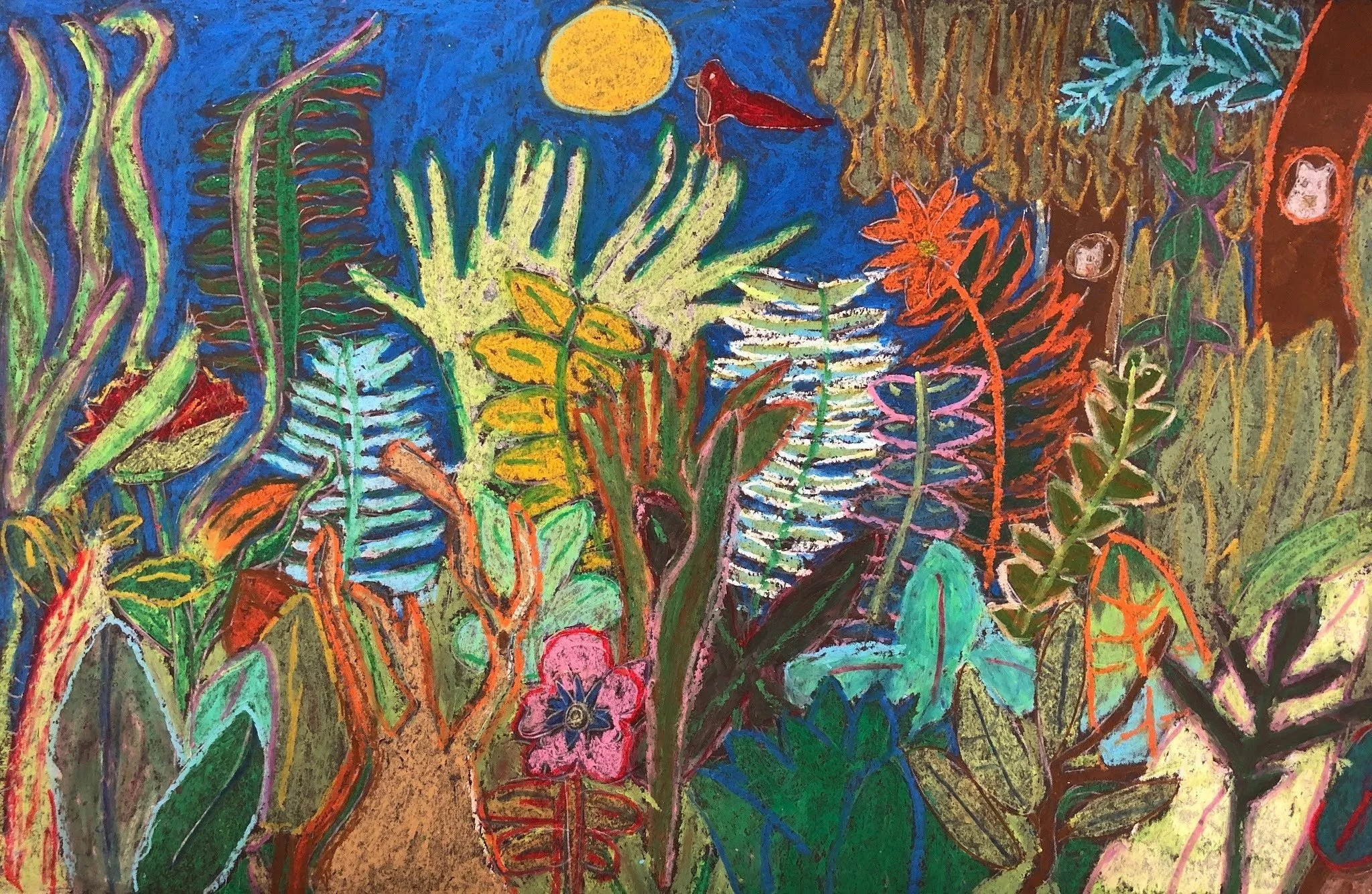
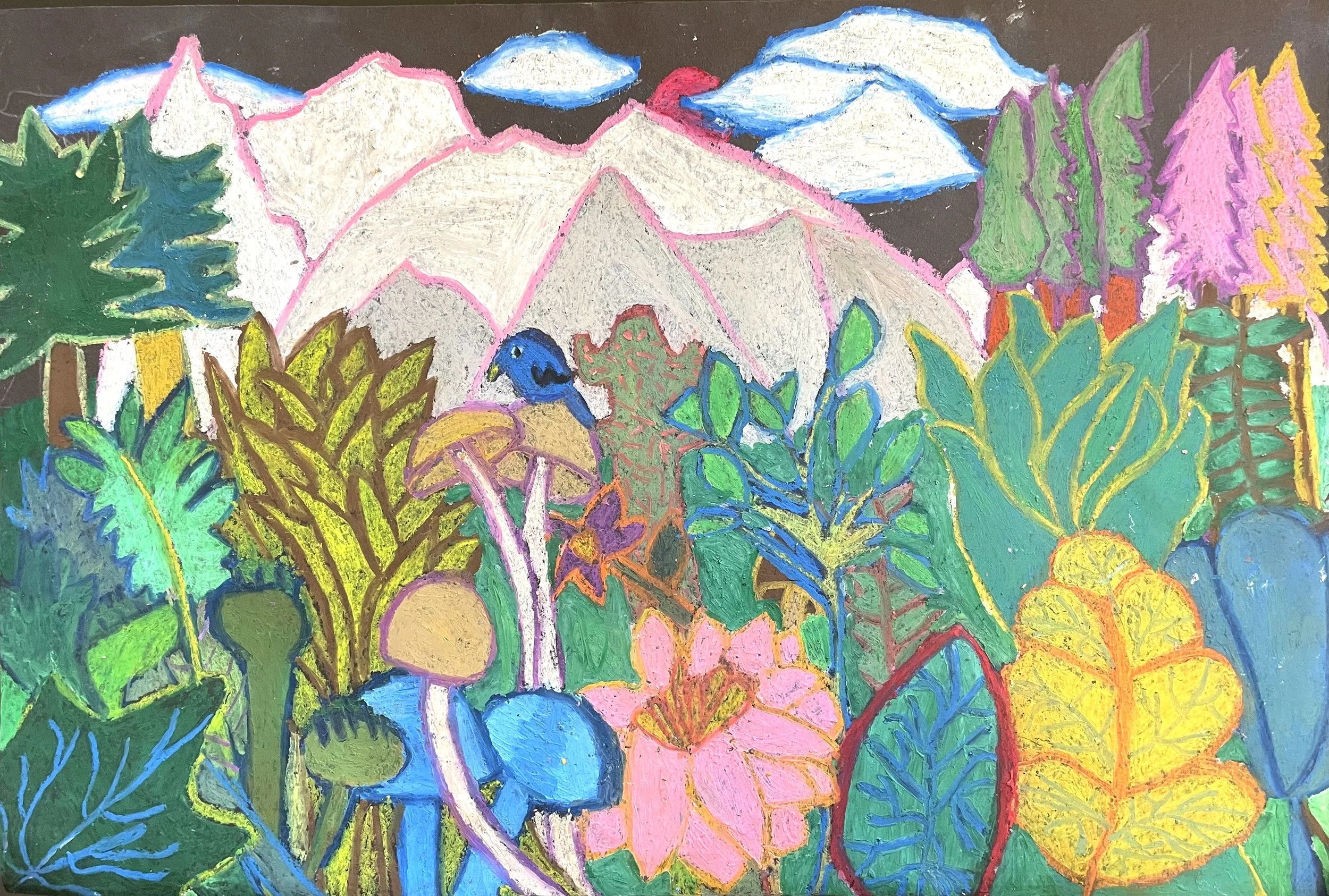
Inspired by the jungle paintings of Henri Rousseau, students used oil pastels to create layered landscape compositions that demonstrate depth through scale and placement.
Storytelling and Composition
Storytelling and Composition
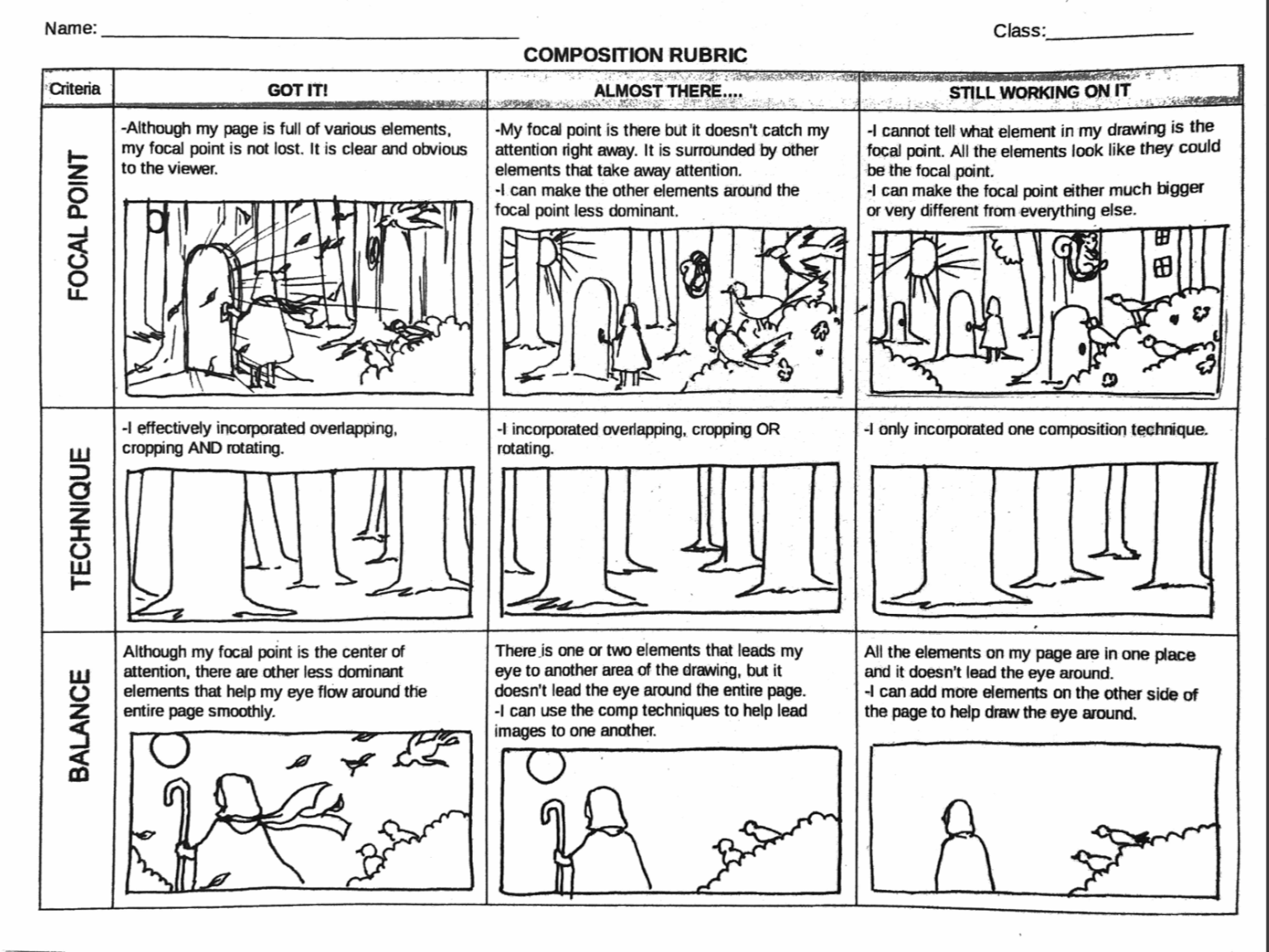
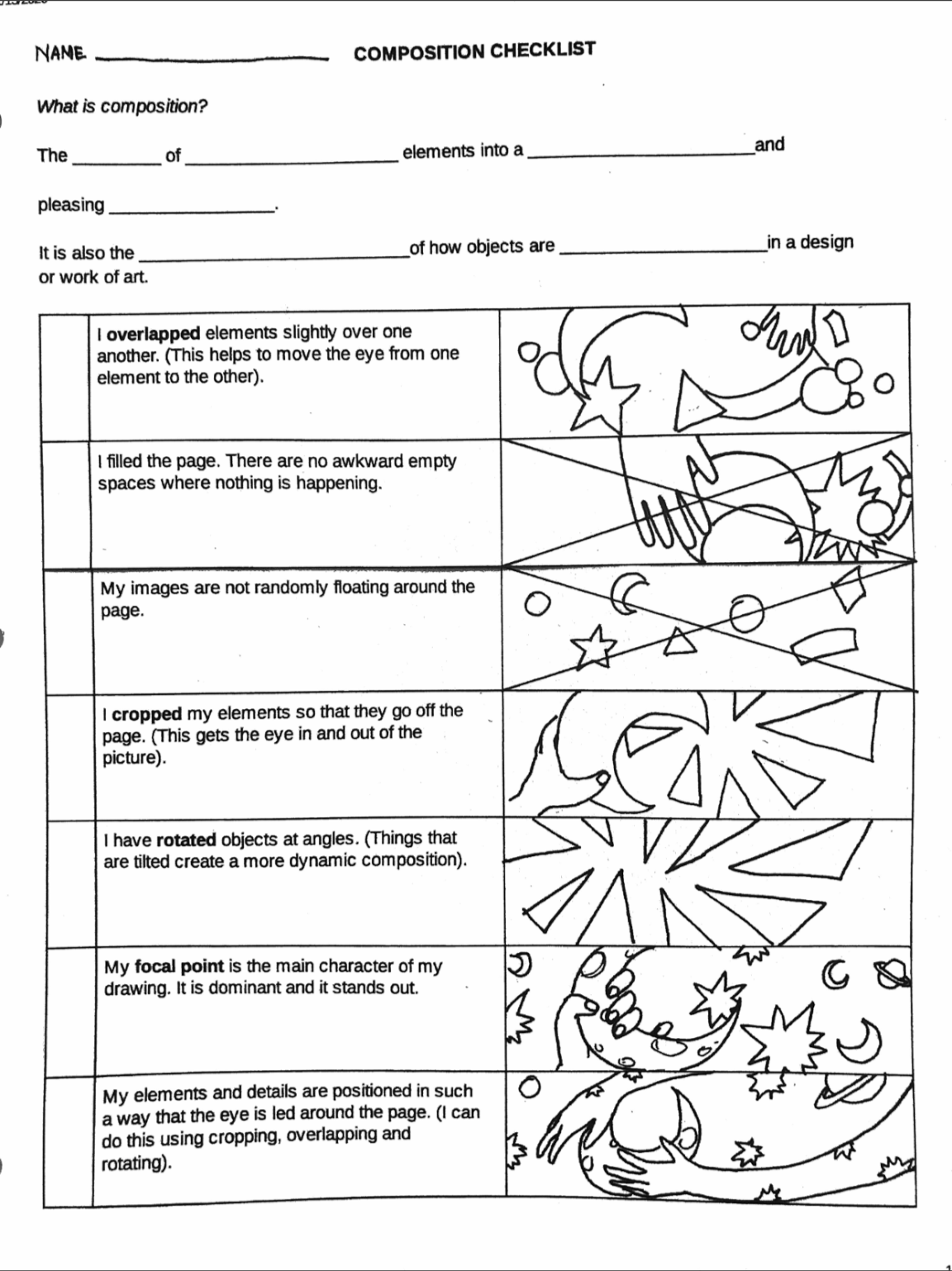
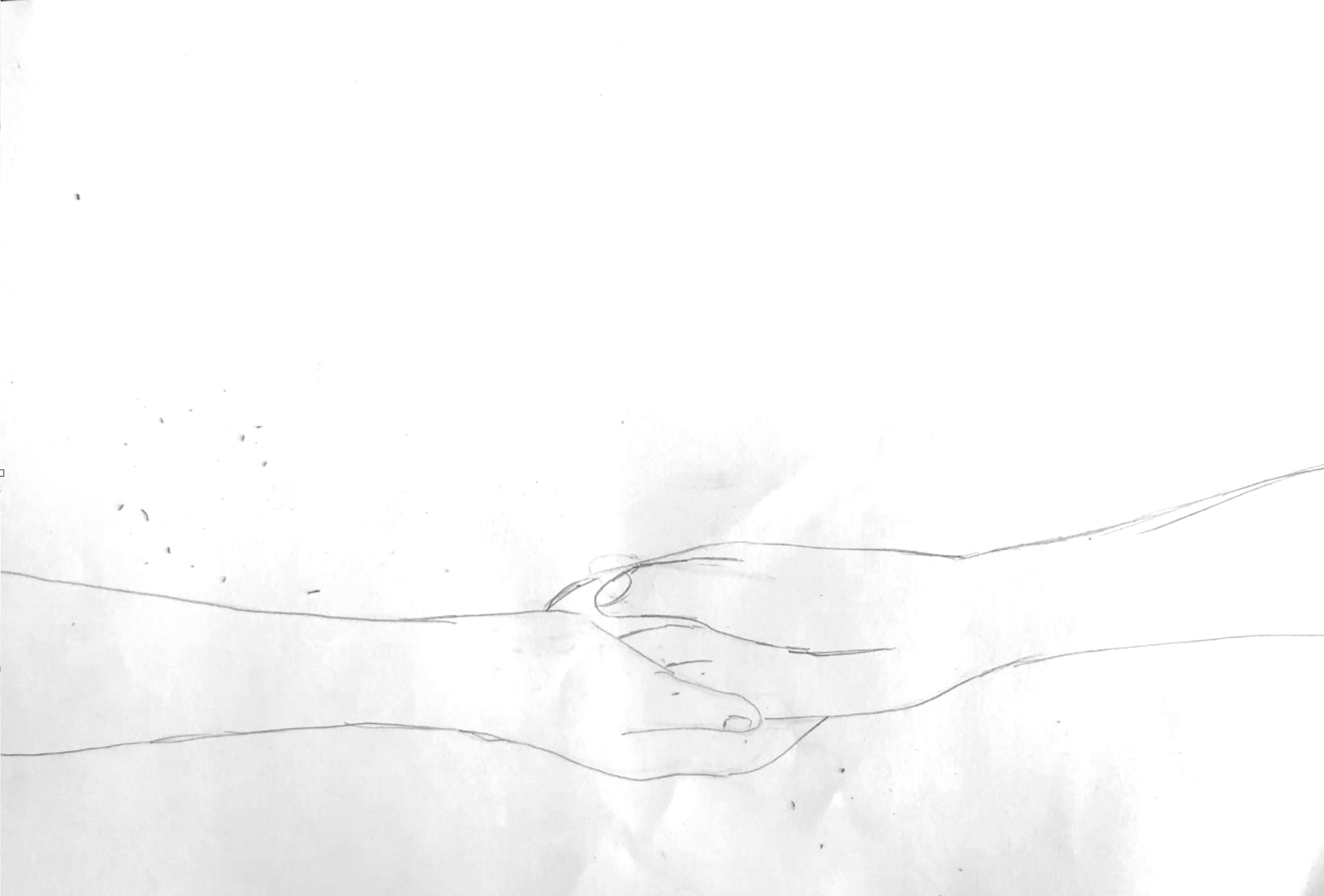
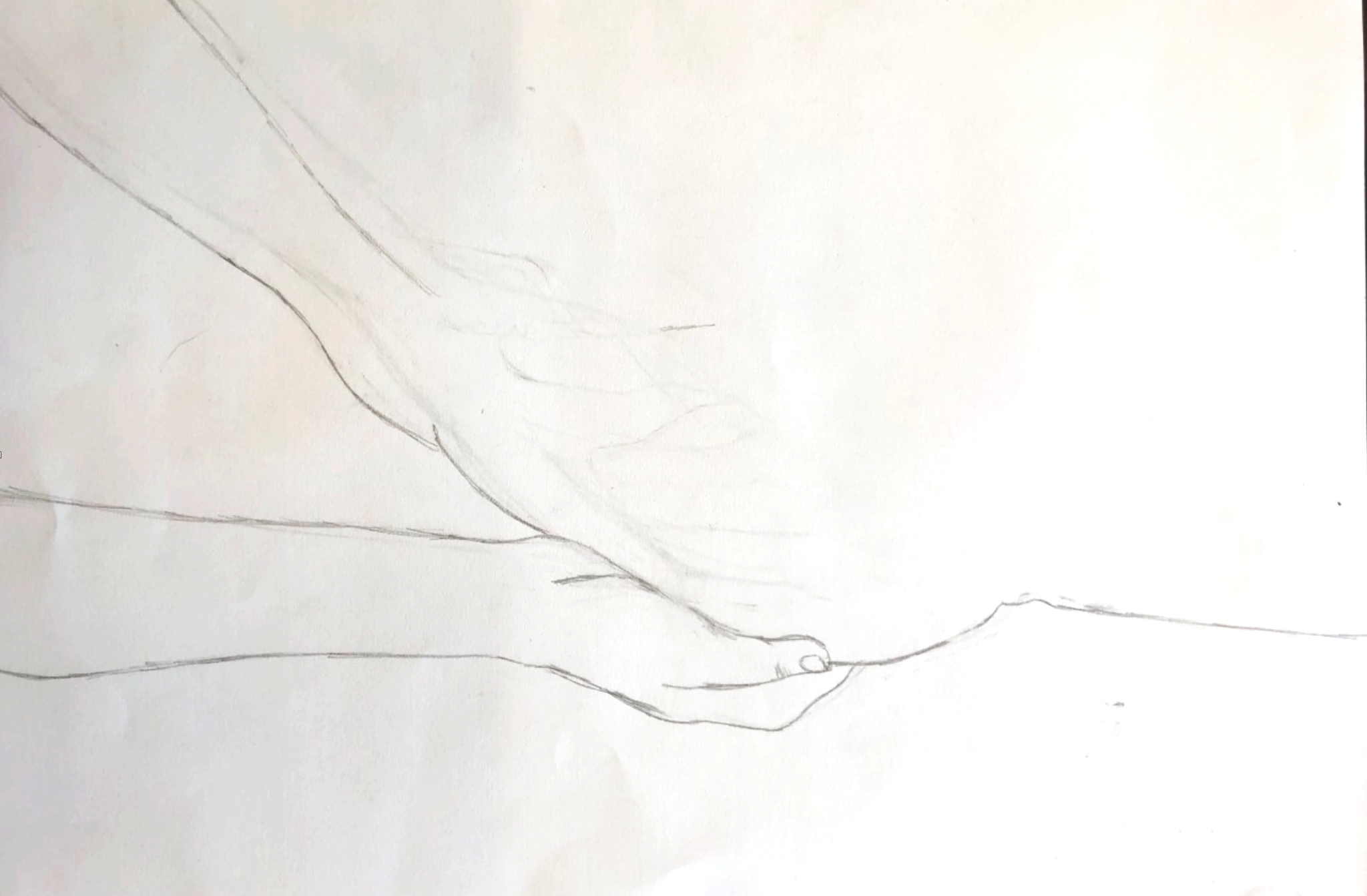
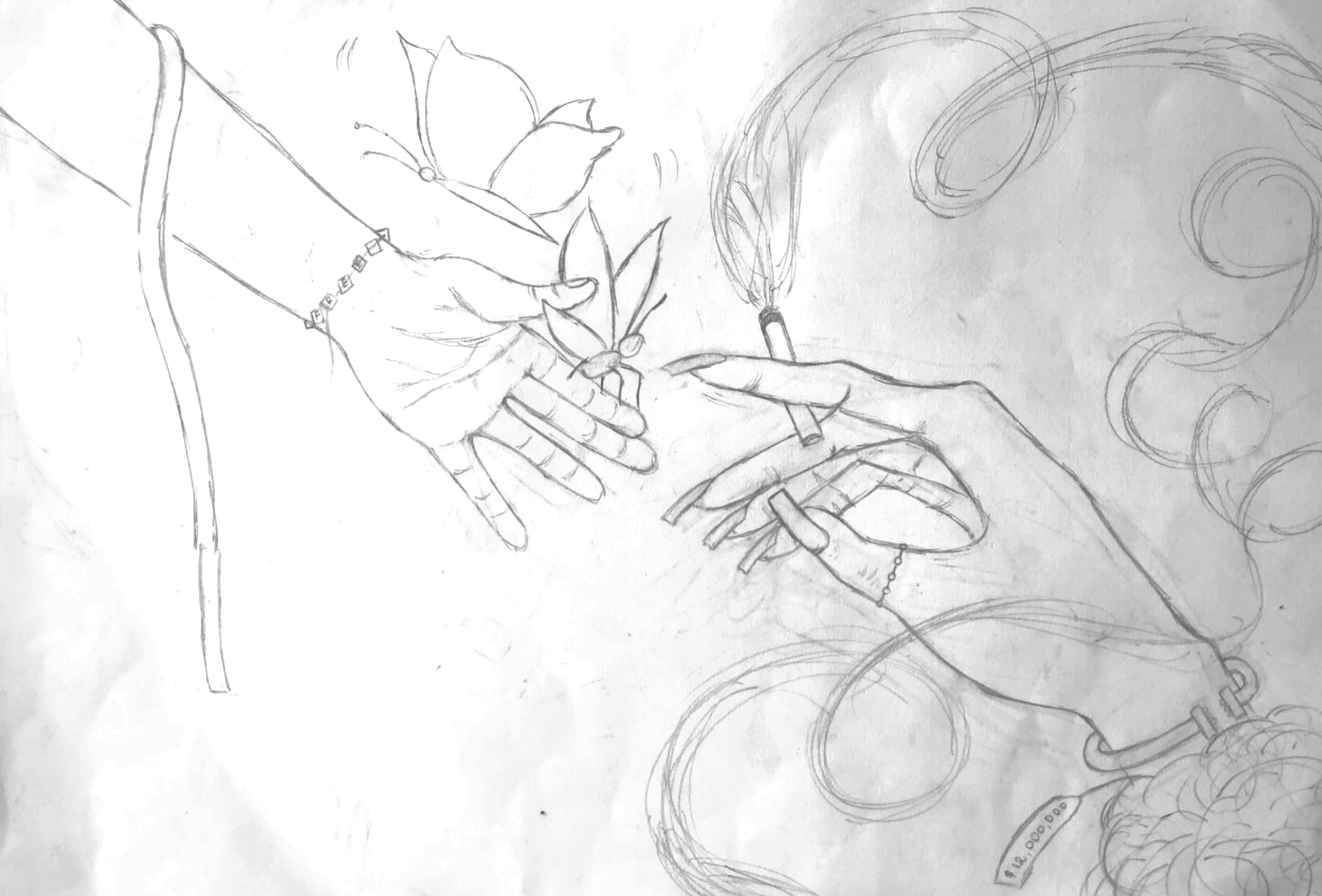
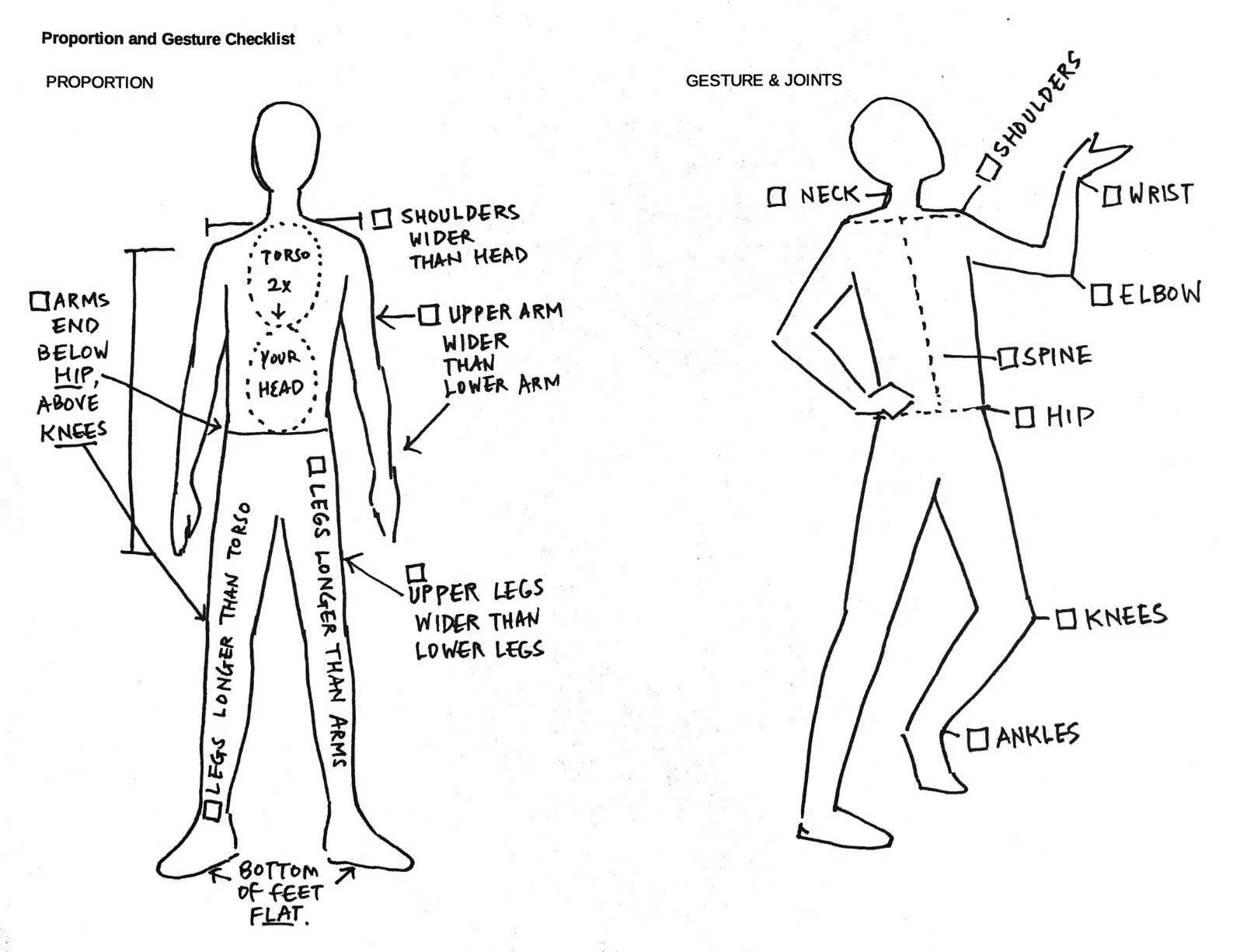
This student struggled to map out a composition where the eye went around the whole page. Using a combination of the above rubric and checklist, she was able to revise the position of the hands so that they were more central on the page rather than off to the bottom.
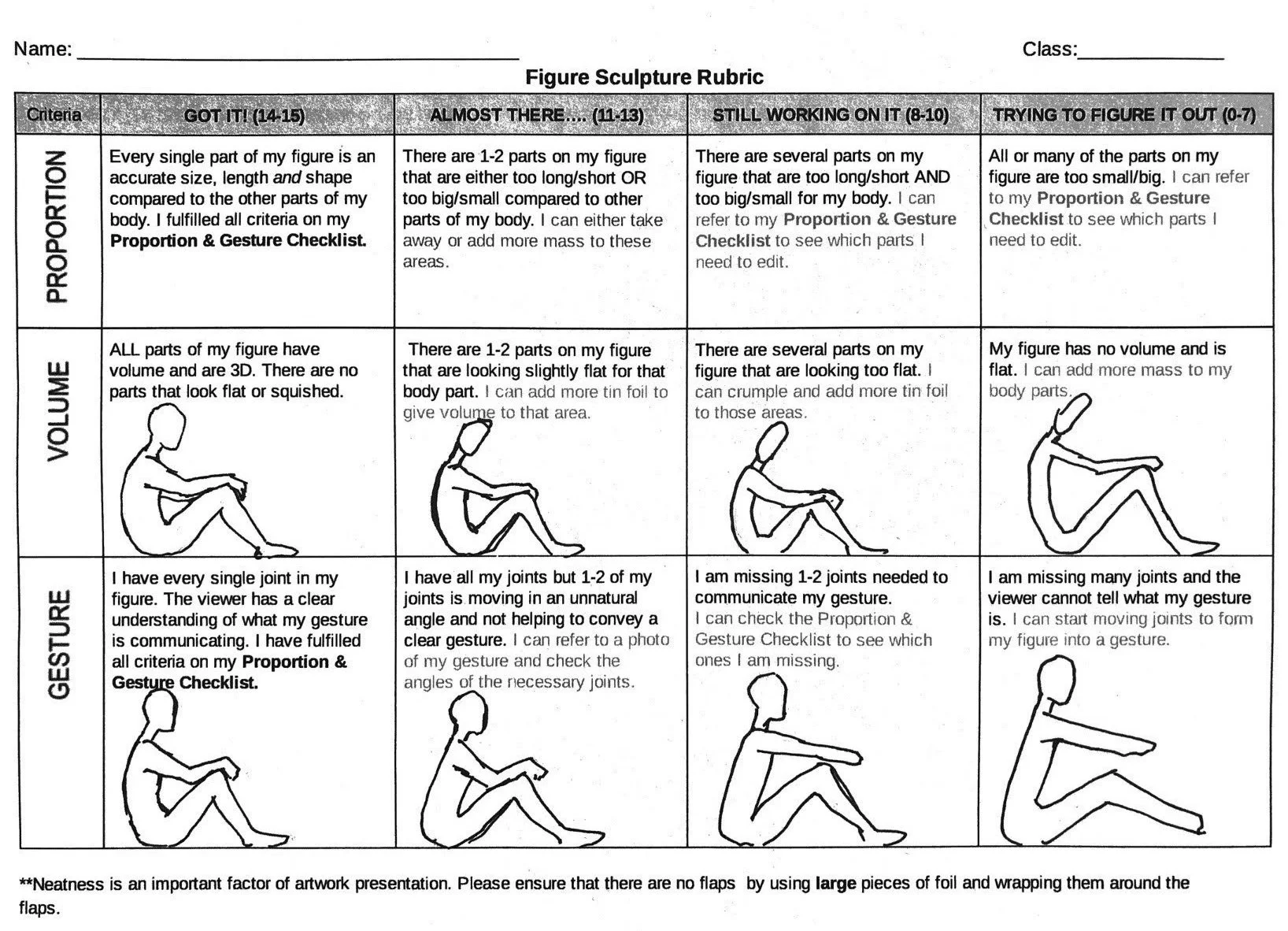
Gesture Sculptures
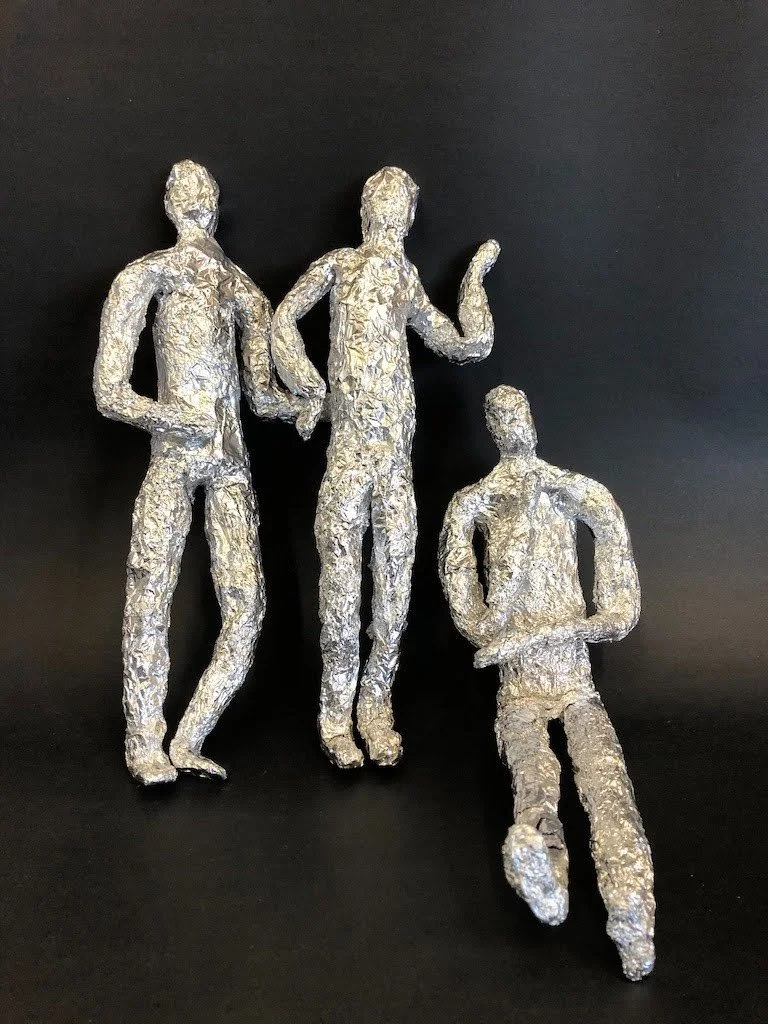
6th Grade Gesture Sculptures
Observations
Events & Exhibits &
Events & Exhibits &
Art Festivals
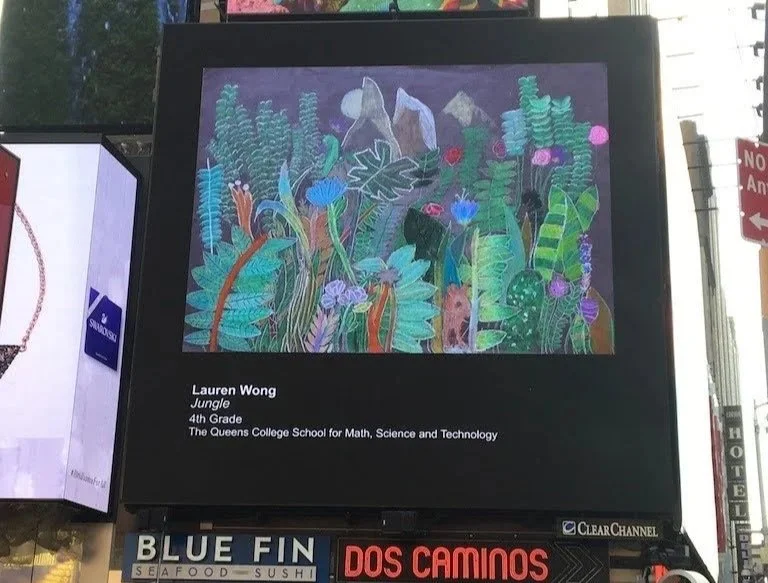
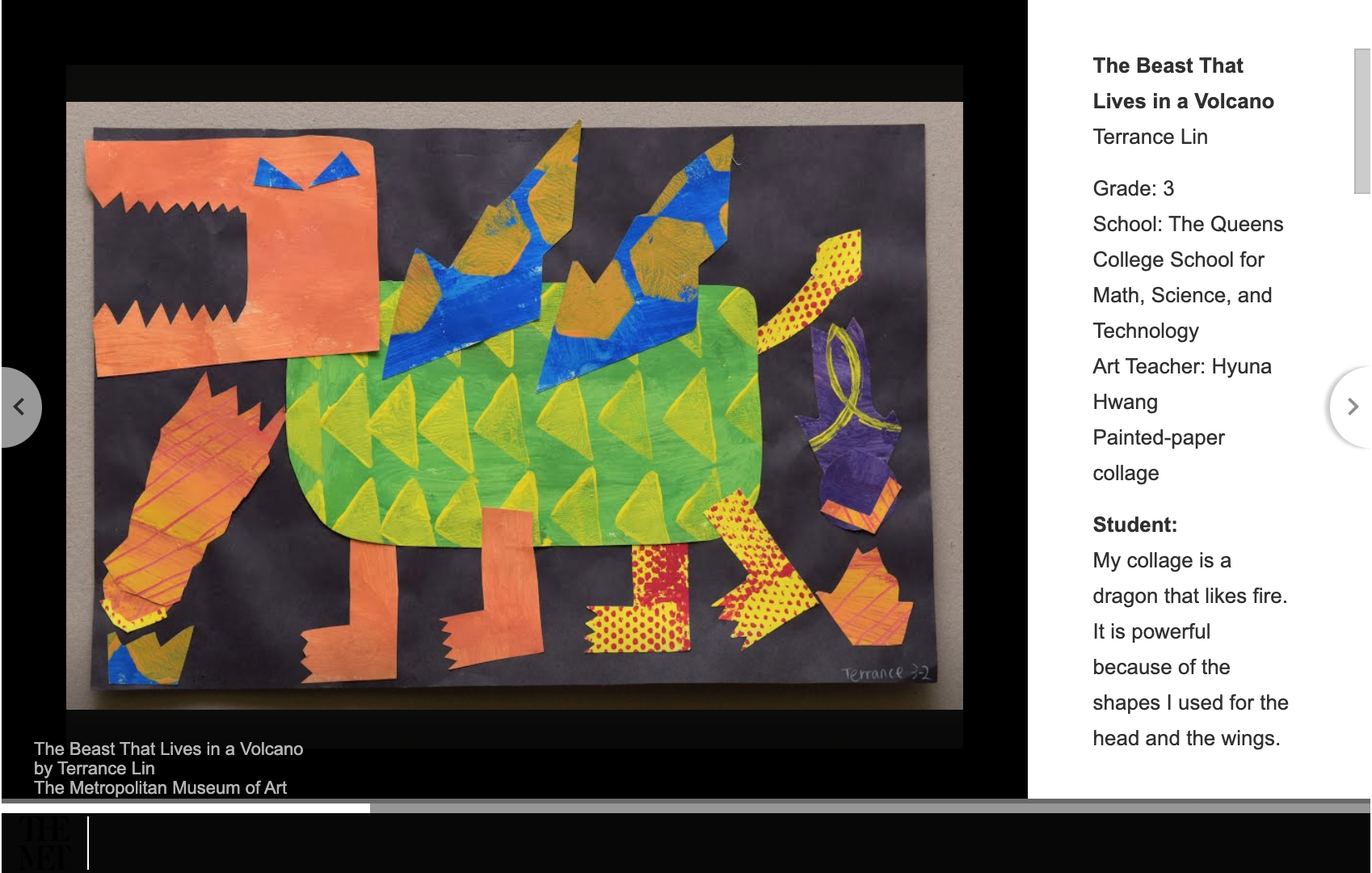
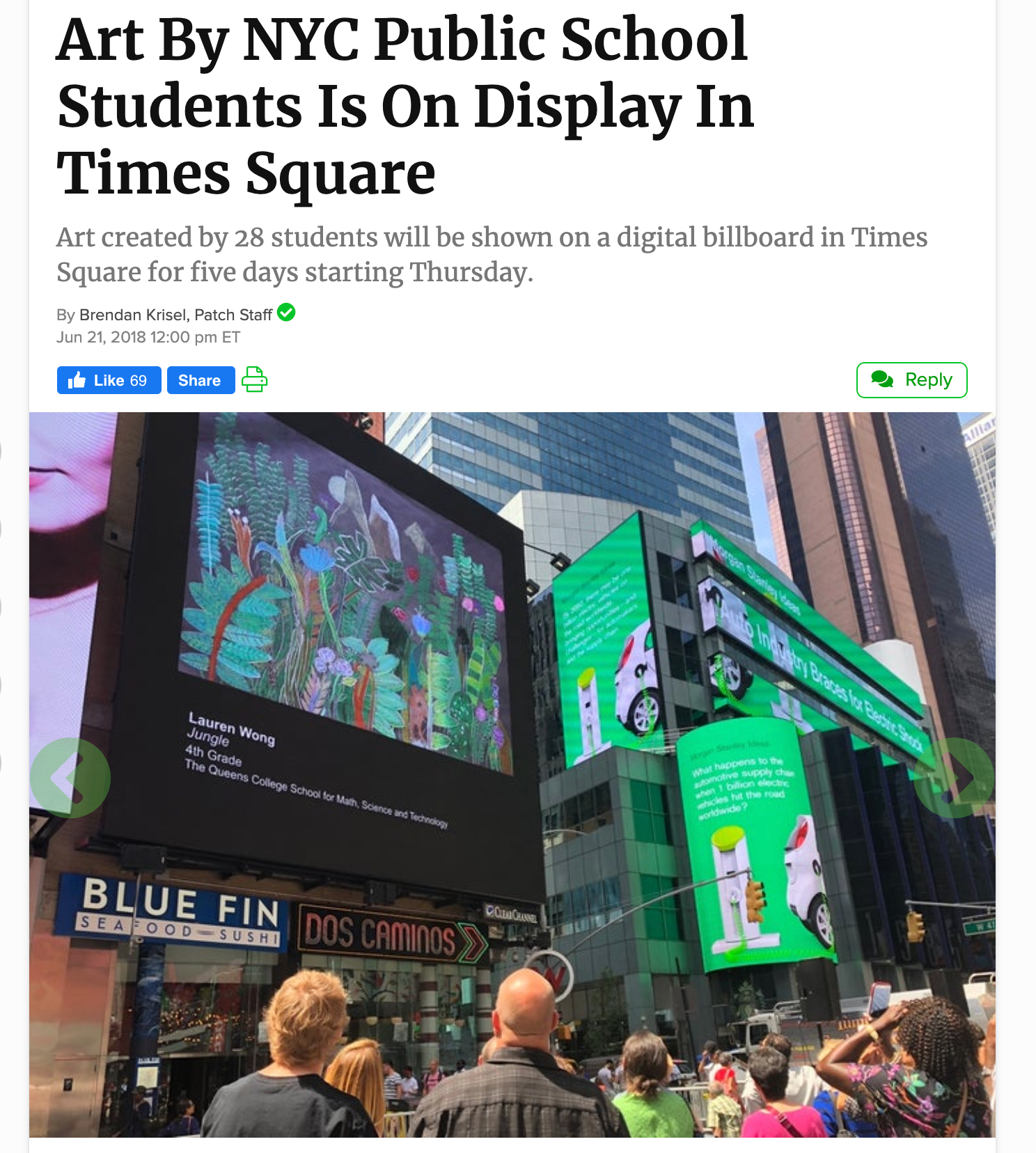
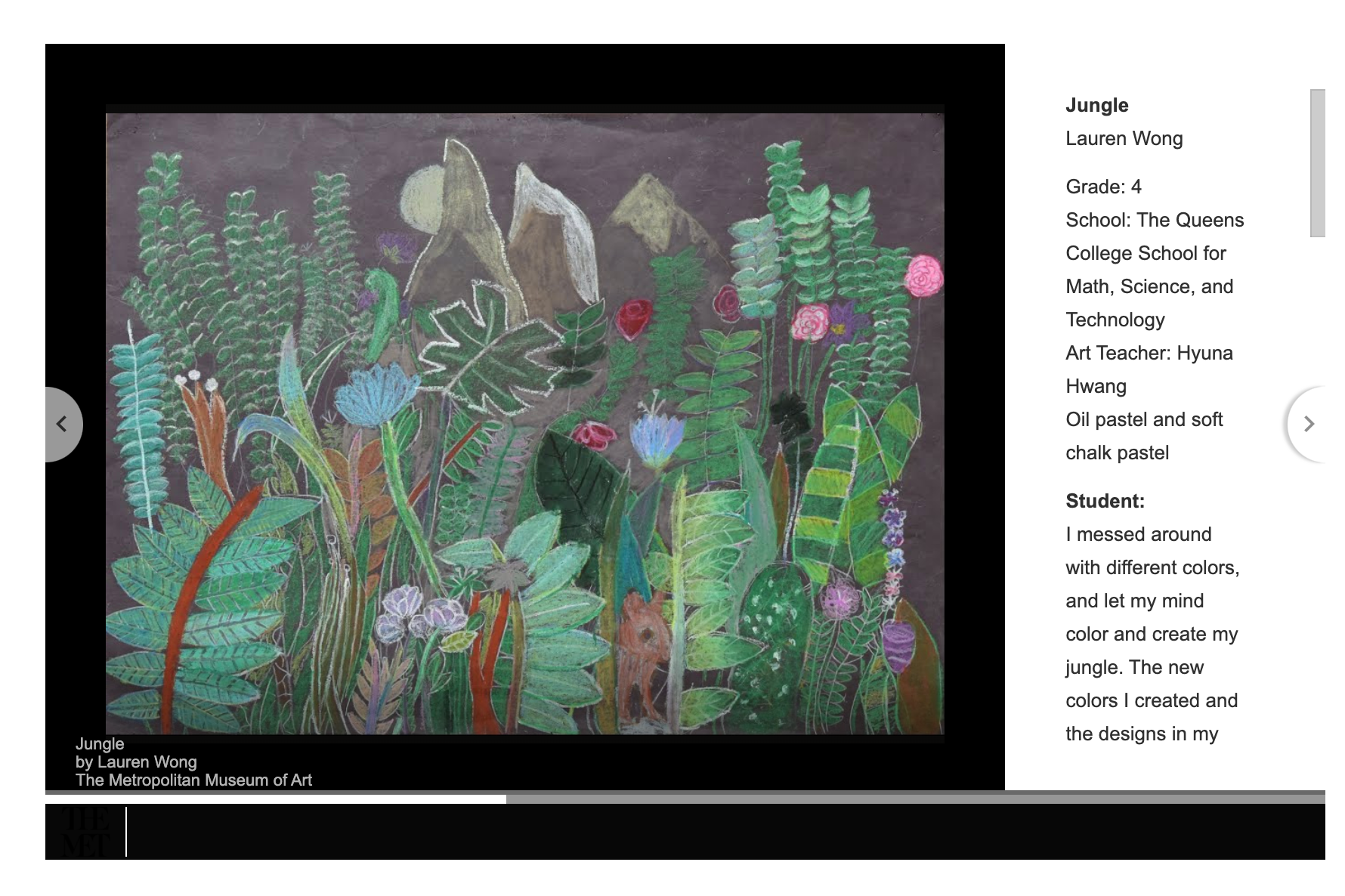
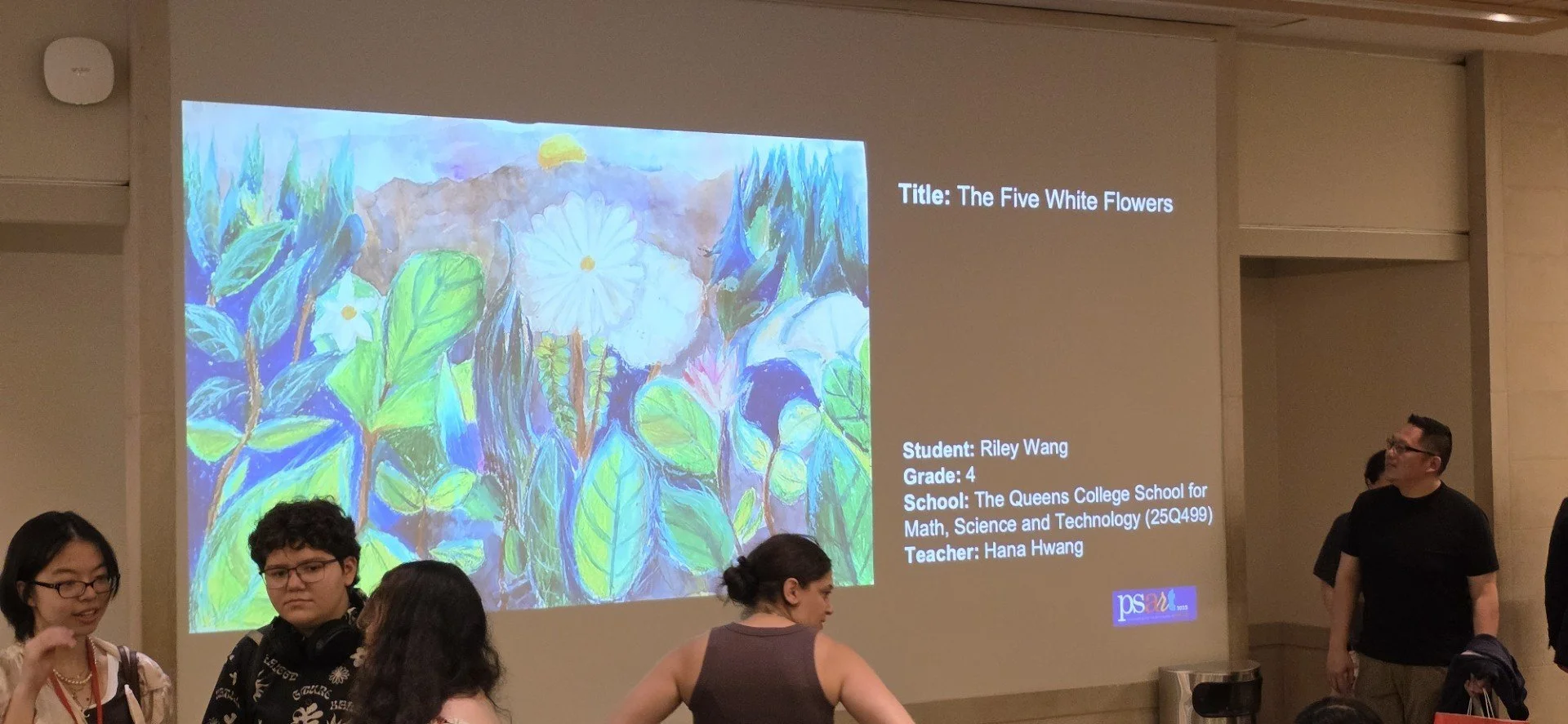
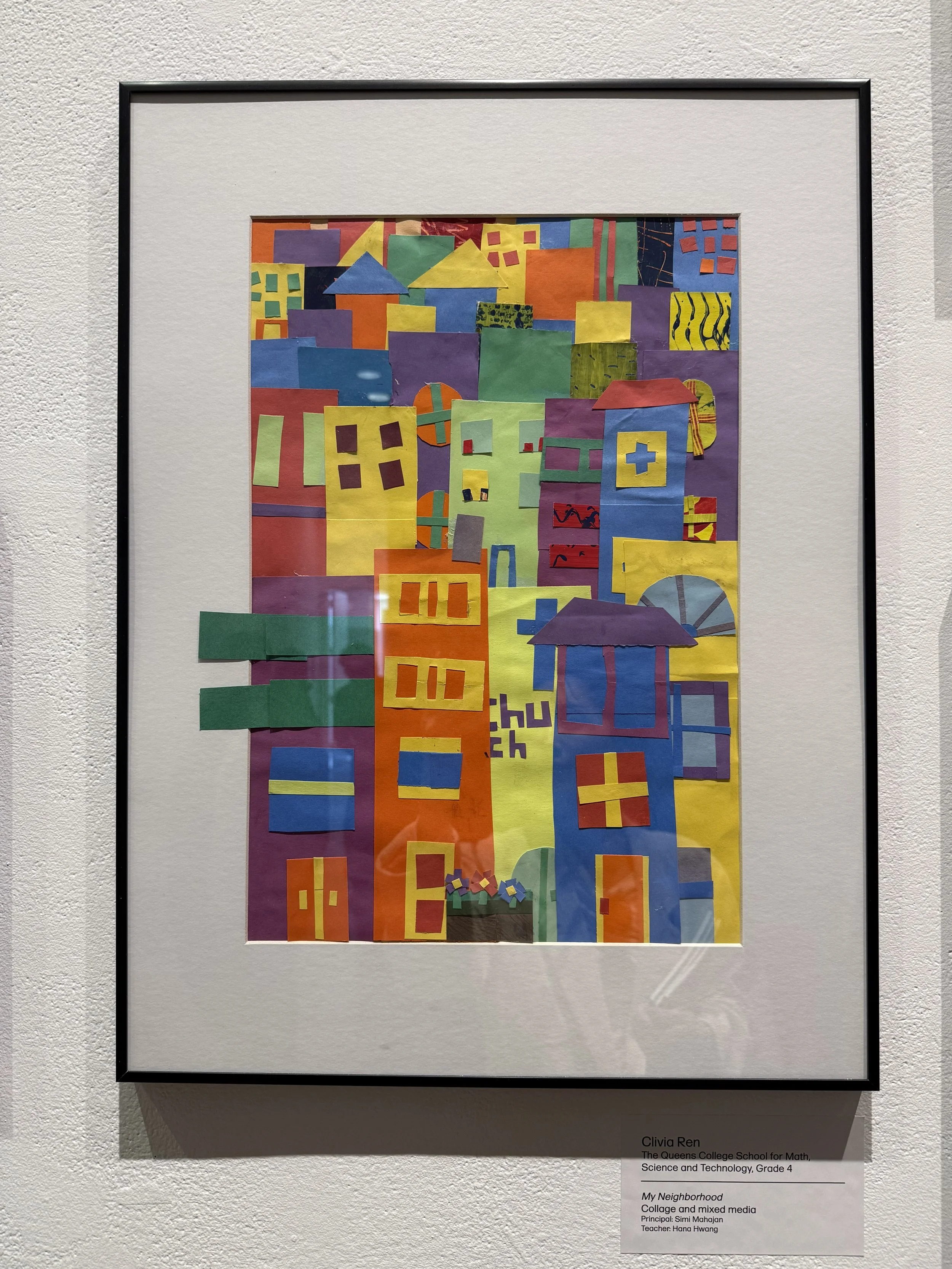
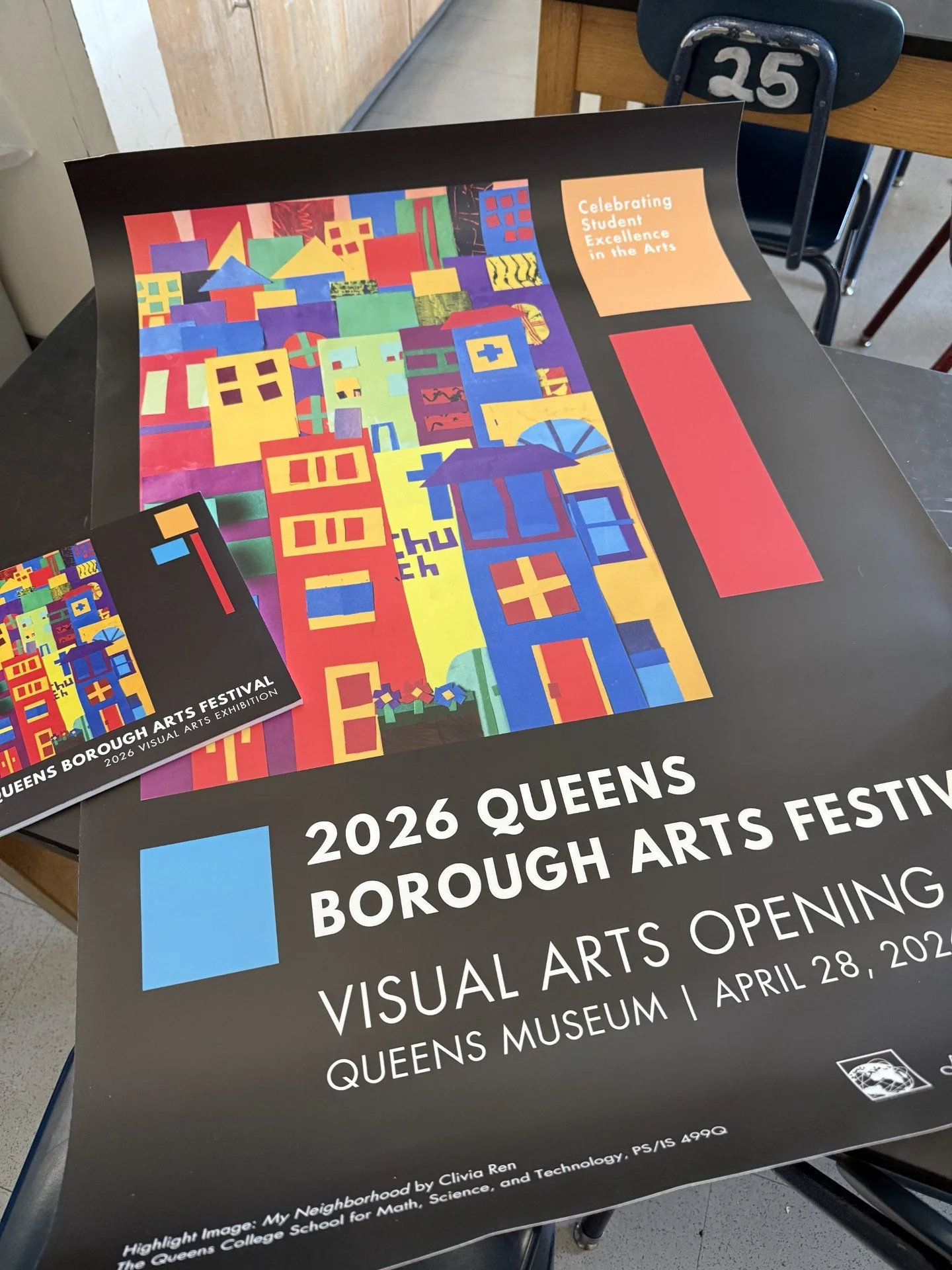
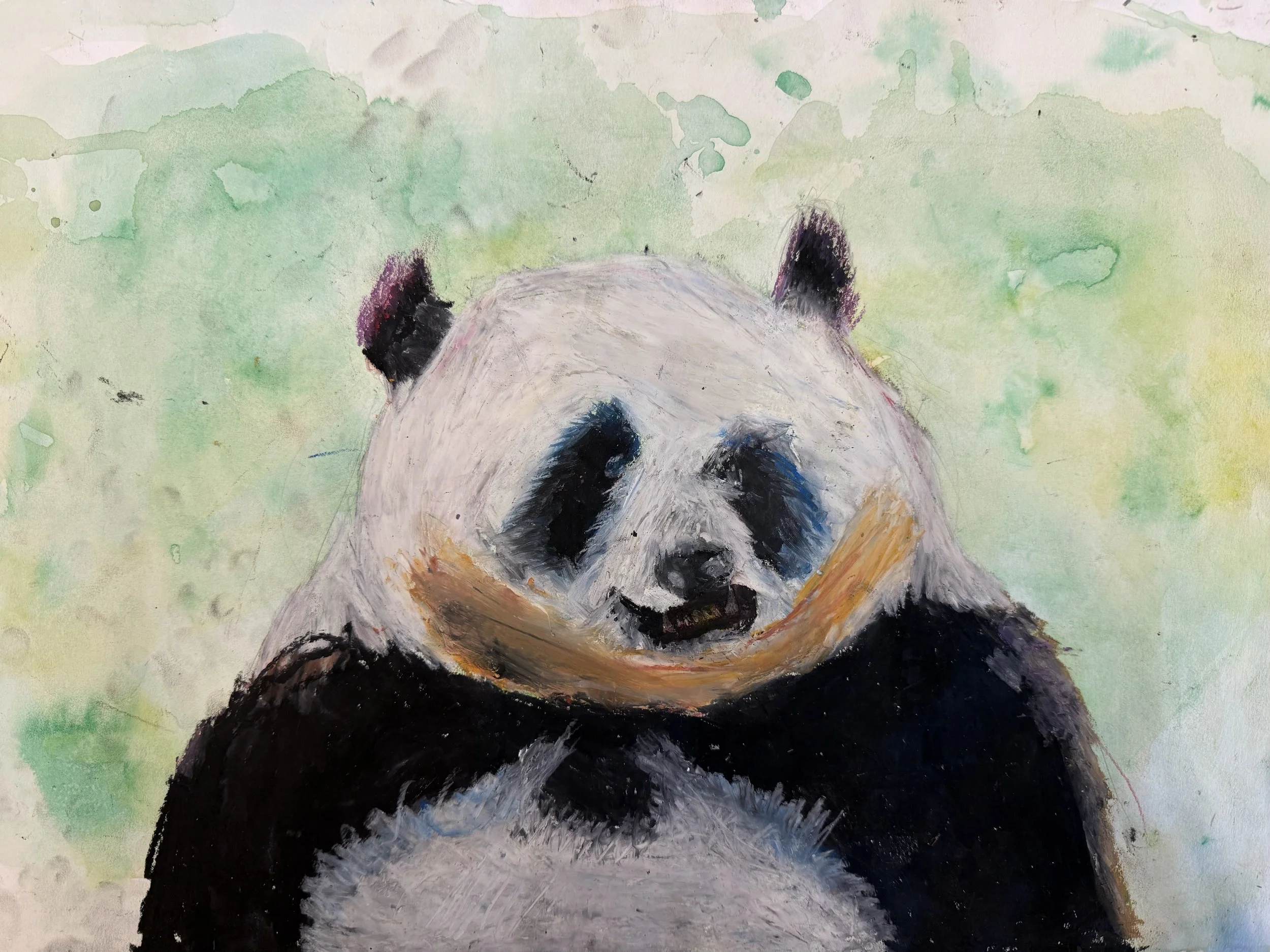
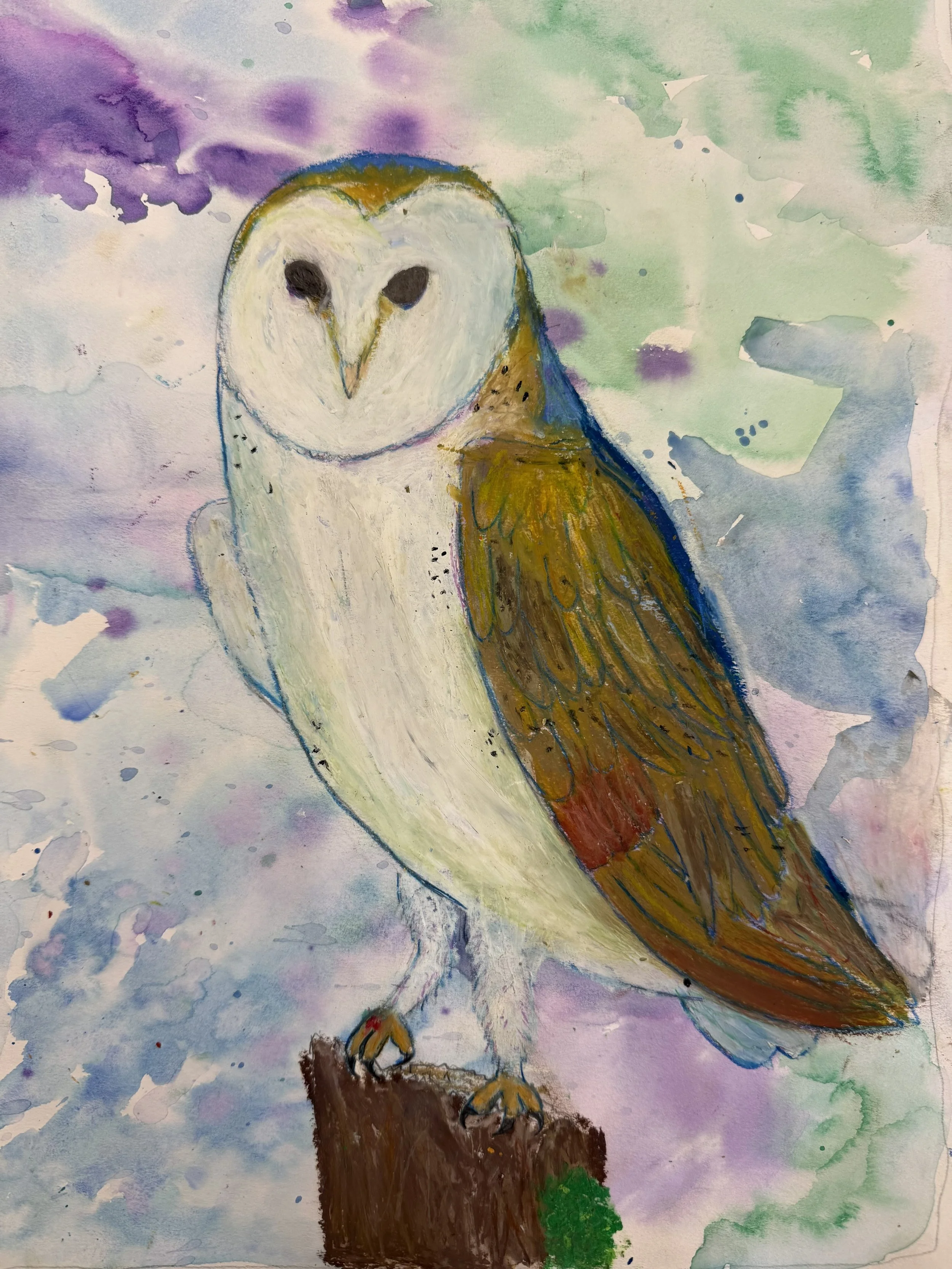
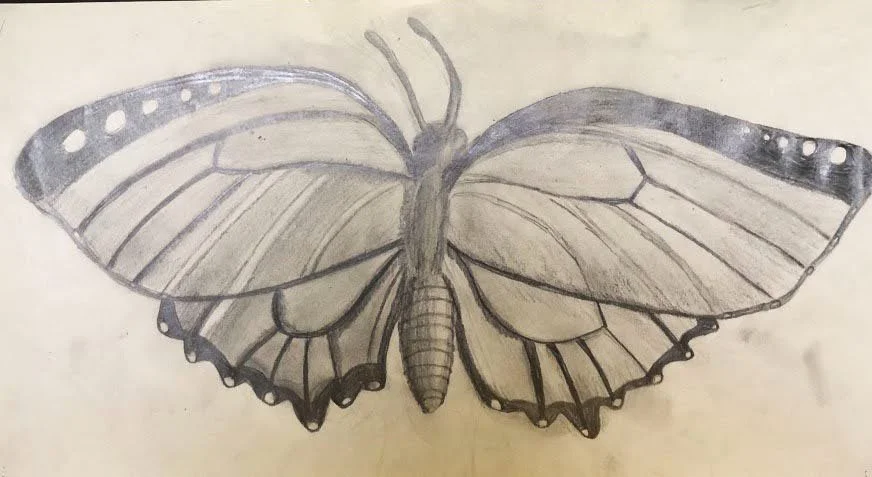
My students have had the honor of being selected as finalists for citywide and borough-wide art festivals every year since 2016. Here are some winners throughout the years.

Student Art Gallery
5th Grade
4th Grade
7th Grade
8th Grade